© 2025 Messer Cutting Systems, Inc.

Tube Laser Cutting uses a focused laser beam to cut, notch, or shape metal tubes and pipes. Unlike a saw, it can create detailed profiles without changing tools for every cut. A CNC system follows programmed dimensions while a chuck grips and rotates the tube. The laser head moves along the material, directing concentrated heat at the cutting line. Assist gas clears molten metal and helps produce a cleaner edge.
That is the basic idea. In practice, results depend on more than laser power. Tube diameter, wall thickness, material type, focus position, and cutting speed all affect the finished part. For example, a thin stainless-steel tube needs different settings from a thick carbon-steel section. The machine may also use sensors to keep the tube aligned as it turns. Small setup errors can show up as uneven slots or misplaced holes.
It matters.
This process is useful for frames, handrails, vehicle components, and other parts made from round, square, or shaped tubing. It can reduce manual marking and secondary machining, especially when designs include repeated holes or angled joints. Still, it is not an automatic fix for poor drawings or inconsistent material. Good results start with accurate measurements, suitable tooling, and a verified cutting program. The technology is precise, but real production always involves trade-offs between speed, finish, and cost.
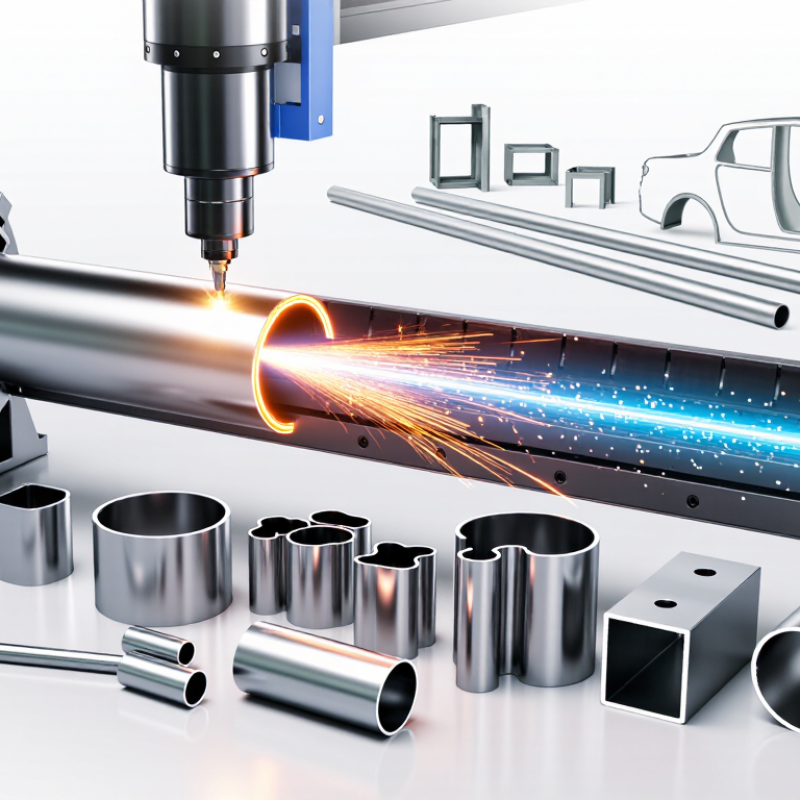
What Is Tube Laser Cutting and How Does It Work?
What Tube Laser Cutting Is
Tube laser cutting is a process that uses a focused laser beam to cut hollow, long workpieces. These include round, square, and rectangular tubes. The tube is held and rotated by a chuck while the cutting head directs the beam along programmed paths. The beam heats and melts a small area; assist gas removes molten material, leaving the cut edge. The machine can create slots, holes, notches, and angled ends in one setup. No separate drill or saw is needed for those features.
The process depends on the tube’s material, wall thickness, shape, and surface condition. A thin-walled steel tube may cut quickly, while thicker material needs different settings and more time. MarketsandMarkets’ 2023 laser-cutting-machine market report projected the global market to reach USD 5.7 billion by 2027. This is market-growth data, not a guarantee of cutting speed or quality. That distinction is easy to overlook.
Tips: Confirm the tube’s dimensions and wall thickness before programming. Keep the tube aligned, and inspect the first cut for burrs or heat marks. Small setup errors can shift holes away from their intended position. A test piece helps. It may seem like an extra step, but it can prevent a full batch from being cut incorrectly.
Tube laser cutting uses a focused laser beam to cut profiles, holes, and notches in metal tubing. A CNC system coordinates the cutting head with the tube’s rotation and movement. The chart shows example round-tube outside diameters; labels give outside diameter × wall thickness in millimeters. These are illustrative dimensions, not machine limits or a claim about product availability.
A tube laser cutting system combines several parts that must work in sync. The laser source creates the beam, while the cutting head focuses it onto the tube. A small nozzle directs assist gas at the cut, helping clear molten material. Focus and nozzle distance matter. If either is poorly set, edges may look rough or show excess heat marks.
The machine bed supports the tube, and chuck assemblies grip and rotate it as the cutting head moves along its length. Their timing lets the system cut slots, holes, and angled ends around the tube’s surface. Clamping force needs care: too little can allow movement, while too much may dent thin-walled stock. The CNC controller coordinates rotation, feed speed, and cutting paths from the programmed design.
Cooling equipment helps manage heat in the laser source and other components. An extraction system removes smoke and fine particles from the cutting area. Operators also check gas pressure, lens condition, and tube alignment before a run. Small setup errors can matter. A drawing may look precise, yet the real tube can have slight bends or size variations. Those details are easy to underestimate, and automated cutting does not make them disappear.
Tube laser cutting shapes hollow sections, including round, square, and rectangular tubes, with a focused laser beam. The process begins with a digital drawing that defines cut paths, holes, slots, and end angles. An operator checks the tube’s dimensions and material, then loads it into the machine’s chuck. The chuck holds and rotates the tube as it moves through the cutting area. Small shifts matter.
The machine aligns the tube and follows programmed coordinates. A high-energy beam melts or vaporizes material at each cut point, while assist gas clears molten metal from the kerf. For a hole, the laser pierces the wall before tracing its outline. For a complex profile, the tube may rotate between cuts. Heat still builds. Cut edges and hole positions should be checked against the drawing, since material variation or an imperfect setup can affect fit. Not every tube behaves exactly as planned.
Tips: Confirm material type, wall thickness, and tube dimensions before cutting. Keep the drawing’s tolerances realistic, especially around small holes and tight corners. A test piece can reveal burrs or alignment issues early. Don’t skip inspection; a clean-looking edge can still be out of position.
| Process Stage | What Happens | Main Inputs or Controls | Typical Result |
|---|---|---|---|
| 1. Create the part design | A tube or pipe component is designed in CAD, including its profile, length, holes, slots, mitres, and end features. | Part dimensions, material, wall thickness, tolerances, and a compatible machine file | A digital cutting plan that defines the required geometry |
| 2. Load and position the tube | The raw tube is placed in the machine. Clamping and chuck systems hold and rotate it, while supports help control longer stock. | Tube length, outer profile, alignment, clamping force, and support setup | The workpiece is held in position for accurate cutting |
| 3. Set the cutting conditions | The machine program coordinates the laser head, tube rotation, and movement along the tube. The operator or control system selects suitable process settings. | Material type, wall thickness, laser power, cutting speed, focus position, and assist-gas settings | A process setup matched to the material and part geometry |
| 4. Pierce the material | The focused laser delivers concentrated energy to create an opening in the tube wall before the cutting path begins. | Laser output, focus, pierce time, material, and wall thickness | A starting point for the programmed cut |
| 5. Cut the programmed features | The laser beam melts or vaporizes material along the programmed path. Assist gas helps clear molten material from the kerf, while the tube and cutting head move in coordination. | Beam path, tube rotation, head motion, cutting speed, focus, and assist gas | Profiles, openings, slots, notches, and angled cuts formed in the tube |
| 6. Separate and unload the part | After the programmed cuts are complete, the finished component is released and removed. Automated systems may sort or collect parts. | Cut sequence, part support, unloading method, and remnant handling | A cut tube component and any remaining stock |
| 7. Inspect the finished component | The part is checked against the drawing. Additional deburring or finishing may be needed depending on the cut quality and application. | Feature dimensions, edge condition, fit requirements, and drawing tolerances | A verified part ready for assembly or further processing |
| Materials and shapes | Tube laser systems are commonly configured to process metal tubing and profiles. Suitable materials and sizes depend on the machine and its setup. | Common metals include carbon steel, stainless steel, and aluminum; profiles can include round, square, and rectangular sections | Cutting capability varies by material, profile, dimensions, and machine specifications |
| Key process advantage | Because the tube can be rotated and cut in one setup, multiple features can often be produced without separate drilling or sawing operations. | Part design, machine capability, setup accuracy, and production requirements | Potentially fewer secondary operations and efficient production of complex tube parts |
Tube laser cutting can process hollow metal sections without repeated manual repositioning. Common materials include carbon steel, stainless steel, and aluminum. Copper and brass can also be cut, but their reflectivity and heat transfer may require suitable equipment and carefully adjusted settings. Material grade and wall thickness both affect cutting speed, edge quality, and the risk of heat distortion.
Small differences matter.
Round, square, and rectangular tubes are common, while oval sections and selected open profiles may also be possible. The machine’s chuck, supports, and software determine which shapes it can handle reliably. A programmed cut can create holes, slots, notches, and angled ends in one setup.
On a workshop floor, a thin-wall tube may shift under clamping, while a heavier section may need slower cutting. In practice, the first setup is not always right; that is worth admitting. Test cuts help reveal burrs, dross, or fit problems before a full batch is processed.
Tube laser cutting directs a focused beam onto a tube held and rotated by a CNC chuck. The machine follows programmed paths to cut holes, slots, notches, and angled ends. This can produce complex profiles without separate drilling or sawing steps. On a shop floor, fewer handling steps can mean fewer chances to misalign a part.
Accuracy and repeatability are key advantages, especially when parts must fit into welded frames or assemblies. A clean cut may also reduce deburring, though results depend on material, settings, and assist gas. Grand View Research estimated the global laser cutting machine market at USD 5.21 billion in 2023. That is market context, not proof that every fabricator benefits. Still, it reflects continued industrial interest in laser cutting equipment.
There are limits. Maximum wall thickness depends on the laser’s power and the material; highly reflective metals need suitable process controls. Heat can affect the cut edge, and poor settings may leave burrs or discoloration. The machine also requires substantial investment, skilled programming, and regular maintenance. For a short run of simple parts, conventional sawing or punching may cost less. The best choice depends on the part mix.
© 2025 Messer Cutting Systems, Inc.