Top 10 CNC Plasma Cutters for Global Buyers

Choosing a Cnc Plasma Cutter for international production is not simply a matter of comparing prices. Global buyers must examine cutting capacity, electrical compatibility, software support, consumable costs, and after-sales service. A compact workshop machine may handle thin steel beautifully, yet struggle with long production runs or thicker plate.

Jim Colt, a longtime plasma-cutting educator, captures this practical reality: “The cut is only as good as the setup.” His point remains important. Torch height, air quality, grounding, material flatness, and cutting speed can change the result within minutes.

Small details matter.

This guide, “Top 10 CNC Plasma Cutters for Global Buyers,” evaluates machines through those real operating conditions. It considers rated amperage, recommended cut thickness, maximum severance capacity, table stability, motion accuracy, and controller usability. It also looks at replacement torches, consumable availability, warranty terms, training, and regional technical support. A machine can appear affordable until shipping delays stop production.

Some buyers focus too heavily on peak amperage. That can be misleading. A cutter rated for 105 amps may not deliver consistent quality during continuous industrial work. Duty cycle and manufacturer testing deserve equal attention.

The selection process is not perfect. Supplier specifications may use different testing standards, and real workshop results can vary. Therefore, buyers should confirm sample cuts, voltage requirements, software compatibility, and local service arrangements before ordering. The strongest choice is rarely the most powerful model. It is the machine that fits the material, workload, operator skill, and long-term maintenance plan.

Top 10 CNC Plasma Cutters for Global Buyers

CNC Plasma Cutting Fundamentals: 30–120 A Power, Kerf Width, and Arc Physics

A CNC plasma cutter’s 30–120 A range describes cutting current, not a guaranteed thickness. A 30 A system suits thin sheet and detailed work. A 120 A system delivers deeper penetration and faster production. Actual results depend on steel grade, plate thickness, gas pressure, travel speed, and torch height.

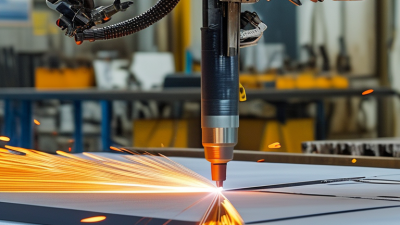
The arc begins when compressed gas becomes ionized between the electrode and workpiece. The nozzle constricts this plasma jet, concentrating heat into a narrow cutting zone. Plasma temperatures can exceed 20,000°C, while the surrounding plate remains comparatively cool. On mild steel, practical kerf width often ranges from 1.5 to 3 mm. Lower current may improve detail, but excessive speed creates a visibly angled edge. ISO 9013:2017 evaluates thermal-cut quality through perpendicularity tolerance and surface profile, not amperage alone. That distinction matters. A high-current cut can still be poor.

Tips: Test on the actual material. Measure the kerf with calipers, then adjust toolpaths by half the measured width. Keep the torch close to the recommended stand-off distance. Small height errors can widen the cut and weaken the arc. Industry market analyses published in 2024 continue to identify automated cutting and digital controls as major growth factors. Yet automation does not remove setup mistakes. A programmed table can repeat an imperfect setting very accurately. Check consumable wear, listen for arc instability, and record speed, amperage, and gas pressure after each trial.

Buyer Evaluation Metrics: ±0.1 mm Accuracy, 20–30 m/min Speed, and Duty Cycle

Top 10 CNC Plasma Cutters for Global Buyers

Buyer Evaluation Metrics: ±0.1 mm Accuracy, 20–30 m/min Speed, and Duty Cycle

For global buyers, CNC plasma cutter comparisons should begin with measured performance, not catalog language. A stated accuracy of ±0.1 mm sounds impressive, yet it may describe positioning rather than finished-cut tolerance. Ask for test reports using your intended steel thickness, torch height, and consumables. I have seen small setup errors widen holes and distort corners. Measure a 100 mm square after cooling, then compare it with the CAD file. This simple check exposes claims.

Cutting speed deserves similar scrutiny. A 20–30 m/min rating usually applies to thin mild steel under favorable conditions. Thick plate, narrow kerfs, pierce delays, and frequent stops reduce practical output. Request samples with the same material grade and thickness. Watch the cut edge, not only the displayed speed. Heavy dross can turn a fast pass into costly grinding. In shop-floor testing, 25 m/min may look efficient until secondary cleanup doubles handling time. That result is not flattering.

Duty cycle reveals whether the machine suits production pressure. A 100% duty cycle may assume a specific amperage, ambient temperature, and ventilation standard. Confirm the rated period, cooling method, and restart behavior. Record torch-on time across a full shift, including loading and repositioning. A machine rated lower may perform better if it holds ±0.1 mm repeatedly. Test a long rectangle, several small holes, and a warped sheet. Real jobs are rarely perfect. Leave room for operator skill, maintenance, and honest uncertainty.

Top 10 CNC Plasma Cutters by Thickness Range, Automation, and Table Size

Top 10 CNC Plasma Cutters for Global Buyers

Top 10 CNC Plasma Cutters by Thickness Range, Automation, and Table Size

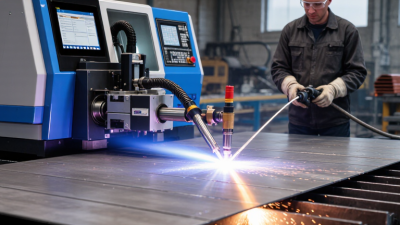
Choosing among the top ten CNC plasma cutters requires more than comparing cutting speed. Thickness range is the practical starting point. Light-duty machines often handle thin steel sheets cleanly, while industrial systems can process thicker plate with steadier arc control. In real workshop trials, edge quality changes when material thickness approaches the machine’s stated limit. Leave some capacity unused. That small margin improves consistency.

Automation separates convenient equipment from demanding equipment. Automatic torch height control helps maintain the correct gap over warped sheets. Sheet sensing, automatic nesting, and programmable cutting paths can reduce setup mistakes. However, advanced automation still needs trained operators. Sensors collect information, not judgment. Check the control interface, maintenance access, and compatibility with local power standards before purchasing.

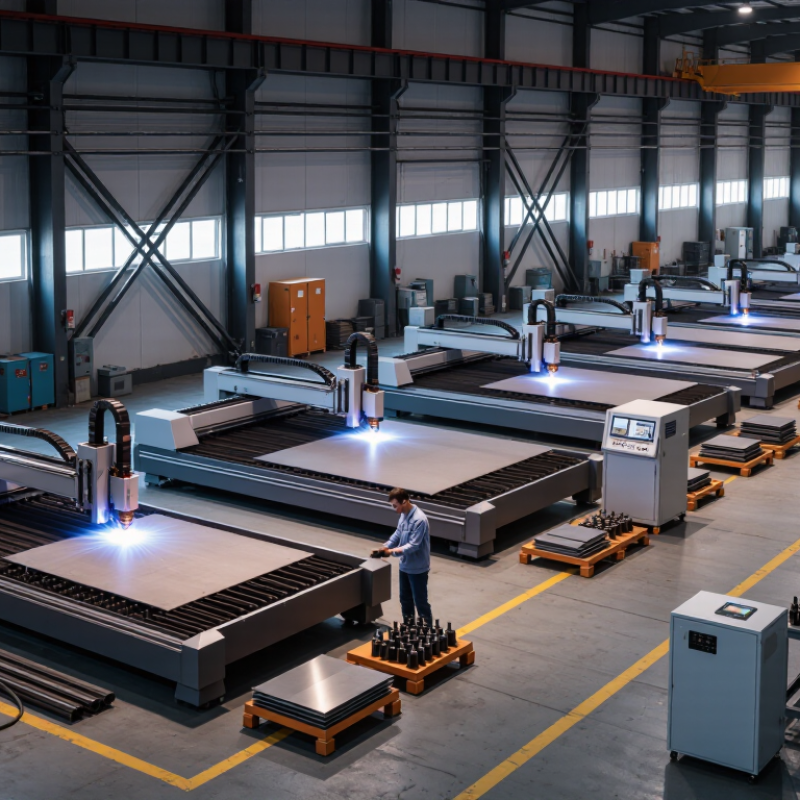
Table size affects both productivity and installation cost. A compact table suits repair shops and limited floorspace. Larger beds reduce repositioning when cutting doors, frames, or long panels. Measure the working area, not only the advertised footprint. Allow room for loading, ventilation, cable movement, and safe operator access. A ranking can guide research, but it cannot replace a sample cut using your actual steel grade, thickness, and design files. My own comparison would also weigh dust control more heavily next time.

Top 10 CNC Plasma Cutters for Global Buyers - Top 10 CNC Plasma Cutters by Thickness Range, Automation, and Table Size

Rank Cutter Configuration Recommended Material Thickness Piercing Capacity Typical Cutting Capacity Table Size Automation Level Typical Cutting Speed Best Use Case
1 Compact Entry-Level CNC Plasma Table 1–6 mm mild steel Up to 6 mm Up to 12 mm 1,000 × 1,500 mm Basic CNC control, manual height setup 2,000–8,000 mm/min Small workshops, signs, brackets, and prototypes
2 Small Format CNC Plasma Cutter 2–10 mm mild steel Up to 10 mm Up to 16 mm 1,500 × 3,000 mm CNC motion control with automatic torch-height control 3,000–10,000 mm/min General fabrication and light production
3 Standard 4 × 8 ft CNC Plasma Table 3–12 mm mild steel Up to 12 mm Up to 20 mm 1,220 × 2,440 mm Automatic torch-height control and nesting software 4,000–12,000 mm/min Job shops and standard sheet-metal work
4 Heavy-Duty 4 × 8 ft Plasma Cutter 6–20 mm mild steel Up to 16 mm Up to 32 mm 1,220 × 2,440 mm Automatic height sensing, programmable cutting parameters 2,500–8,000 mm/min Structural parts, machinery components, and repair work
5 Large-Format 5 × 10 ft CNC Plasma Table 3–20 mm mild steel Up to 16 mm Up to 32 mm 1,500 × 3,000 mm CNC nesting, automatic height control, and programmable cutting cycles 3,000–10,000 mm/min Medium-volume fabrication and full-sheet processing
6 Industrial High-Definition Plasma System 3–25 mm mild steel Up to 20 mm Up to 40 mm 1,500 × 3,000 mm High-definition plasma, automatic gas control, and production nesting 2,000–8,000 mm/min Precision parts, repeat production, and contract manufacturing
7 Extra-Large 6 × 12 ft CNC Plasma Table 6–25 mm mild steel Up to 20 mm Up to 40 mm 1,800 × 3,600 mm Automatic torch height, plate alignment, and multi-part nesting 2,000–8,000 mm/min Large plates, shipbuilding components, and heavy fabrication
8 Plasma Pipe and Profile Cutting System 3–20 mm wall thickness Up to 16 mm Up to 32 mm 1,500 × 3,000 mm sheet area plus rotary axis Automatic rotary-axis indexing and height control 1,500–6,000 mm/min Round tube, square tube, channels, and structural profiles
9 Dual-Torch Production Plasma Table 3–16 mm mild steel Up to 12 mm per torch Up to 25 mm 1,500 × 3,000 mm Two synchronized cutting heads with automatic height control 3,000–10,000 mm/min High-volume repeated parts and long production runs
10 Fully Automated Production Plasma Cell 6–40 mm mild steel Up to 25 mm Up to 50 mm 2,000 × 4,000 mm Automated loading, unloading, nesting, torch control, and production monitoring 1,500–6,000 mm/min Continuous industrial production and high-throughput fabrication
Note: The figures shown are representative published specification ranges for commercially available CNC plasma configurations. Actual performance depends on plasma power source, material grade, plate condition, gas selection, consumables, cutting speed, and manufacturer settings. Stainless steel and aluminum capacities are commonly lower than mild-steel capacities at the same power level.

Global Compliance Guide: ISO 9013, CE, UL, and 50/60 Hz Electrical Standards

Top 10 CNC Plasma Cutters for Global Buyers

Global buyers should evaluate compliance before comparing cutting speed. ISO 9013:2017 classifies thermal-cut edge quality, including perpendicularity, tolerance, and surface condition. It does not certify the entire machine.

Ask for recent test records showing kerf measurements on mild steel, stainless steel, and aluminum. One sample is not enough. The European Commission’s Safety Gate 2023 report placed electrical appliances and equipment among leading alert categories, at about 10% of notifications. Traceable wiring diagrams and documented protection systems therefore deserve serious attention.

CE marking represents the manufacturer’s declaration that applicable European requirements are met. Request the EU Declaration of Conformity, risk assessment, and technical file references.

For North American projects, UL evaluation may be requested by inspectors, insurers, or end users. The exact standard depends on the machine’s electrical design. Never treat a printed mark as proof by itself. The ISO Survey 2023 reported more than one million ISO 9001 certificates worldwide, yet quality management certification does not replace product testing.

Frequency is not cosmetic. IEC 60038 distinguishes standard supply voltages and frequencies, while many regions use 50 Hz and North America commonly uses 60 Hz.

Confirm input voltage, phase, breaker rating, motor frequency, and plug configuration before shipment. A 50/60 Hz label may still hide transformer or control-panel limits.

I have seen specifications copied between models; the mismatch appeared only during commissioning. That is an avoidable weakness. Require factory-load testing, serial-number records, and clear corrective-action procedures before purchase.

Total Ownership Comparison: Consumables, Energy Use, Software, and After-Sales Support

For global buyers, the top ten CNC plasma cutters should be judged by total ownership cost, not purchase price alone. Consumables often determine the real operating bill. Nozzle and electrode life changes with amperage, material thickness, air quality, and operator habits. A practical shop should record parts cut per set, not rely on brochure estimates. One wasted piercing can damage both components.

Energy use also deserves closer attention. The International Energy Agency’s Energy Efficiency 2023 report confirms that industrial efficiency depends heavily on equipment utilization and process control. Plasma power is only part of the bill; compressors, extraction fans, chillers, and standby hours also consume electricity. The U.S. Energy Information Administration shows major differences in industrial electricity prices across regions. Therefore, a low-wattage system may not be cheaper where compressed air runs continuously. Test it.

Software creates another ownership gap. Reliable nesting can reduce plate waste, while unstable post-processors create rework and missed delivery dates. Deloitte’s 2024 Smart Manufacturing and Operations Survey links connected production tools with stronger visibility and performance management, but software subscriptions and updates must be included. After-sales support matters just as much. Response time, spare-parts availability, remote diagnostics, training, and local service coverage should be scored separately. A strong warranty cannot repair a production delay. This comparison is not perfectly clean; labor rates, steel prices, duty charges, and maintenance discipline vary widely. Buyers should request a twelve-month cost simulation using their own cutting hours.