© 2025 Messer Cutting Systems, Inc.

Choosing a Portable Ev Station is less about chasing a gadget and more about reducing uncertainty between charging stops. The International Energy Agency’s Global EV Outlook 2024 reports that public charging points worldwide exceeded four million in 2023, with fast chargers growing by 55% that year. The network is expanding. Yet chargers are not always beside a hotel, workplace, or quiet roadside parking space when drivers need them.
A portable unit can add flexibility at home, on a trip, or at a temporary parking spot, provided a suitable power source is available. Imagine arriving late with a low battery and finding a compatible outlet in the garage. That convenience can matter. But charging speed depends on the station, the vehicle, the outlet, and electrical capacity; portable equipment is not a substitute for high-power public charging. Buyers should check connector compatibility, rated output, cable length, weather protection, and safety certifications before relying on any model. Small details count. A short cable can turn a convenient setup into an awkward one.
The IEA’s figures describe public infrastructure, not the performance of portable chargers, so they should not be used to promise specific charging times. That distinction is easy to miss. A Portable Ev Station may provide useful backup, especially where charging access is inconsistent, but it cannot create power where none exists. Consider your usual routes, parking options, and real charging needs before choosing one. Convenience is real, but so are its limits.
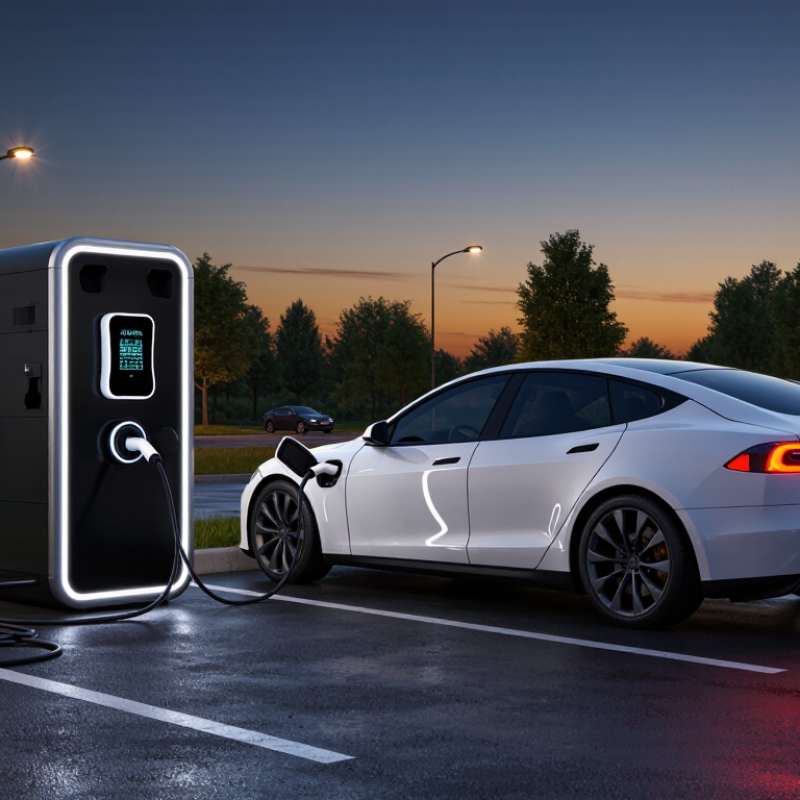
A portable EV charging station is a movable device that connects an electric vehicle to an electrical supply. In many cases, it is portable charging equipment, not a battery that stores energy. It has a cable, a connector for the vehicle, and a control unit that manages the connection. The term can be a little misleading. That distinction matters.
Most portable units draw AC power from a compatible outlet or other approved supply. The vehicle’s onboard charger then converts that power for its battery. Charging speed depends on the available circuit, the unit’s settings, and the vehicle itself. A compact device does not automatically mean fast charging. Sometimes, it simply makes charging more flexible.
Drivers may keep one in the trunk for travel, workplace parking, or a home without a fixed charging unit. Before plugging in, check the outlet’s condition and the equipment’s ratings; warm plugs, loose connections, or damaged cables are warning signs. Avoid assuming every household socket is suitable. Electrical capacity varies, and a qualified electrician can assess a permanent setup. Portable equipment is useful, but it still depends on a safe, reliable power source.
Why Choose a Portable EV Charging Station?
How a Portable EV Charging Station Works
A portable EV charging station is usually a compact AC charging unit and cable. It connects the vehicle to a compatible power source, such as a suitable household outlet. The unit checks the connection and signals how much current it can safely provide. The car’s onboard charger then converts incoming AC power into energy its battery can store. The portable unit manages the connection; it does not usually store electricity itself. Simple, but useful.
Charging speed depends on the outlet’s capacity, the car, and the unit’s settings. A standard outlet may add range slowly, while a dedicated circuit can support faster charging. Heat, a loose plug, or an overloaded circuit can affect performance, so follow the unit and vehicle instructions. Check the dashboard or charging display to confirm power is flowing. The word “station” can sound more powerful than the device really is, and that distinction is easy to miss.
Tips: Inspect the cable and plug before use. Avoid extension cords unless the manufacturer explicitly permits them. If a plug feels unusually hot, stop charging and check the setup with a qualified electrician. Don’t assume every outlet is suitable.
| Dimension | How It Works or What to Expect | Practical Benefit | Important Consideration |
|---|---|---|---|
| Basic operation | A portable AC charging unit connects a power outlet to the vehicle’s charging inlet. Its control and safety circuitry checks the connection and communicates the permitted current to the vehicle. | It can provide charging at home or at another location with a compatible, suitable power supply. | The vehicle’s onboard charger converts incoming AC power into DC power for the battery; the portable unit itself is generally not a DC fast charger. |
| Level 1 charging | In North America, Level 1 commonly uses a 120-volt outlet. A typical 12-amp draw provides about 1.4 kW before charging losses. | Can be convenient for overnight top-ups or vehicles driven relatively short distances each day. | Charging is slow. Actual charging speed depends on the circuit, the unit, the vehicle, and battery conditions. |
| Level 2 charging | Level 2 uses a suitable 208- or 240-volt supply. For example, 16 amps at 240 volts is about 3.8 kW, while 32 amps is about 7.7 kW. | Usually adds energy faster than Level 1 and may be useful where an appropriate outlet is available. | The outlet and circuit must be correctly rated for the unit and continuous load. Higher-current charging may require a dedicated circuit and qualified electrical work. |
| Estimated driving range added | As a rough illustration, Level 1 may add around 2–5 miles of range per hour; a 7.7 kW Level 2 supply may add roughly 20–30 miles per hour. | Helps estimate whether a portable unit can meet a particular daily charging need. | These are approximate estimates, not guarantees. Vehicle efficiency, charging losses, temperature, and the car’s charging limit can change the result substantially. |
| Safety and communication | The charging equipment signals its available current and typically includes protective functions such as ground-fault monitoring and temperature or fault detection. | Provides a controlled connection between the power source and the vehicle. | Use equipment that meets applicable local requirements, inspect cables and plugs, and avoid damaged outlets or unsuitable extension cords. |
| Portability and flexibility | The cable-and-control unit can be carried in the vehicle and connected to compatible outlets, sometimes using manufacturer-approved adapters. | Can serve as a backup or travel option when a permanent charging point is unavailable. | Portability does not guarantee access to an outlet, sufficient electrical capacity, or compatibility with every vehicle and plug type. |
| What determines charging speed? | Charging power is limited by the lowest-rated part of the system: the supply circuit, portable unit, vehicle onboard charger, or charging conditions. | Understanding the limits helps set realistic expectations before connecting. | A higher-rated portable unit cannot make a low-capacity outlet or vehicle charge faster than its limits allow. |
| Best-fit use cases | Often suited to occasional charging, backup use, and locations where a compatible outlet is available; a permanently installed unit may be preferable for frequent high-power charging. | Offers a practical option without assuming that every driver needs a fixed charging installation. | Check the vehicle manual, unit instructions, outlet type, local electrical rules, and available circuit capacity before use. |
A portable EV charger can make charging less dependent on finding a public station. Keep one in the car, and a suitable outlet at a destination may provide a useful overnight top-up. That matters on road trips, at vacation rentals, or when a regular charging spot is temporarily unavailable. Most portable chargers are compact control units, not batteries; they draw electricity from an outlet.
Flexibility is the main benefit. Many units support different charging currents or interchangeable plugs, so drivers can adapt to the outlets available. Check that the connector fits the vehicle and that the outlet can safely support the charger’s rated load. A standard household outlet may add only a modest amount of range over several hours. It is convenient, not necessarily fast.
There are limits. A charger cannot make a weak outlet deliver more power, and a shared circuit may trip if other appliances run at the same time. Still, there are limits. Before plugging in, inspect the cable and outlet for damage, and use outdoor equipment only in conditions allowed by its rating. Portability helps, but it also invites improvisation. I would avoid relying on an unfamiliar outlet until its condition and capacity are clear.
Key benefits of choosing a portable EV charger include charging flexibility and access to compatible outlets at home or while traveling.
How to read this: At an assumed efficiency of 3 miles per kWh, a typical 1.4 kW Level 1 setup adds about 4 miles of range per hour, while a 7.2 kW Level 2 setup adds about 22 miles. Actual charging rates vary by vehicle, outlet, circuit, and conditions. A portable charger offers flexibility; it does not guarantee faster charging.
A portable EV charging station is most useful when a fixed charger is unavailable, inconvenient, or temporarily out of service. Think of a rural guesthouse with an outdoor outlet, a weekend cabin, or a workplace parking area without dedicated charging. The International Energy Agency’s Global EV Outlook 2024 reports that public charging points exceeded four million worldwide in 2023, up more than 40% from 2022. That growth is significant, but chargers are not evenly distributed. A portable unit can provide flexibility where access remains patchy. It is a backup, not a magic fix.
Before a trip, check the unit’s output, connector compatibility, and the electrical supply at your destination. Battery-based stations have limited stored energy; portable EVSE units need a suitable power source and may charge slowly. A useful reality check: the word “portable” does not guarantee a full battery overnight. Match expectations to the vehicle and available power.
Tips: Test the setup at home before travelling, and confirm the outlet is suitable for the charger’s load. Keep cables clear of puddles, vehicle tires, and walking paths. A little planning helps; improvising at midnight is less ideal.
Why Choose a Portable EV Charging Station?
Factors to Consider Before Choosing One
A portable EV charging station can help when your usual charging point is unavailable, but its value depends on your driving routine. The International Energy Agency reported nearly 14 million electric car sales in 2023, about 18% of global car sales. More EVs mean more varied charging needs, not necessarily a need for every driver to carry extra equipment. Think about your typical daily distance, access to home charging, and how often you travel beyond familiar routes.
Check compatibility with your vehicle and the power sources you can safely access. Compare charging output, battery capacity, recharge time, cable length, and total weight; a compact unit may be easier to carry but hold less energy. Confirm that the unit has clear safety documentation and protection suited to your intended setting. A portable unit may also need recharging before a trip, an easy detail to overlook. It is not a replacement for planning reliable charging stops on long journeys.
Tips: Test the unit at home before relying on it away from home. Check the plug, cable reach, and estimated charging time against your vehicle’s manual. Keep a small margin in your plan; real conditions can reduce usable charge.
© 2025 Messer Cutting Systems, Inc.