Top Tips for Choosing the Best Wafer Roll Machine?
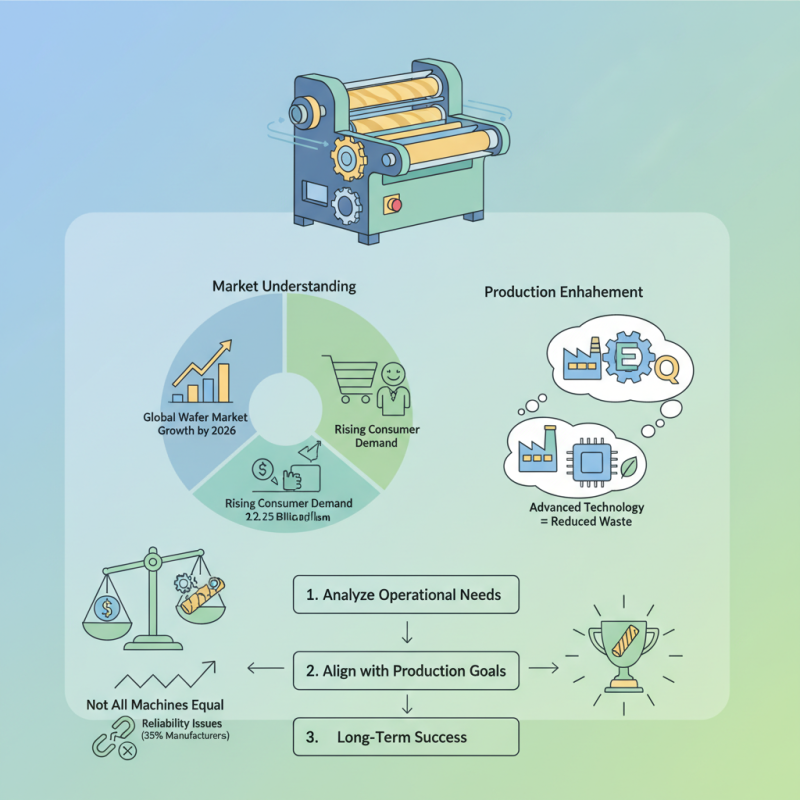
When selecting a Wafer Roll Machine, understanding the market is essential. The global wafer market is projected to reach USD 2.25 billion by 2026. This growth is driven by rising consumer demand for snack products. The right machine can significantly enhance production efficiency and product quality.
Investing in advanced technology can reduce waste. However, not all machines are built equally. Some features might seem beneficial but may not fit every production need. For instance, machines with high-speed capabilities may face challenges with consistency. Research shows that 35% of manufacturers experience issues with machine reliability.
Choosing a Wafer Roll Machine requires careful consideration. Balancing cost, features, and output quality is vital. While many options exist, a machine that meets specific business goals will yield better returns. Make sure to analyze operational needs before making a final decision. Ensuring the machine aligns with production goals is key to long-term success.
Understanding the Basics of Wafer Roll Machines
Choosing the right wafer roll machine is crucial for your production needs. Understanding the basics helps you make an informed decision. These machines are designed to produce crispy and delicious wafer rolls. They often come with various features and capabilities.
When selecting a machine, consider the production capacity. If you have high demand, a machine with a larger output is essential. However, if your needs are smaller, a compact model might suffice. Efficiency is key in any operation. It’s important to evaluate energy consumption as well.
Another tip is to analyze the machine’s maintenance requirements. Some models may require frequent adjustments or parts replacement. This can lead to unexpected downtime. Assessing customer feedback on reliability is also important. It provides insight into the experiences of other users.
Take your time to reflect on how the machine will fit into your workflow. Small design features can significantly impact usability and efficiency. Evaluate your production goals. The right wafer roll machine can optimize your operations, but the wrong choice can bring frustration.
Top Tips for Choosing the Best Wafer Roll Machine
| Feature | Importance Level | Recommended Option |
| Production Capacity | High | 300 kg/hour |
| Energy Efficiency | Medium | Minimal power consumption |
| Ease of Use | High | User-friendly interface |
| Durability | High | Stainless steel frame |
| Warranty | Medium | 2 years warranty |
| Maintenance Requirements | Medium | Monthly servicing |
Key Features to Look for in a Wafer Roll Machine
When selecting a wafer roll machine, it’s crucial to focus on specific features. The capacity of the machine should match your production needs. A report by industry analysts indicates that machines with a capacity of over 2000 pieces per hour dominate the market. This is vital for large-scale operations.
Temperature control is another key feature. Precise temperature control optimizes the wafer's texture and flavor. A study in the pastry industry shows that a temperature deviation of just 5°C can affect the final product significantly. Additionally, machines that are easy to clean may save time, but their design often complicates maintenance.
Finally, consider energy efficiency. A well-designed machine can lower operational costs. Reports suggest that energy-efficient models may reduce energy consumption by 30%. However, these machines may initially be more expensive. Balancing cost and features can be challenging, and careful consideration is needed.
Comparing Different Types of Wafer Roll Machines
When comparing different types of wafer roll machines, it’s essential to know the available options. There are two primary types: rotary and flat machines. Rotary machines often have higher efficiency, producing up to 1,000 rolls per hour. However, they may require more space. Flat machines, with a slower output, can be more affordable and compact. The choice depends on your production needs and available space.
Understanding the production capacity and the type of wafers you want to create is crucial. A recent industry report stated that the demand for wafer rolls is projected to increase by 8% annually. High-quality machines can make a significant difference in texture and taste. Consistency in product quality could be affected by machine design and temperature control. Some machines may not provide stable results, leading to product variability, which can disappoint customers.
In addition, consider maintenance and ease of use. Some machines have complex setups that require skilled labor. Keeping machine parts clean is vital for hygiene and longevity. Machines that are harder to maintain may hinder production efficiency. It’s a balance between cost, efficiency, and quality. Ensure to weigh these factors carefully before making a decision.
Evaluating Brand Reputation and Customer Reviews
When evaluating a wafer roll machine, brand reputation plays a significant role. A reliable brand often reflects quality and trust. Researching how long a brand has been in the market can offer insights into its stability. Newer brands might provide innovative features but may lack proven performance. Older brands might be more dependable, yet they may not always keep up with advancements.
Customer reviews are a goldmine of information. They offer real-life experiences from users. Check various platforms for feedback. Look for common themes among reviews, whether positive or negative. Pay attention to the consistency of praise or complaints. A machine may have a flashy design but might perform poorly in the long run. Users often mention issues like ease of use and maintenance. Understanding these factors can guide your decision.
However, not all reviews are completely honest. Some may have ulterior motives or biases. Be sure to discern which reviews represent genuine user experiences. A few negative comments can highlight potential problems. Yet, too many negatives may be a red flag. Balance is key in assessing feedback. Take your time to sift through user experiences, as they can provide a clearer picture of what to expect from a wafer roll machine.
Top Tips for Choosing the Best Wafer Roll Machine
This bar chart illustrates the factors to consider when choosing a wafer roll machine, based on customer feedback and brand reputation.
Considering Budget and Cost-Effectiveness in Selection
When selecting a wafer roll machine, budget is key. You should determine your price range early on. High-end machines offer great features, but they can strain your finances. Evaluate your needs before committing. Analyze both the initial cost and potential maintenance expenses.
Consider the cost-effectiveness of each option. A cheaper machine may save money upfront but could lead to higher repairs. Invest in quality components to reduce long-term costs. Look for machines that offer warranties. This can safeguard your investment.
Explore different manufacturers and compare prices. It’s essential to get quotes from multiple suppliers. Don't forget about shipping and installation fees. These can inflate your total budget. A detailed breakdown helps identify hidden costs. Seeking reviews may also highlight machines that waste resources or break easily.