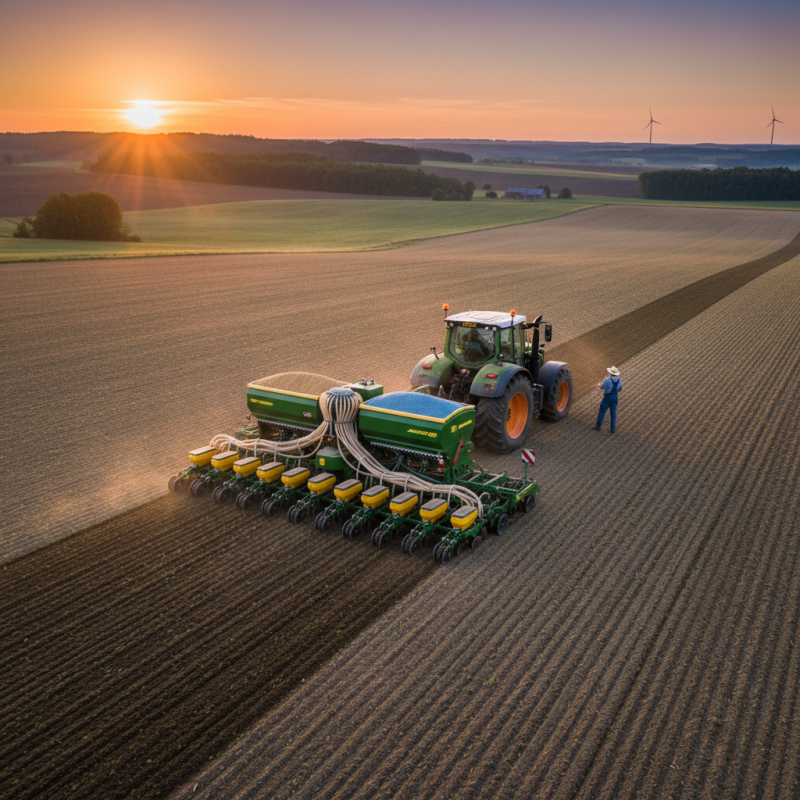
Top 5 Seed and Fertilizer Integrated Seeders for Efficient Farming?
Efficient farming requires innovative tools that enhance productivity. One such tool is the Seed and Fertilizer Integrated Seeder. This equipment combines sowing seeds with fertilizing, streamlining the planting process. Farmers can save time and reduce labor costs.
With various models available, choosing the right seeder can be overwhelming. Each seeder comes with unique features. Some are highly effective in specific soil conditions. Others might not perform as expected in different environments. Understanding these nuances is essential for optimal use.
The goal is not just efficiency, but sustainable farming practices. Farmers must reflect on their choices and adapt to changing conditions. Selecting the right Seed and Fertilizer Integrated Seeder is crucial in achieving this balance.
Top Features to Consider in Seed and Fertilizer Integrated Seeders
When considering seed and fertilizer integrated seeders, several key features stand out. First, the capacity of the seed and fertilizer hoppers is crucial. Larger capacities can reduce the frequency of refilling during planting. This is especially important for large-scale operations. A seeder with adjustable settings allows for varying seed rates and fertilizer application based on crop requirements.
Another vital feature is the precision of the planting mechanism. Accurate seed placement affects crop yield significantly. Seeders that offer uniform depth and spacing can lead to better growth conditions for plants. Additionally, a system that minimizes soil disturbance is preferred. This helps in maintaining soil structure and promotes healthy root development.
While high-tech models may offer advanced options, simplicity often trumps complexity. Newer farmers might find fully automated features daunting. Moreover, the durability of materials used in construction is essential. Integrated seeders should withstand harsh conditions. Regular maintenance is still required, regardless of design. Balancing efficiency with ease of use is a challenge in choosing the right equipment.
Comparison of Leading Seed and Fertilizer Integrated Seeder Models
In the realm of modern agriculture, seed and fertilizer integrated seeders stand out for their efficiency and precision. Research indicates that these machines can improve planting accuracy by up to 30%, which leads to better crop yields. A recent industry report suggests that effective integration of seed and fertilizer can result in an average increase of 15% in overall productivity.
When selecting an integrated seeder, consider its adaptability to various soil types. This is crucial as different crops require unique planting depths and nutrient application. Maintenance plays a significant role too. Regular checks on the seeder mechanism ensure consistent performance. Outdated models may struggle with efficient fertilizer distribution, impacting crop health.
Tip: Regular training for operators can drastically reduce errors during planting. Understanding the machine functions helps in avoiding costly mistakes. Remember, downtime during the planting season can be detrimental to your yield. Evaluate the user experience and maintenance history of the models you're considering. A more user-friendly model often translates to better efficiency in the long run.
Benefits of Using Integrated Seeders for Modern Agriculture
Integrated seeders have revolutionized modern agriculture by combining sowing and fertilization into a single operation. According to a report by the Food and Agriculture Organization (FAO), using integrated seeders can reduce labor costs by up to 30% while increasing planting efficiency dramatically. Farmers experience improved crop yields because seeds are placed accurately. This precision ensures optimal spacing and depth, leading to better resource utilization.
These tools also enhance soil health. By applying fertilizers at planting, they minimize nutrient loss. A study published in the Journal of Agriculture highlights that this method can improve nutrient uptake by crops by approximately 20%. Farmers also noted improvements in soil moisture retention, which is critical during dry spells.
Tip: Regularly calibrate your integrated seeder for optimal performance. Also, consider the specific soil needs of your crops to maximize nutrient efficiency. It's crucial to monitor crop response closely to adjust your practices if necessary. While integrated seeders present many advantages, more training may be required for proper handling. Mismanagement can lead to uneven crop distribution. Always be prepared to adapt your practices based on field conditions and crop feedback.
Top 5 Seed and Fertilizer Integrated Seeders for Efficient Farming
| Model | Seed Capacity (liters) | Fertilizer Capacity (liters) | Working Width (meters) | Weight (kg) | Key Features |
| Model A | 300 | 150 | 3 | 500 | GPS Guidance, Adjustable Depth |
| Model B | 250 | 180 | 2.5 | 450 | Hydraulic Control, Easy Calibration |
| Model C | 320 | 200 | 3.5 | 600 | Precision Metering, Easy Maintenance |
| Model D | 280 | 160 | 3 | 550 | Real-time Monitoring, Low Soil Disturbance |
| Model E | 290 | 170 | 3.2 | 520 | Variable Rate Technology, User-friendly Interface |
Maintenance Tips for Optimal Performance of Integrated Seeders
Maintaining integrated seeders is crucial for achieving maximum efficiency. Regular maintenance ensures optimal performance, helping farmers reduce downtime. Data from the American Society of Agricultural and Biological Engineers suggests that well-maintained equipment can improve planting precision by up to 15%.
Farmers should conduct daily checks on seed hoppers. Ensure no clogs exist before planting. Regularly inspect the system for wear and tear. Minor issues can quickly escalate into major problems if ignored. Lubricating moving parts, such as gearboxes and bearings, is essential. Neglecting this can increase friction and lead to unexpected breakdowns.
Cleaning equipment after each use is equally important. Residue build-up can damage components over time. Field data indicates that most failures occur due to inadequate cleaning. Furthermore, calibrating seeders before each planting season helps maintain accuracy. Different seeds may require different settings, and failing to adjust can result in uneven distribution. This can critically affect crop yields.
Case Studies: Success Stories with Integrated Seed and Fertilizer Seeders
Integrated seed and fertilizer seeders have transformed modern agriculture, addressing both efficiency and sustainability. A recent study by the Food and Agriculture Organization (FAO) revealed that these seeders can improve crop yields by up to 20%. Farmers utilizing these technologies report that they reduce the time spent on planting and fertilization, allowing for better management of resources.
In a case study from the Midwest, a farmer successfully adopted an integrated seeder and noted significant improvements. He achieved a 15% reduction in fertilizer costs and a crop yield increase of 25%. However, challenges remain. Not all farmers have the technical expertise needed for maintenance and calibration. Moreover, initial costs can be a barrier for small-scale operations. This highlights a need for accessible training and support in the adoption process.
In another example from South America, a cooperative implemented integrated seeders and saw their soil health improve over time. They measured increased organic matter and reduced erosion rates. Despite these gains, some members struggled with the transition, pointing out the steep learning curve associated with new technologies. This indicates there is room for improvement in creating user-friendly solutions.