© 2025 Messer Cutting Systems, Inc.

Choosing the right Fiber Laser Cutter supplier can shape production quality, delivery stability, and long-term operating costs. Global buyers need more than attractive specifications. They should examine cutting accuracy, laser source quality, machine durability, software support, and after-sales service.
A reliable supplier should explain real performance clearly. Ask about cutting stainless steel, carbon steel, aluminum, and brass at practical thicknesses. Request sample cuts, energy-consumption data, warranty terms, and installation details. A factory demonstration can reveal edge quality, piercing speed, and vibration control. Small details matter, such as nozzle availability and response time for technical support.
Dr. Valentin Gapontsev, a pioneer of industrial fiber lasers, described fiber lasers as “the future of industrial lasers.” His view helps explain the technology’s growing role in modern metal fabrication. However, advanced technology alone does not guarantee a dependable purchase. Supplier experience, engineering capability, operator training, and regional service coverage remain essential.
Some buyers focus too heavily on initial price. That can be a costly mistake. A cheaper machine may require longer setup times, frequent maintenance, or expensive replacement parts. Yet even premium suppliers are not perfect. Performance can vary with material condition, operator skill, and factory environment. Buyers should compare verified results instead of trusting polished brochures.
This guide evaluates leading Fiber Laser Cutter suppliers for global buyers. It considers machine configuration, production capacity, customization, certifications, customer support, and value over time. The goal is practical guidance, not exaggerated claims. Each supplier deserves careful review before a purchasing decision.
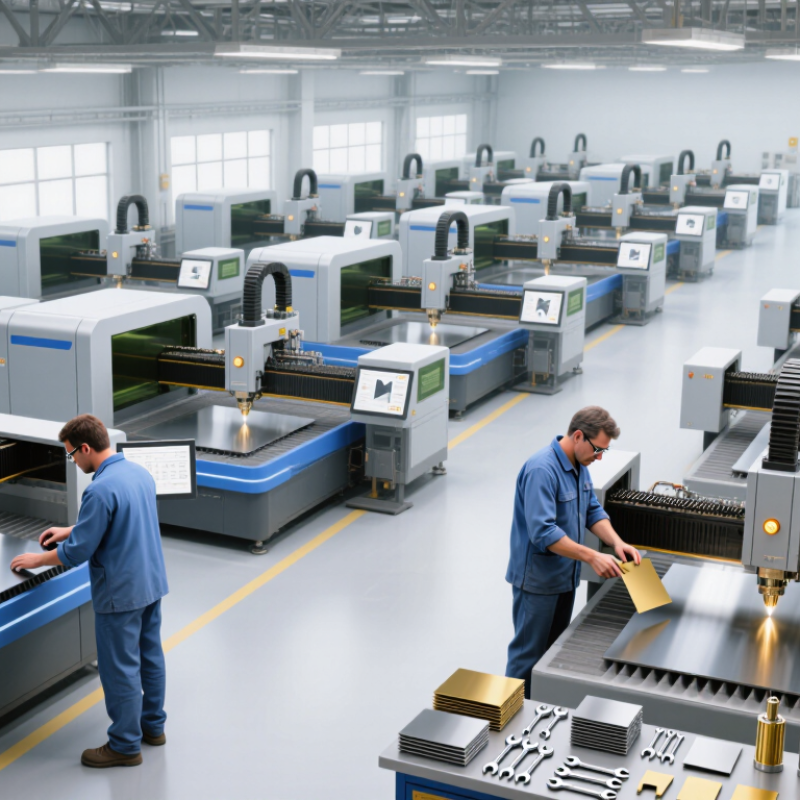
A top fiber laser cutter supplier understands production, not just machine specifications. Their engineers ask about material grades, sheet thickness, daily workload, and required edge quality. This practical questioning reveals whether the proposed system fits the buyer’s factory. A fast laser is not always the right laser.
Reliable suppliers provide clear cutting data, realistic tolerances, and documented testing. They should explain laser power, cutting head options, table design, software compatibility, and expected maintenance intervals. Sample cuts matter. A 10-millimeter steel test may look excellent, while thin stainless steel exposes heat distortion or rough edges. Demonstrations can mislead.
Strong technical support separates serious suppliers from ordinary sellers. Look for installation guidance, operator training, spare-parts planning, and responsive troubleshooting. Service records and inspection documents add confidence. Regional electrical, safety, and environmental requirements also deserve careful attention. A supplier should communicate these responsibilities plainly, without promising effortless compliance.
Even experienced buyers can overlook downtime costs. A lower purchase price may become expensive after repeated nozzle changes, delayed repairs, or weak software support. No supplier gets every detail right. The real test is how openly they discuss limitations, warranty conditions, delivery risks, and possible design changes. Visit a working installation when possible, inspect cut samples under magnification, and ask for references from comparable production environments.

A top fiber laser cutter supplier is evaluated through more than machine price alone. This practical procurement scorecard emphasizes cutting accuracy and quality, equipment uptime, service responsiveness, total cost of ownership, material flexibility, delivery and training, and safety compliance. The percentages represent an illustrative buyer evaluation model and total 100%.
Global fiber laser cutter purchasing requires more than comparing machine prices. MarketsandMarkets estimates the fiber laser market could grow from about USD 5.6 billion in 2023 to USD 11.1 billion by 2028. This expansion attracts capable manufacturers and weaker assemblers. Buyers should verify cutting tests, component traceability, and production references before signing contracts. Ask suppliers to cut your actual steel or aluminum samples. Inspect edge dross, kerf width, piercing time, and dimensional accuracy. A polished showroom sample proves little.
Technical capability should match the intended workload. Review laser power stability, motion accuracy, cooling performance, software compatibility, and nozzle-change procedures. The International Organization for Standardization identifies ISO 9001 as a framework for consistent quality management, but certification alone cannot guarantee reliable machines. Request recent calibration records, acceptance-test procedures, and documented maintenance intervals. Small details matter. A poorly sealed control cabinet can create expensive downtime in dusty workshops.
After-sales support often separates a dependable supplier from a risky one. Deloitte’s 2024 manufacturing outlook highlights resilience, skilled labor, and digital monitoring as major operational priorities. Therefore, evaluate remote diagnostics, spare-parts availability, engineer response times, and operator training. Confirm whether manuals are clear and translated accurately. Check warranty exclusions carefully. A low quotation may hide installation costs, software limitations, or delayed parts. My own practical concern is simple: suppliers often promise lifetime support, yet contracts rarely define response deadlines. Put those promises in writing, and test communication before payment.
Top Fiber Laser Cutter Suppliers for Global Buyers
Supplier selection changes by machine type, production scale, and destination market. Original equipment manufacturers usually offer deeper engineering control and customization. Specialized distributors provide faster local support and stocked replacement parts. System integrators are useful when cutting must connect with loading, nesting, or factory software.
Regional strengths matter. East Asian suppliers often combine broad model ranges with competitive manufacturing costs. European suppliers typically emphasize process stability, automation, and documented compliance. North American suppliers commonly provide application engineering and responsive service networks. MarketsandMarkets estimates the laser cutting machine market could grow from about USD 5.2 billion in 2023 to USD 8.7 billion by 2028. That expansion increases supplier choice, but also raises comparison risks.
Market coverage should be measured beyond sales offices. Check installation records, local technicians, training hours, spare-part locations, and response times. Ask for cutting samples using your actual steel thickness and gas settings. Grand View Research reports continued double-digit growth for the global fiber laser market, driven by metal fabrication, automotive, and electronics production. These sectors need stable power, repeatable kerf quality, and software support. A low purchase price can hide costly downtime. My practical view is less perfect: supplier websites often overstate service coverage, while buyers sometimes ignore operator training. Verify both sides. Request references from factories with similar materials, shifts, and export requirements.
| Supplier Type | Primary Product Focus | Common Laser Power Range | Typical Working Area | Regional Strengths | Typical Market Coverage | Best Fit for Buyers |
|---|---|---|---|---|---|---|
| Large-scale industrial manufacturers | High-speed sheet, tube, and structural-steel cutting systems | 6–30 kW for mainstream industrial configurations | 3,000 × 1,500 mm to approximately 12,000 × 2,500 mm | Strong production capacity in East Asia, Europe, and North America | Global sales networks, regional service centers, and distributor channels | Automotive, construction equipment, shipbuilding, and large metal-fabrication plants |
| Mid-market machine builders | General-purpose 2D fiber laser cutters for job shops and manufacturers | 1–12 kW | Typically 3,000 × 1,500 mm or 4,000 × 2,000 mm | Broad availability in China, Turkey, Italy, Germany, and other manufacturing centers | Asia-Pacific, Europe, the Middle East, Africa, and Latin America | Contract manufacturers, sheet-metal processors, and equipment wholesalers |
| Entry-level and compact equipment suppliers | Compact flatbed cutters for light fabrication and prototyping | 1–3 kW | Approximately 1,500 × 3,000 mm to 2,000 × 4,000 mm | Strong price competitiveness from Asian production bases | Local workshops and import markets requiring lower initial investment | Small workshops, vocational schools, maintenance departments, and startup manufacturers |
| Tube and profile cutting specialists | Dedicated tube, pipe, angle, channel, and rectangular-profile laser systems | 2–12 kW | Tube lengths commonly range from 3,000 to 12,000 mm | Strong demand and engineering expertise in Europe, China, North America, and India | Construction, furniture, fitness equipment, agricultural machinery, and automotive supply chains | Buyers processing high volumes of round, square, rectangular, or open-section profiles |
| Automation-focused integrators | Laser cutting cells integrated with loading, unloading, storage, bending, or robotic handling | 3–20 kW, depending on the production line | Standard beds plus customized layouts for factory integration | Advanced automation expertise in Germany, Italy, Japan, South Korea, and North America | High-volume factories with digital production and traceability requirements | Manufacturers prioritizing labor reduction, repeatability, throughput, and unmanned operation |
| Regional distributors and service partners | Multi-brand machine supply, installation, spare parts, training, and after-sales support | Usually 1–20 kW, based on the selected machine platform | Varies by machine configuration and local customer demand | Strong local support in North America, Europe, Southeast Asia, the Middle East, and Latin America | Country-level and regional markets where local maintenance response is important | Buyers requiring local commissioning, operator training, financing, and shorter service response times |
| Application-specific solution providers | Customized systems for stainless steel, aluminum, copper, galvanized sheet, or specialized fabrication | 2–15 kW, selected according to material, thickness, and required cycle time | Configured around the required part size and production workflow | Engineering-led markets in Europe, North America, East Asia, and India | Niche industrial segments with demanding process, quality, or compliance requirements | Buyers needing validated cutting parameters, custom tooling, process testing, or specialized automation |
Choosing among top fiber laser cutter suppliers requires more than comparing advertised wattage. In purchasing reviews, I examine cutting thickness, repeatability, acceleration, and energy use together. A powerful source may cut thick plate quickly, yet perform poorly on thin stainless steel. Request sample cuts using your actual materials. Inspect edge quality, burrs, heat marks, and cycle time. Photos are not enough.
Machine price is only the opening figure. Calculate lenses, nozzles, filters, assist gas, electricity, software, installation, and operator training. Ask suppliers for maintenance intervals and realistic replacement costs. A useful comparison uses cost per production hour, not only cost per machine. Include expected downtime. One missed delivery can cost more than several routine repairs. The math may look simple, but many quotes hide shipping, commissioning, or local taxes.
Service quality often separates a reliable investment from an expensive interruption. Check response times, spare-parts availability, remote diagnostics, and technician coverage in your region. Ask for written service terms, not informal promises. Speak with current users about support after installation, when problems become less convenient. Be cautious with optimistic uptime claims; they may exclude setup and scheduled maintenance. I would also test the software interface personally. Small delays in nesting or parameter changes become expensive across hundreds of jobs. Some comparisons still miss operator learning time, which is an uncomfortable but real ownership cost.
Choosing a fiber laser cutter supplier starts with your material, thickness, work area, and output target. Record these details before requesting quotations. A 3,000 x 1,500 mm bed may suit sheet work, while tube processing needs different equipment. Ask for cutting samples using your actual steel or aluminum. Review edge smoothness, heat marks, pierce time, and dimensional accuracy. Request test videos with dates, material grades, and machine settings. Photos alone prove little. This step shows whether the supplier understands your process, not just its catalog.
Evaluate technical and commercial reliability together. Check laser source specifications, cutting-head maintenance, electrical standards, software compatibility, and spare-parts availability in your region. Ask for installation training, response times, warranty limits, and remote troubleshooting procedures. A clear quotation should separate machine cost, shipping, insurance, commissioning, and optional tools. Confirm packing details and delivery milestones in writing. Speak with recent customers if possible, especially those operating similar shifts. I once underestimated training time; the machine arrived on schedule, but production still waited. That mistake is easy to repeat.
Tips: Build a supplier scorecard. Give each candidate points for sample quality, documentation, service coverage, payment security, and total ownership cost. Compare three offers using identical specifications. Check local safety and electrical requirements. Before final payment, inspect serial records, acceptance criteria, and included accessories. Keep a contingency budget for tooling and electrical adjustments. A cautious purchase may feel slower, but unclear promises usually cost more later.
© 2025 Messer Cutting Systems, Inc.