© 2025 Messer Cutting Systems, Inc.

China’s anchor drilling market is shaped by demanding ground conditions, infrastructure growth, and the need for dependable equipment. An Anchor Drill Rig must do more than reach a target depth. It must hold alignment, manage drilling force, and perform steadily where access is tight or rock varies sharply. Buyers comparing China’s top manufacturers and suppliers should look closely at rig configuration, anchoring method, service support, and documented field performance.
The Global Wind Energy Council’s Global Wind Report 2024 recorded 117 GW of new wind capacity worldwide in 2023, bringing total installed capacity above one terawatt. That figure is not a direct measure of anchor-rig sales. It does, however, show the scale of infrastructure work that can require ground investigation and foundation drilling. For technical context, the U.S. Federal Highway Administration’s Ground Anchors and Anchored Systems guidance explains design and construction considerations for anchored structures. Specifications matter. So does the ground beneath the machine.
Engineering author Henry Petroski wrote, “Science is about knowing; engineering is about doing.” It is a useful reminder for evaluating an Anchor Drill Rig: brochure specifications need to meet real site conditions. Ask suppliers for verifiable test data, maintenance records, and examples from comparable projects. A polished catalogue is not field evidence. And one limitation deserves attention: public reports rarely isolate anchor-drill-rig demand from broader construction equipment markets. Careful buyers should treat market claims accordingly.
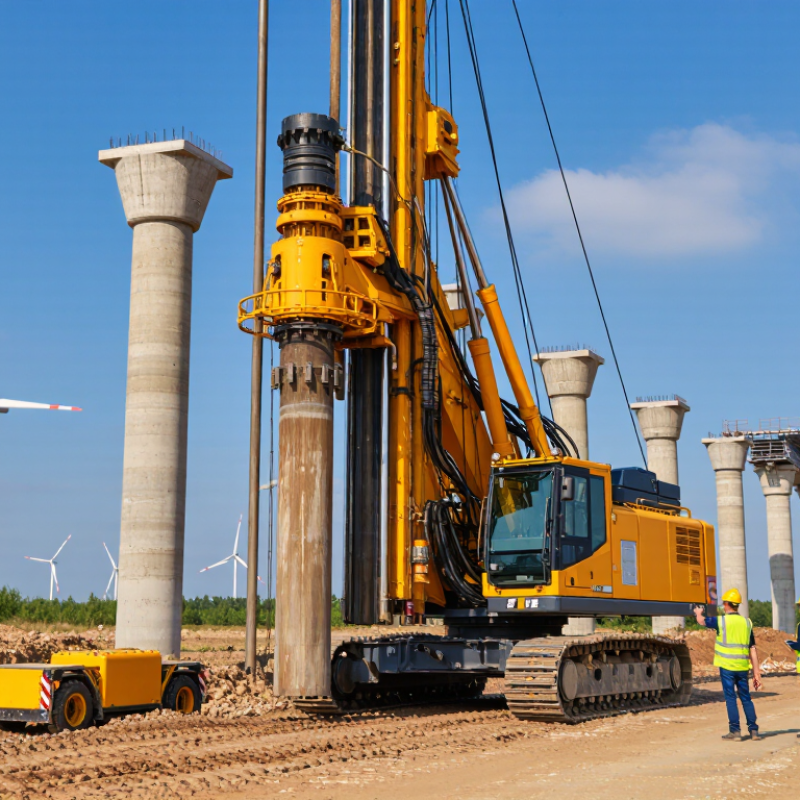
Anchor drill rigs install holes for soil nails, rock bolts, and prestressed ground anchors. The three main systems deliver drilling energy differently. Rotary rigs apply torque and flushing water or air, making them useful in soil, weathered rock, and mixed ground. They can produce clean, controlled holes, but progress may slow in hard formations.
Top-hammer rigs strike the drill string from behind the bit. They suit shorter holes in competent rock, where fast percussion helps maintain production. Down-the-hole rigs place the hammer near the bit, reducing energy loss along long drill rods. This often favors deeper holes and hard rock. Not interchangeable. Fractured layers can blur these categories, so site trials matter.
Rig selection also affects anchor quality, not just drilling speed. In its Geotechnical Engineering Circular No. 4, Ground Anchors and Anchored Systems, the U.S. Federal Highway Administration describes proof testing at up to 1.33 times the design load. That benchmark makes accurate hole placement and reliable installation important. For buyers comparing Chinese suppliers, ask how the rig handles casing, flushing, and changing ground conditions. Check those details. A compact rig may reach a steep slope easily, yet struggle when the hole crosses loose soil into rock. I would treat published capacity figures as starting points, not guarantees; the geology can make a tidy specification look less tidy.
China Top Anchor Drill Rig Manufacturers and Suppliers
Key Rig Specifications: Hole Diameter, Torque, Feed Force, and Drilling Depth
When comparing anchor drill rigs, match the rated hole diameter to the anchors and tools your projects actually require. A larger capacity can be useful, but it may add weight and cost without improving everyday work. Check whether the stated diameter applies to the complete drilling system or only certain tooling. That detail matters. Torque helps maintain rotation in dense or fractured ground, while feed force pushes the drill string forward. These figures work together, so judging either one alone can be misleading.
Drilling depth should reflect the site’s ground conditions, not just the deepest number on a specification sheet. Rod length, hole stability, and equipment setup can all limit practical reach. Ask suppliers how ratings were tested and request operating data for comparable ground. A neat table rarely shows the whole story; real conditions vary, and specifications can leave important questions unanswered.
Tips: Compare the same test conditions across models. Confirm continuous and peak torque separately, and ask how feed force changes over the stroke. Check tooling compatibility, service access, and transport dimensions before choosing. A short trial in representative ground can reveal issues that brochures miss.
China’s anchor drill rig suppliers cover hydraulic crawler rigs, compact trailer units, and truck-mounted systems for slope stabilization, foundation work, and tunneling. Product comparisons should go beyond drilling depth. Buyers need rated torque, feed force, mast stroke, rod handling, and compatibility with local anchors. Ask for test records, wear-part lists, and service intervals. Small details matter. A rig that fits a narrow road may still struggle on fractured rock.
Production capability is visible in repeatable assembly, traceable components, and documented load testing, not just factory size. China’s National Bureau of Statistics reported infrastructure investment growth of 5.9% in 2023, indicating a substantial domestic project base, though not a direct measure of anchor-rig output. The General Administration of Customs reported mechanical and electrical exports of RMB 13.92 trillion that year, up 2.9%; this signals broad export infrastructure, not rig-specific sales. Suppliers should provide clear packing dimensions, spare-part lead times, and manuals suited to overseas crews. Still, catalog claims can flatter reality. Compare specifications with a site trial where possible, and check whether after-sales support reaches the actual work location.
Ground anchor proof testing checks whether an installed anchor can sustain the required load without excessive movement. FHWA-based project specifications commonly take proof loads to about 1.33 times the design load, though the approved test plan governs each job. That factor is not a guarantee of performance.
A typical test uses a calibrated hydraulic jack, a stable reaction frame, and displacement gauges positioned to measure anchor movement. Load is applied in controlled increments, with readings recorded at each stage and during specified hold periods. Watch the gauge closely. Unexpected movement or continuing creep can signal a problem that needs investigation, not a quick adjustment to the paperwork. Test records should identify the anchor, equipment calibration, load steps, hold times, and measured displacement.
Good testing also depends on sound installation. Drilling conditions, tendon placement, grout return, and curing can all affect the result. For a rig supplier or contractor, reliable equipment helps crews maintain the planned hole geometry and work consistently, but it cannot replace inspection or competent testing. Site conditions vary, and a clean test sheet may still leave questions if readings or field notes are incomplete. That part is easy to overlook.
Selecting an anchor drill rig supplier requires more than comparing quoted prices. Ask for current certificates and confirm their scope, issuing body, and validity dates. Documents matter. For the intended ground conditions, request reports naming the tested configuration, operating limits, and measurement method. A neat certificate is not proof that every component was tested. Check traceability. Serial numbers, dates, and equipment descriptions should match the proposed rig. Where details are missing, ask for clarification in writing.
Spare-parts support is easier to judge with a parts list, stated lead times, and clear ordering procedures. Ask which wear items are held locally, such as seals, hoses, and drill-head components. Availability can change. After-sales support should include named technical contacts, response hours, remote troubleshooting, and an outline of technician visits.
Request sample maintenance records or a commissioning checklist to see how handover works in practice. During evaluation, speak with the service team, not only sales. It may reveal gaps. Supplier claims still need verification. Even good paperwork cannot predict every delay, so leave room for uncertainty.
© 2025 Messer Cutting Systems, Inc.