© 2025 Messer Cutting Systems, Inc.

Buying a Ti-6Al-4V (Grade 5) Titanium Bar is not just a matter of comparing prices. The alloy is valued for its strength-to-weight ratio, corrosion resistance, and performance in demanding applications. Yet those benefits depend on choosing material that suits the job. A bar for a machined aerospace component may have different requirements from one used in a marine fitting or medical equipment.
Start with the details. Confirm the alloy designation, requested dimensions, product form, and applicable material documentation. Ask the supplier how the bar’s chemistry and mechanical properties are verified, and whether inspection records can be provided. Check tolerances, surface condition, and the cutting allowance you may need. A small mismatch in diameter can mean extra machining, wasted stock, or delays. Not every supplier describes these details in the same way.
This guide presents seven practical tips for evaluating suppliers and material before placing an order. It covers specifications, traceability, testing, condition, machining needs, supplier experience, and total cost. These checks can make a purchase more predictable, but they cannot replace engineering review. Requirements vary. If a specification is unclear, pause and confirm it with your materials engineer or end user. That extra conversation may feel slow, but it is usually cheaper than discovering a problem after the bar has been cut.
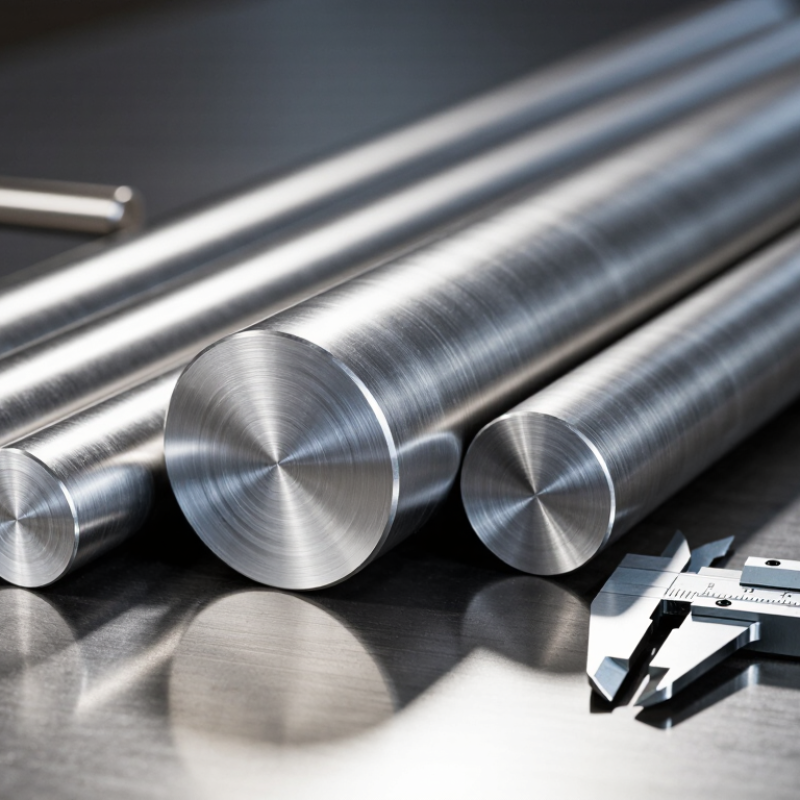
Ti-6Al-4V Grade 5 is an alpha-beta titanium alloy. Its nominal composition is about 6% aluminum, 4% vanadium, with titanium making up most of the remainder. Aluminum helps stabilize the alpha phase, while vanadium supports the beta phase. The balance between them gives the alloy a useful combination of strength and formability. Small composition variations can occur within applicable specifications, so confirm the material certificate rather than relying on the grade name alone.
Grade 5 is valued for its high strength-to-weight ratio and resistance to corrosion in many environments. Its density is about 4.43 grams per cubic centimeter, noticeably lower than steel. A cut bar feels substantial, but it is lighter than a similarly sized steel bar. Mechanical properties depend on product form, heat treatment, and testing requirements. Check the supplier’s stated condition and minimum values. A single headline strength figure can be misleading.
It is not effortless to machine. Titanium’s low thermal conductivity concentrates heat near the cutting edge, so tooling and feed conditions matter. The alloy can also gall during contact with other surfaces. That detail is easy to overlook. For a purchase, match the bar’s diameter, tolerance, surface condition, and certification to the intended part. Composition matters, but it does not tell the whole story.
Before requesting Ti-6Al-4V Grade 5 bar, define the finished part’s dimensions and how much stock machining will remove. Specify diameter or width and thickness, length, straightness, and dimensional tolerances. For round bar, include the required diameter; for flat or square stock, list each side separately. Small details matter. A drawing that says “standard size” can leave room for costly assumptions.
Then connect the size and shape to the job. A long, slender bar may need tighter straightness control, while a machined aerospace component may require extra material for facing and turning. ASTM B348/B348M, the specification for titanium and titanium-alloy bars and billets, lists Grade 5 minimum tensile strength of 895 MPa and yield strength of 828 MPa for annealed material. These figures help screen material, but they do not replace design allowables or application-specific engineering review. Ask whether the bar will be cut, forged, or machined, and state the required condition and inspection documents. A little extra machining stock can help; too much increases weight, material cost, and cutting time. The trade-off is easy to overlook.
A dependable purchase begins with the exact specification, not just the Grade 5 label. For bar stock, confirm whether ASTM B348 applies and check the required revision. Compare the purchase order with the supplier’s material test report.
It should identify the alloy and report chemistry, mechanical properties, heat-treatment condition, and applicable test units. The grade name alone is not enough. Confirm that the reported results meet your order’s requirements; a generic certificate may not cover additional customer specifications.
Traceability matters. Check that the heat or lot number on the report matches the bar, bundle tag, or shipping documents. Keep a clear link between each received piece and its paperwork, especially if bars are cut before inspection. Look for mismatched numbers, missing pages, or unclear revisions.
A certificate can appear complete and still leave a gap. If a marking is hard to read, pause and request clarification rather than guessing. Retain the records with receiving and inspection details. Requirements can vary by application, so verify them before the material is released for production.
When buying Ti-6Al-4V Grade 5 titanium bar, ask how the supplier controls each production lot. A useful quality system links the bar’s heat number to its material test report, inspection results, and shipping documents. Check that the number on the bar or bundle matches the paperwork. Keep it traceable.
Review the reported chemistry and mechanical properties against your purchase specification, not just a generic Grade 5 description. Confirm the report identifies the test method, sample location, and acceptance limits. Dimensional inspection should cover the sizes that matter to your machining plan, such as diameter, straightness, and length. If ultrasonic or other nondestructive testing is required, verify its scope and acceptance criteria before ordering. The details count.
Ask for evidence that measuring equipment is calibrated and that nonconforming material is identified and kept separate. Inspection records should show dates, lot identification, and actual results—not only a checked box. A polished certificate can still leave gaps. I would request a sample report and compare it with the bar marking before approving a larger shipment. One imperfect detail deserves a question: records may describe a sampled piece, not every bar. Agree on sampling frequency and incoming checks in writing, especially when the material will be machined into critical components.
Evaluate supplier quality controls and inspection records using this illustrative buyer-priority scale. Scores are guidance, not supplier ratings or requirements set by a standard.
Check that records identify the material heat and product, match the purchase specification, and are traceable to the bars supplied. Confirm applicable test methods and acceptance criteria against your order and governing specification.
When comparing prices for Ti-6Al-4V Grade 5 titanium bar, make sure each quote covers the same specification. Match diameter, length, tolerance, surface condition, and required inspection documents. A low price may exclude cutting, testing, or protective packaging. Check whether certification is included and whether the material’s heat and batch details can be traced.
Lead times need the same careful comparison. Ask whether the bar is in stock or must be produced, and confirm the stated date applies to your exact size and quantity. Stock can still require time for cutting and inspection. Get the expected dispatch date in writing. Small detail, big difference. I once underestimated how much cut-to-length work could affect a delivery plan; it is easy to overlook.
Compare delivery conditions, not just freight costs. Confirm who arranges transport, how the bars will be packed, and whether delivery is curbside or to a specified receiving area. Long bars may need special handling, and damaged ends can create extra inspection or rework. Ask about split shipments if your schedule is tight. A cheaper quote is not always better value when freight, handling, and a missed production slot are added. I would also leave a little schedule room; estimates can change.
| Tip | What to Compare | Practical Checks | What to Record in the Quote |
|---|---|---|---|
| 1. Confirm the exact grade and standard | Ti-6Al-4V Grade 5 is commonly identified as UNS R56400. Confirm the material specification and product form required for your application. | For bar, check whether the order requires ASTM B348 or another governing specification. Do not assume that a grade name alone defines all requirements. | Grade, UNS designation, applicable specification and revision, bar form, and any additional customer requirements. |
| 2. Compare prices on the same basis | Compare the quoted price per unit of weight or per piece only after aligning alloy, dimensions, quantity, condition, tolerances, and certification requirements. | Check whether the price includes cutting, testing, documentation, packaging, freight, duties, and other charges. Compare total delivered cost, not just the material line item. | Currency, price unit, order quantity, quote validity, included services, excluded charges, and freight or tax assumptions. |
| 3. Specify dimensions and tolerances | Compare diameter or cross-section, length, straightness, dimensional tolerances, and any machining allowance. | State whether dimensions are nominal or finished sizes. Confirm whether bars are supplied in standard lengths or cut-to-length and how cut lengths are measured. | Shape, nominal dimensions, tolerances, length range, straightness requirement, cut-end condition, and permitted quantity variation. |
| 4. Verify condition and test requirements | Compare the specified metallurgical condition and the inspection or testing scope included in the offer. | Request the material test report and confirm traceability to the supplied bars. If mechanical-property values are critical, specify the applicable test direction, sampling, and acceptance criteria. | Condition, required tests, inspection level, test-report format, traceability details, and acceptance criteria from the governing specification. |
| 5. Compare lead times by milestone | Compare the quoted schedule for material availability, processing, inspection, and dispatch—not just a single estimated delivery date. | Ask whether the material is in stock or requires production. Confirm when the lead time begins, whether it is in calendar or working days, and how partial shipments affect the schedule. | Stock or production status, lead-time start point, estimated dispatch date, transit estimate, shipment milestones, and partial-shipment terms. |
| 6. Review packaging and transport conditions | Compare how bars will be protected, bundled, labeled, and transported for the shipment route and handling environment. | Confirm protection against moisture, contamination, impact, and handling damage as appropriate. Check package dimensions, weight, lifting needs, and any export packing requirements. | Packaging method, bundle or piece labels, package count, gross and net weight, shipping method, destination, and responsibility for freight and risk. |
| 7. Check delivery terms and receiving requirements | Compare the named delivery location, applicable Incoterms® rule and version, unloading responsibilities, and document requirements. | Ensure the quote states who arranges transport, handles export or import formalities, pays applicable charges, and bears risk at each delivery stage. | Named place, Incoterms® rule and version, delivery window, required shipping documents, receiving hours, and procedure for reporting damage or shortages. |
Lead times and prices are supplier- and order-specific. Request written, like-for-like quotations and verify all technical and delivery requirements against the applicable purchase specification before ordering.
© 2025 Messer Cutting Systems, Inc.