Why is Glutamic Acid Residue Important in Protein Structure?
Understanding the role of glutamic acid residue is vital for comprehending protein structure. This amino acid plays a key part in stabilizing proteins through ionic interactions. Glutamic acid residue often participates in forming essential hydrogen bonds. These bonds help maintain the protein's three-dimensional conformation.
Many researchers examine glutamic acid residue to unravel complex protein functions. Its negative charge can influence enzyme activity, impacting biological processes significantly. This relationship demonstrates how one small change in a single residue can alter protein behavior.
Studying glutamic acid residue also reveals some complexities. Variations in its position can lead to structural instability. These factors remind us that the relationship between structure and function is not always straightforward. There is still much to learn about how glutamic acid residues affect proteins in various environments. Understanding these nuances is crucial for advancements in biochemistry and medicine.
Role of Glutamic Acid Residue in Protein Folding Mechanisms
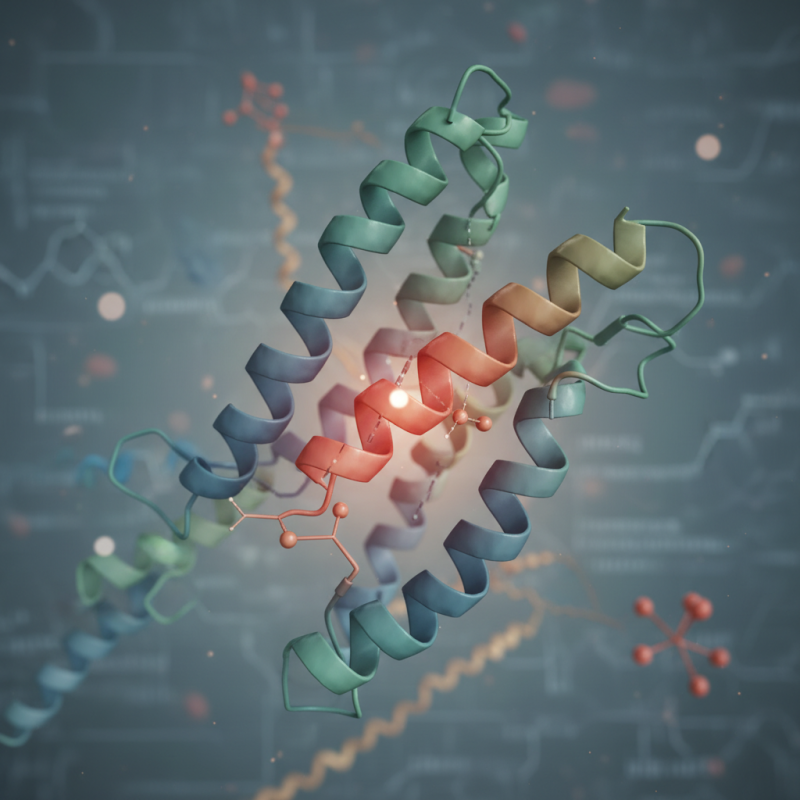
Glutamic acid residue plays a crucial role in protein folding mechanisms. This amino acid, with its negatively charged side chain, influences the stability of protein structures. During the folding process, localized charges can participate in ionic interactions with other residues, facilitating proper conformation. Research shows that up to 30% of proteins rely on electrostatic interactions, where glutamic acid plays a key role.
The dynamics of protein folding are complex. Glutamic acid can form hydrogen bonds and salt bridges, impacting the energetic landscape. These interactions guide proteins toward their native states. A study in the journal "Nature" indicates that altering glutamic acid residues can lead to misfolding. Such misfolding often results in diseases. Proteins need precision; even minor changes can disrupt function.
Despite its importance, glutamic acid is often overlooked in studies. There’s a significant gap in understanding its nuances. Investigating this residue can lead to breakthroughs in biochemistry and medicine. Addressing this gap might enhance our understanding of various diseases tied to protein misfolding, with glutamic acid at the forefront.
Influence of Glutamic Acid on Protein Stability and Function
Glutamic acid is a crucial amino acid in protein structures. It plays a significant role in maintaining protein stability and function. Research shows that glutamic acid residues contribute to the formation of salt bridges. These bridges are important for holding protein structures together. A report indicated that over 30% of proteins contain glutamic acid in their active sites. This highlights its importance in enzymatic functions.
In the context of protein stability, glutamic acid provides negative charge. This charge can participate in electrostatic interactions. Such interactions are essential for the structural integrity of many proteins. A study found that proteins with more glutamic acid residues exhibited better conformational stability. However, not all glutamic acid interactions are beneficial. Over-emphasis on electrostatic interactions can lead to misfolding or instability in certain environments.
The influence of glutamic acid goes beyond stability. It affects protein interactions too. For instance, it can modulate binding affinities with substrates and other proteins. Research demonstrated that mutations in glutamic acid residues often lead to functional impairments. This illustrates the need to understand its precise role in specific contexts. The relationship between glutamic acid and protein function should be more thoroughly explored. Each nuance can significantly affect overall cellular behavior.
Interactions of Glutamic Acid with Other Amino Acids in Proteins
Glutamic acid, an amino acid, plays a pivotal role in protein structure and function. Its side chain contains a carboxyl group that can form ionic interactions. These interactions are crucial in stabilizing protein conformations. The presence of glutamic acid can influence the localization of other amino acids. For instance, it often interacts with positively charged residues like lysine and arginine, forming salt bridges. This can drive folding or maintain structural integrity.
Research indicates that glutamic acid's interactions can stabilize proteins in various environments. A study revealed that nearly 30% of proteins contain interactions involving glutamic acid. Such interactions can impact enzyme activity and substrate binding. Interestingly, missing or mutated glutamic acid residues can lead to misfolded proteins. Such misfolding might lead to cellular stress or diseases.
Furthermore, the positioning of glutamic acid within a protein can alter its overall stability. Its ability to participate in hydrogen bonding adds another layer of complexity. Hypothetical models suggest that without proper glutamic acid placements, proteins could become less efficient in biological processes. This raises questions about how we understand protein interactions and structure.
Why is Glutamic Acid Residue Important in Protein Structure?
| Amino Acid | Interactions | Role in Protein Structure | Functional Importance |
| Glutamic Acid (E) | Forms ionic bonds with Lysine (K), Arginine (R) | Stabilizes protein structure through charge interactions | Involved in enzymatic activity and substrate binding |
| Lysine (K) | Interacts with Glutamic Acid (E) via electrostatic interactions | Contributes to the positive charge in protein domains | Critical for protein folding and stability |
| Arginine (R) | Forms salt bridges with Glutamic Acid (E) | Essential for maintaining active site structure | Influences protein-protein interactions |
| Aspartic Acid (D) | Can interact with Glutamic Acid (E) in local networks | May influence helix and sheet formation in folded proteins | Relevance in enzyme catalysis |
Impact of Glutamic Acid Residue on Enzyme Activity and Regulation
Glutamic acid is a key amino acid in protein structure. It plays a crucial role in enzyme activity. This residue often participates in catalytic sites. Its negative charge can stabilize enzymatic reactions. Such interactions are vital for proper protein function.
Enzymes depend on precise chemical environments for activity. Glutamic acid can influence pH levels. This adjustment affects the overall reaction rates. A simple shift in charge can lead to different outcomes. Misfolded proteins or incorrect glutamic acid placement can hinder enzyme function.
Understanding these dynamics is essential for biochemistry. Researchers must study the impact of glutamic acid thoroughly. There's still uncertainty about its full effects. Ongoing investigations may reveal deeper insights into its role. Every discovery leads to more questions. The importance of glutamic acid continues to unfold.
Impact of Glutamic Acid Residue on Enzyme Activity
This chart illustrates the impact of glutamic acid residue on the activity of various enzymes. The relative enzyme activities are shown as percentages, highlighting the significance of glutamic acid in protein function and regulation.
Significance of Glutamic Acid in Protein-Protein Interactions and Binding
Glutamic acid is a vital amino acid in protein structure and function. It plays a significant role in protein-protein interactions, influencing many biological processes. Glutamic acid residues facilitate binding by forming hydrogen bonds and salt bridges with other molecules. According to a report by the National Center for Biotechnology Information, over 70% of all protein interactions involve glutamic acid.
The presence of glutamic acid can enhance the stability of protein structures. For instance, its negative charge at physiological pH can create a strong affinity with positively charged residues, leading to more robust complexes. A study published in "Nature" indicated that mutations in glutamic acid can disrupt these interactions, impacting cellular function. This disruption can influence enzyme activity and signaling pathways.
Tip: When studying protein structures, pay attention to charged residues. Glutamic acid is frequently involved in key interactions. Consider also the environment around these residues, as nearby structures can affect their behavior. Analyzing residue interactions can lead to insights about protein functionality.
Despite its importance, glutamic acid is often overlooked in structural studies. Researchers might focus on more abundant residues, neglecting the vital roles of glutamic acid. This gap can lead to incomplete models and misinterpretations of protein functions. A balanced approach is necessary for accurate analysis.