Why is Desizing Enzyme Essential for Textile Manufacturing?
In the textile manufacturing industry, desizing enzymes play a critical role in the production process. Renowned expert Dr. Lydia Yang states, "The right desizing enzyme can significantly improve fabric quality." This highlights the enzyme's importance in removing impurities from fibers.
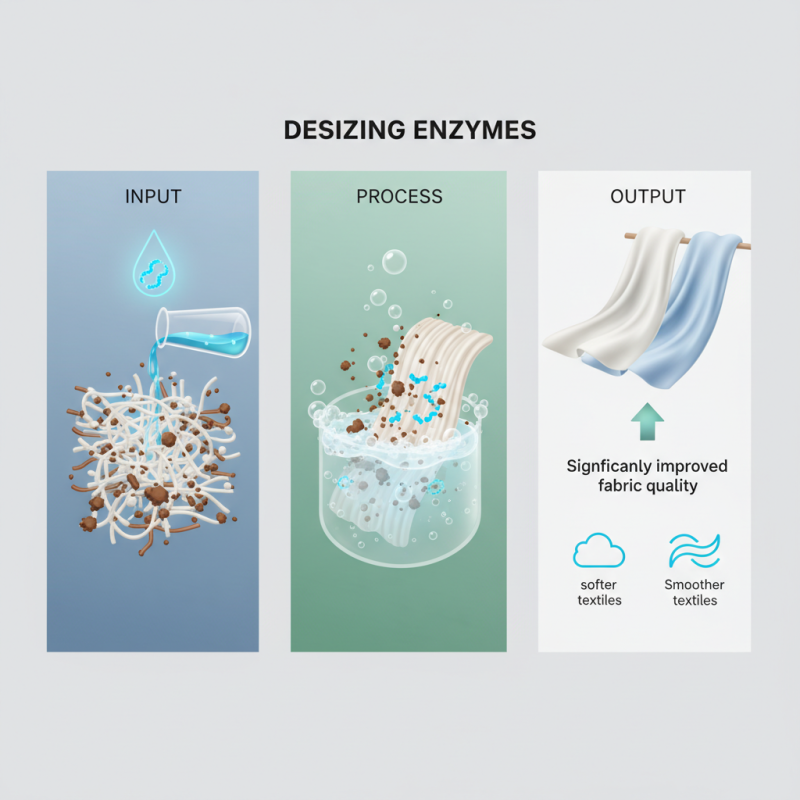
Textiles often undergo trials with various chemicals. However, the effectiveness of desizing enzymes is unmatched. These enzymes help eliminate starch and sizing agents from fabrics. This leads to smoother, softer textiles. Yet, not all enzymes yield the same results. Selecting the appropriate desizing enzyme can be challenging.
Despite advancements, the industry still faces hurdles. Some manufacturers overlook the enzyme's importance, resulting in decreased quality. There’s a need for deeper understanding and better selection of desizing enzymes. Missteps in this area can hinder overall production efficiency and fabric performance. The conversation around desizing enzymes must continue to evolve to meet the industry's demands.
Role of Desizing Enzymes in Textile Manufacturing Processes
Desizing enzymes play a critical role in textile manufacturing. These enzymes help remove sizing agents from woven fabrics. Sizing agents add weight and stiffness during production. However, they can hinder dye absorption and prevent a soft finish. Enzymes break down these agents effectively. Their precise action allows for a smoother textile surface, essential for quality.
The use of desizing enzymes is advantageous, yet there are challenges. Sometimes, the enzymes do not act completely. This could lead to residual sizing that interferes with dye uptake. Additionally, the process needs careful control of temperature and pH. If not monitored, the results may vary significantly. These nuances show the importance of experimentation and adjustment in the process.
Moreover, eco-friendliness is a concern. While enzymes are more sustainable than chemicals, they still require resources for production. Balancing efficiency and environmental impact is crucial. Manufacturers must consider both aspects to ensure a responsible approach. Understanding these factors leads to better use of desizing enzymes in textile production.
Types of Desizing Enzymes and Their Applications in Textiles
Desizing enzymes play a pivotal role in textile manufacturing. They remove sizing agents from fabrics, ensuring a cleaner finish. Common types of desizing enzymes include amylases and cellulases. Amylases target starch-based sizes, breaking them down effectively. Meanwhile, cellulases work on cellulose sizes, enhancing fabric quality and softness.
As enzymes vary, their applications in textiles differ. In cotton processing, amylases are often preferred. They efficiently tackle starches, revealing the fiber's natural properties. Cellulases, on the other hand, are essential for blends. They improve dye uptake and overall feel, which could sometimes lead to uneven results.
Not every enzyme functions optimally in every scenario. Factors like temperature and pH can affect enzyme efficiency. High temperatures might denature the enzymes, impacting performance. Textile producers must carefully select and monitor these enzymes. Even minor deviations can lead to significant quality issues, warranting constant evaluation and adjustment.
Mechanisms of Action: How Desizing Enzymes Remove Sizing Agents
Desizing enzymes play a vital role in textile manufacturing. These enzymes effectively break down sizing agents used in fabric preparation. Sizing agents, often made from starch or other polymers, provide strength during weaving. However, they must be removed for dyeing and finishing.
The action of desizing enzymes involves hydrolysis. Water molecules interact with the polymer chains, breaking them into smaller units. This process makes it easier to wash away the sizing agents. Enzymes function best at specific temperatures and pH levels. Factors like time and concentration also influence their effectiveness. A precise balance is essential for optimal performance, as improper use may lead to incomplete removal.
Challenges arise in the desizing process. Overexposure to the enzyme can damage fabric fibers. On the other hand, insufficient enzyme activity may leave residues. Monitoring these parameters is critical. Attention to detail ensures the desired outcome. Thus, embracing the complexities of using desizing enzymes is essential for achieving high-quality textiles.
Benefits of Using Desizing Enzymes for Textile Quality and Sustainability
Desizing enzymes play a crucial role in textile manufacturing. They help remove sizing materials from fabrics. This process is vital for achieving high-quality textiles. Without desizing, fabrics often feel stiff and rough. The enzymes break down starches and other substances, leading to softer textures and enhanced dye uptake.
Using desizing enzymes benefits sustainability in several ways. They require less water and energy than traditional methods. This reduces the overall environmental impact of textile production. Enzymes are biodegradable, so they don’t leave harmful residues. Additionally, they allow for quicker processing times. However, finding the right enzyme can sometimes be a challenge. Not all fabrics react the same way, and this requires careful testing.
Textile manufacturers must consider the balance between efficiency and quality. While desizing enzymes improve fabric characteristics, selecting the wrong type may lead to issues. Some enzymes might not effectively remove the sizing agents. Others could compromise the fabric's strength. It’s essential to evaluate each application carefully. In the quest for quality and sustainability, manufacturers must remain vigilant in their enzyme choices.
Benefits of Using Desizing Enzymes for Textile Quality and Sustainability
Impact of Desizing Enzymes on Dyeing and Finishing Processes in Textiles
Desizing enzymes play a crucial role in textile processing, particularly in dyeing and finishing. During the desizing phase, these enzymes break down starch and other sizing agents applied to the fabric to enhance its performance. This action ensures that the fibers are clean and ready for subsequent treatments. A properly desized fabric absorbs dyes more uniformly, leading to vibrant and consistent colors.
In the dyeing process, the effectiveness of these enzymes is evident. Fabrics that are well desized display better dye uptake, resulting in deep, rich hues. However, if desizing is incomplete, the residual sizing can lead to uneven dye application. This can produce unsightly patches on the fabric, causing frustration for manufacturers. It's an area demanding careful attention. Additionally, the interaction between dyes and finishing treatments can be compromised by improper desizing.
Finishing processes also rely on the removal of sizing agents. These agents can hinder the bonding of finishing chemicals, affecting the fabric's final properties. For instance, if a fabric retains sizing, treatments like softening or water repellency may be less effective. Manufacturers face challenges here; they must balance efficiency with effectiveness. Rethinking desizing strategies can mitigate these issues and enhance fabric quality.