© 2025 Messer Cutting Systems, Inc.

Choosing a Glass Manufacturing Machine is not just a question of price or advertised output. Buyers must match each machine to the glass type, production volume, available floor space, and required finish. A line built for flat glass may not suit container production. Small differences matter.
This guide compares ten machine categories, from batch preparation and melting to forming, cutting, tempering, and inspection. It highlights practical checks: furnace capacity, control-system access, spare-parts availability, energy use, and the time needed for changeovers. A specification sheet can look convincing. The factory floor tells more. Watch how sheets move between stations, listen for uneven machinery, and ask how operators handle rejected pieces.
To avoid presenting an invented statement as a real quotation, this guide uses an illustrative expert voice, Alex Morgan, a fictional composite representing glass-process engineering experience: “A reliable machine earns its place through consistent quality, maintainable parts, and a process your team can actually run.” Treat that line as an editorial principle, not a sourced interview. It reflects a useful buying discipline, though no single checklist replaces a plant-specific assessment. Some comparisons will remain imperfect because suppliers report performance differently, and local operating conditions vary. Ask for test data, inspect finished samples, and confirm service arrangements before committing. The strongest choice is not always the fastest. It is the machine that fits your material, team, and production goals with fewer surprises.
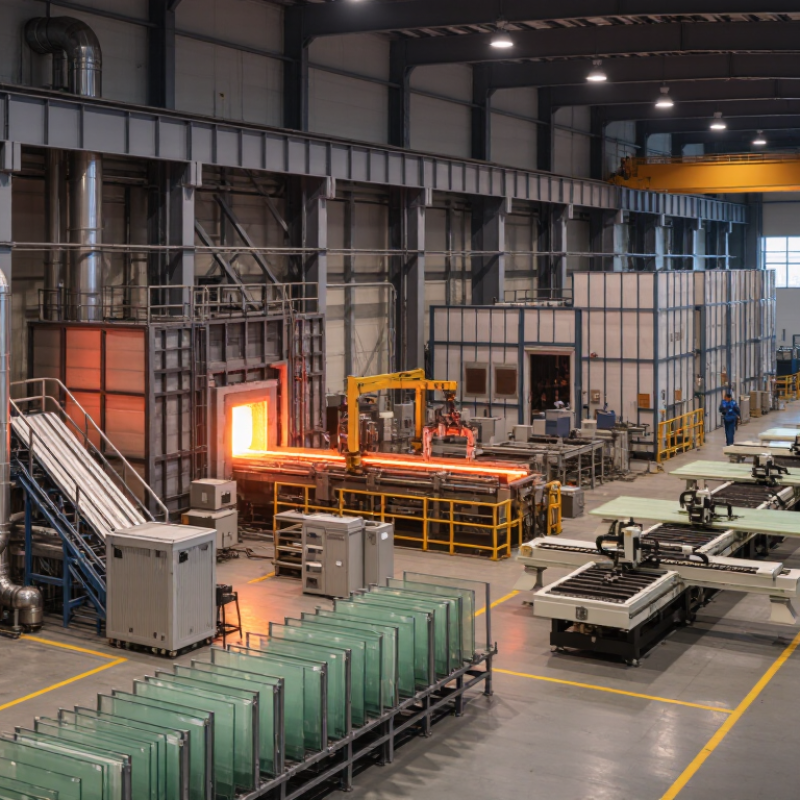
Glass production starts with batch preparation. Weighing systems meter silica sand, soda ash, limestone, and recycled cullet into mixers. Consistent proportions help stabilize melting, while dust collection keeps fine particles from spreading around the plant. Moisture matters.
The batch enters a furnace, where controlled heat turns it into molten glass. Temperature sensors and automatic feeders help maintain a steady supply, but furnace settings must match the glass composition and production rate. Forming equipment then shapes the melt: float lines create flat sheets, while presses or blowers make containers. Timing is critical. A small temperature shift can affect thickness, clarity, or shape.
Newly formed glass moves through an annealing lehr, a long, temperature-controlled cooling chamber. Cooling too quickly can leave internal stress, so operators monitor the temperature profile rather than relying on appearance alone. Cutting tables, edge-grinding machines, or coating lines prepare products for their intended use. Inspection systems check dimensions and detect visible defects; manual checks still help catch issues cameras may miss. Equipment choices depend on product type, output needs, and available maintenance skills. A high-speed line may look efficient, yet downtime can erase that advantage.
A modern flat-glass line depends on coordinated equipment, not one powerful machine. The raw-material batch mixer blends silica sand, soda ash, and other measured ingredients. A melting furnace heats the batch until it becomes molten glass. Next, the tin bath forms a continuous, even ribbon. Temperature control matters here. Small fluctuations can affect thickness and surface quality.
The annealing lehr cools the ribbon gradually to reduce internal stress. An automatic cutting table scores sheets to specified dimensions. A breakout unit separates the cut pieces. Edge-processing equipment smooths sharp edges, while a glass washer removes fine particles before later treatment. A tempering furnace then heats and rapidly cools suitable sheets to increase strength. Finally, an inspection and packing system checks for visible defects and prepares approved glass for handling.
Machine selection should match the intended product, sheet size, and production speed. A washer cannot correct poor cutting, and inspection cannot undo uneven heating. That sounds obvious, but it is easy to overlook when comparing equipment only by output figures. No line is perfect. Operators still need clear maintenance routines and reliable process checks. The right sequence may also change for laminated or coated glass, so buyers should confirm compatibility before specifying a complete line.
Glass products take shape through a sequence of machines, each controlling a different stage. Cutting tables score sheets to precise dimensions, while edging machines smooth sharp sides and refine profiles. CNC shaping equipment can create holes or curves for custom designs. After forming, washing systems remove fine glass dust before tempering ovens heat and rapidly cool the surface. The result is stronger glass, but uneven heating can cause defects. Laminating, insulating, coating, and printing machines add further performance or appearance features. Small process details matter.
Tips: Check the finished glass size, thickness, and edge quality during production trials. Ask about maintenance access, calibration, and operator training. A clear service plan helps reduce unexpected downtime.
For global buyers, machine capacity should match the actual product mix, not just the highest advertised output. Review energy use, temperature controls, loading methods, and compatibility between each stage. A fast tempering furnace cannot compensate for a poorly aligned cutting process. Nor does advanced automation remove the need for careful inspection. One planning mistake is underestimating changeover time; different sizes and coatings may require frequent adjustments. Request sample runs using your own specifications, then compare yield and finish quality. Specs look reassuring on paper. Real production can be messier.
Comparing glass manufacturing machines starts with the product, not the headline capacity. Check the supported glass type, thickness range, maximum dimensions, and target output per hour. Ask whether stated capacity reflects continuous production or a short test run. Numbers need context.
For furnaces, review working temperature, temperature uniformity, heating time, and energy use under a defined load. For forming and cutting equipment, examine cycle speed, dimensional tolerance, and repeatability across different product sizes.
Look closely at changeover time, control functions, and the space needed for safe operation and maintenance. A fast machine may still slow a line if molds are difficult to replace or settings require frequent correction.
Request sample-run data using glass close to your actual specifications, and clarify how defects and downtime were recorded. Confirm power, cooling, compressed-air, and exhaust requirements before comparing total operating costs.
Service access matters. Ask which wear parts need routine replacement and how maintenance intervals were established.
Datasheets rarely capture every factory condition; I would treat them as a starting point, then verify performance against a written acceptance test.
For glass manufacturing machines, compliance begins with the paperwork and the equipment itself. Ask for safety risk assessments, guarding details, electrical diagrams, and certificates that match the destination market. Requirements vary, so confirm them with a qualified local adviser before production or shipment. Check that machine voltage, frequency, and control interfaces suit the plant; a mismatch can delay commissioning. Small details matter. A document pack may look complete yet omit a language version or a component list. Treat it as a working file, not a guarantee.
Shipping deserves equal attention. UNCTAD’s Review of Maritime Transport 2024 notes that about 80% of world trade by volume moves by sea. That makes crate dimensions, moisture barriers, lifting points, and shock indicators practical buying questions, not minor details. The World Bank’s Logistics Performance Index 2023 assessed 139 economies across areas including tracking and timeliness. Buyers should request a shipping plan with milestones, named responsibilities, and a process for reporting damage. Also confirm spare-parts availability, remote troubleshooting hours, and technician response times. A checklist can still miss a detail; review it with the installation team, then revise it as the project evolves.
© 2025 Messer Cutting Systems, Inc.