How to Choose the Right Spider Coupling for Your Needs?
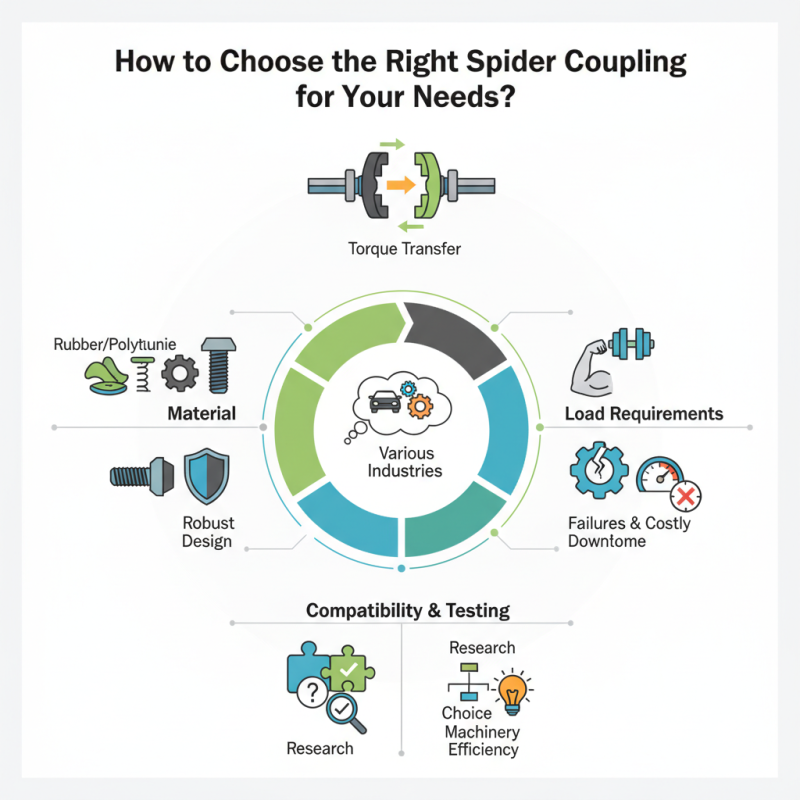
Choosing the right spider coupling for your applications is crucial. These couplings manage torque transfer between rotating shafts. They play a vital role in various industries, from automotive to manufacturing.
When selecting a spider coupling, consider several factors. The material of the coupling affects its durability. For instance, rubber or polyurethane offer flexibility and shock absorption. Think about load requirements too. High-torque applications need a robust design that can withstand stress.
Don’t overlook the compatibility with your existing equipment. A poorly matched coupling can lead to failures and costly downtime. Sometimes, what seems like a perfect fit may not truly meet your needs. Research and test different options before making a decision. An informed choice can greatly enhance the efficiency of your machinery.
Understanding the Basics of Spider Couplings and Their Applications
Understanding the basics of spider couplings is crucial for various applications in mechanical systems. These couplings connect shafts while providing flexibility. They absorb shock and reduce vibrations, which can extend equipment life. A spider coupling consists of a hub and a spider made of rubber or polyurethane. The choice of material affects performance and durability. For high-torque applications, a more robust spider may be necessary.
Different industries utilize spider couplings for distinct purposes. In some cases, they help in power transmission between motors and pumps. In others, they allow misalignment compensation, which is essential in rotating machinery. However, not all couplings are created equal. It’s vital to consider specific requirements like load capacity and operating conditions.
If a coupling is poorly matched, it could lead to failures. Misalignment or excessive wear can be troublesome. Proper installation and routine checks are often overlooked. Users must understand that even the best design may have flaws. Spiders can wear out over time, making understanding their lifecycle key. Each application is unique; choosing the right coupling may require trial and error.
Key Factors to Consider When Selecting Spider Couplings
When selecting a spider coupling, consider the material. Options include rubber, polyurethane, and metallic components. Each material offers unique benefits. For instance, rubber is great for shock absorption, while metallic couplings provide durability. Think about the environment where the coupling will be used. Will it face high temperatures or harsh chemicals? These factors can heavily influence your choice.
Another important aspect is the torque and speed requirements. Understand the specific application of the coupling. High-speed applications may need tighter tolerances. On the other hand, low-speed usages can afford more slack. Noise and vibration are also crucial concerns. A poorly chosen coupling might lead to excessive wear and tear on machinery. Pay attention to these details to avoid costly repairs.
Don't forget the dimensions. Measure the shaft sizes carefully. An incorrect fit can lead to failures. Some manufacturers publish charts for compatibility. But these can be misleading if not checked against actual measurements. It’s better to double-check than to guess. Always keep the operating conditions in mind. Vibrations, alignments, and loads can greatly affect performance. Take time to assess all these elements before making a decision.
Common Materials Used in Spider Couplings and Their Benefits
Spider couplings are essential for various mechanical applications. Choosing the right material can significantly influence performance and longevity. Common materials used in spider couplings include polyurethane, rubber, and metals. Each has distinct benefits that cater to different operational needs.
Polyurethane is often favored for its excellent shock absorption and flexibility. It's durable and stands up to wear and tear. However, it may not perform well in extreme temperatures. Rubber, on the other hand, provides good insulation but can break down with prolonged exposure to certain oils. It’s important to consider the working environment when selecting materials. Metals offer strength and rigidity. Yet, they can lead to more vibration and noise, which might affect the overall system.
It’s crucial to evaluate the specific requirements of your machinery. Think about load, speed, and environmental conditions. Material choice is not always straightforward. Testing and revisiting choices can yield better outcomes. Sometimes, a less popular material might outperform more commonly used options. Don't overlook these details as they may save you frustration and cost in the long run.
Analyzing Performance Specifications of Spider Couplings
When selecting the right spider coupling, performance specifications play a crucial role. Key specifications include torque capacity, misalignment tolerance, and operating speed. According to industry reports, optimal torque ratings should align with your application to avoid premature failure. Many buyers overlook these metrics, leading to suboptimal coupling selection.
Misalignment tolerance is another critical specification. A coupling that cannot accommodate misalignment can lead to excessive wear. Research indicates that up to 25% of mechanical failures arise from misalignment issues. This highlights the importance of assessing the specific alignment conditions of your machinery.
Additionally, the operating speed must match your machinery's requirements. Many spider couplings can handle speeds up to 6,000 RPM. However, exceeding these limits can compromise performance. Users often underestimate the impact of speed, leading to inefficiencies or breakdowns. Therefore, understanding these performance metrics is essential for achieving reliability in your mechanical systems.
Industry Standards and Certifications for Spider Coupling Selection
When selecting a spider coupling, industry standards and certifications play a crucial role. Look for couplings that meet ISO and ANSI standards. These guidelines ensure reliability and performance in various applications. Certificates from recognized institutions can provide additional assurance of quality. However, not all products flaunt these certifications. This can lead to confusion.
Consider the specific requirements of your equipment. Each application might need different specifications. For example, torque capacity and temperature range are vital factors. Some couplings may fall short in extreme conditions. This could lead to premature wear and costly downtimes. It's essential to assess if the coupling aligns with your operational needs.
In the end, it's okay to question the certifications and standards being presented. Not every claim holds up under scrutiny. Engage with suppliers, ask for detailed documentation. There's value in understanding the certifications rather than just accepting them at face value. Remember, informed choices lead to better performance and longevity.
How to Choose the Right Spider Coupling for Your Needs?
| Criteria | Details | Industry Standards | Certifications |
| Torque Capacity | Can handle varying torque levels based on application needs. | ISO 9001 | CE Marking |
| Material Type | Flexible rubber, Polyurethane, or Metal constructions available. | ASTM D2000 | RoHS Compliance |
| Temperature Range | Operating temperatures from -40°C to +100°C (depending on material). | SAE J200 | ISO 14001 |
| Vibration Dampening | Capable of reducing vibrations in rotating equipment. | MIL-STD-167 | UL Certification |
| Misalignment Tolerance | Designed to accommodate slight misalignments in the shaft. | AGMA 9001 | ISO 45001 |