How to Choose the Best Level 3 EV Charger in 2026?
Choosing a Level 3 Ev Charger in 2026 means balancing charging speed with the needs of the vehicles and site it will serve. These DC fast chargers can deliver substantial power, but a high kilowatt rating alone does not guarantee faster sessions. A vehicle’s maximum charging rate, battery temperature, and state of charge all affect real-world performance. Compatibility matters, too. Check connector types and regional charging standards before comparing models.
Start with the site. A charger drawing several hundred kilowatts may require substantial electrical capacity, careful planning, and professional installation. Consider how many vehicles arrive during busy hours, how long they typically stay, and whether the location can support future expansion. Look closely at uptime records, service response times, warranty terms, and network fees. A bright screen and a polished app are useful, but drivers notice a stalled session more.
Details count. Ask how the unit handles heat, whether parts are readily available, and how operators monitor faults remotely. Compare the full cost of ownership, including installation, maintenance, software, and payment processing—not just the purchase price. No single specification tells the whole story. A charger chosen for peak output might be poorly matched to a small site with limited grid capacity. That judgment can change as traffic grows, so leave room for reassessment. The best choice is the one that reliably fits local demand, vehicle compatibility, and the site’s practical limits. Before committing, have qualified professionals assess electrical capacity and installation requirements. A careful comparison now can prevent expensive surprises later.
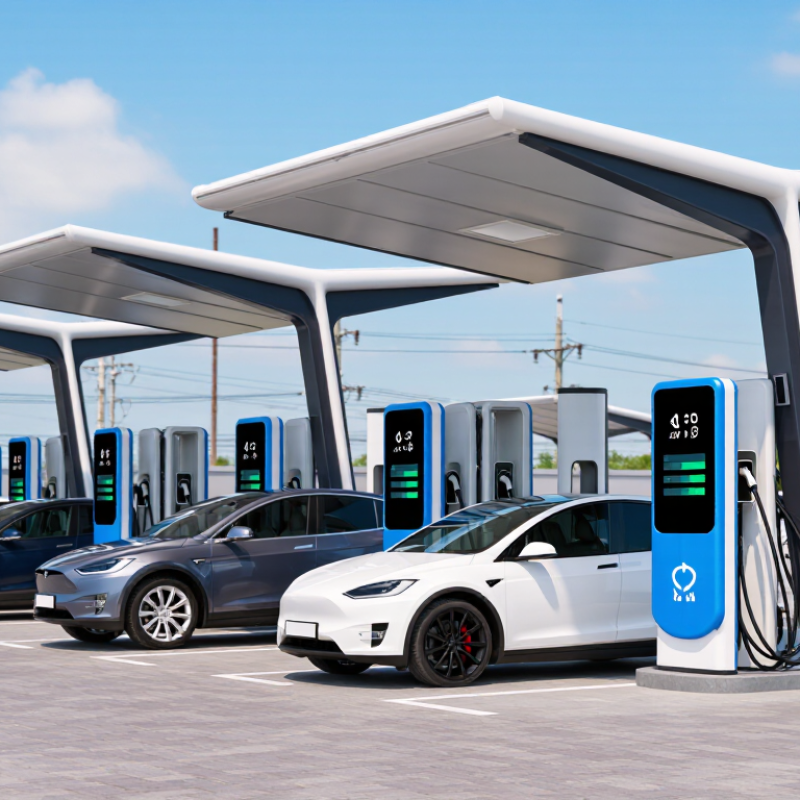
Understanding Level 3 EV Chargers and How They Work
Level 3, often called DC fast charging, works differently from home charging. A station converts grid electricity into direct current before sending it to the vehicle. This lets energy reach the battery without passing through the car’s smaller onboard charger. The vehicle’s battery management system still controls how quickly charging happens. It monitors factors such as battery temperature and charge level.
Power ratings matter, but they tell only part of the story. A station rated for high output cannot make every vehicle charge at that speed. The vehicle sets its own limit, and the battery often accepts power more slowly as it fills. Cold weather can slow charging, too. Some vehicles warm the battery before arrival, but the feature and its effect vary. Peak numbers can mislead.
When comparing chargers, check connector compatibility, the vehicle’s maximum DC charging rate, and the station’s listed output. Also consider whether power may be shared between charging stalls. A brief stop can feel very different from a long session. Even so, charging curves are not always easy to predict from a single specification. The vehicle manual and station details offer a more grounded starting point.
Matching Charger Power and Connectors to Your EV
Choosing a Level 3 charger starts with your vehicle’s DC charging limit, not the station’s biggest number. A 350 kW unit will not make a car accept power beyond its own maximum. Check the owner’s manual for peak DC input and the connector standard fitted to your vehicle. Check the inlet first.
Connector compatibility can decide whether a charger is useful at all. Confirm the plug type, any approved adapter requirements, and whether the charging network supports your vehicle. Standards vary by market, including CCS, CHAdeMO, and GB/T. A quick check before a long drive can prevent an unhelpful detour.
Power is not speed. Charging rates often fall as the battery fills, and cold conditions can reduce them further. The IEA’s Global EV Outlook 2024 reported that public fast-charging points grew 55% in 2023, reaching about 1.3 million worldwide. More choice is welcome, but figures vary by location. Compare the charger’s rated output with your car’s stated limit, then consider the route, battery preconditioning, and nearby alternatives. A higher rating may still be worth choosing when it adds flexibility, though the benefit can be modest.
Assessing Charging Speed, Usage Needs, and Site Requirements
Choosing a Level 3 charger starts with the vehicle, not the headline power rating. Check each vehicle’s maximum DC charging rate and charging curve; peak output may last only briefly. Battery temperature and charge level also change charging speed. A high-rated unit cannot make a car accept power faster than its limits.
Match charger capacity to how people use the site. A highway stop with brief visits may need higher output than a workplace where cars stay for several hours. Review arrival patterns, expected sessions, and the number of vehicles charging at once. Measure the real pattern. Shared power can reduce costs, but several cars may charge more slowly during busy periods.
Site conditions matter just as much. Confirm available electrical service and ask the utility about capacity before planning equipment. Transformer work can add time and cost. Check cable reach, vehicle turning space, drainage, and protection from weather. Still, projections are only estimates: real sessions vary with temperature, vehicle condition, and battery level. That matters. A site walk and a review of actual charging data can expose assumptions that look fine on paper but fail at the curb.
Comparing Costs, Energy Efficiency, and Network Features
Choosing a Level 3 EV charger in 2026 means comparing more than the purchase price. Installation can require costly electrical upgrades, especially where a site has limited power. Ask for a quote that separates equipment, civil work, grid connection, and ongoing service fees. Energy efficiency matters too: power lost as heat never reaches the vehicle. Compare tested efficiency figures under similar operating conditions, not just peak output. Busy sites may benefit from faster charging, but low utilization can make expensive capacity hard to justify.
Tips: Estimate daily sessions using real traffic, not optimistic forecasts. Check demand charges with the local utility. Ask whether the charger supports clear pricing, remote diagnostics, and payment options drivers can use easily. Confirm network fees and contract terms before signing.
Network features shape the daily experience. Live status, fault alerts, and usage reports can help operators spot problems before drivers arrive. Check how often the network reports charger availability, and ask what happens during an internet outage. A polished dashboard is not proof of dependable service. No spreadsheet predicts every queue or utility delay; that uncertainty matters. I would leave room in the budget for maintenance, and revisit assumptions after several months of actual usage.
Checking Safety Standards, Reliability, and Long-Term Support
When comparing Level 3 EV chargers, look beyond charging speed. Check that the equipment has been independently tested and certified to standards applicable in its intended market. Ask for the certification number, not just a safety claim on a sales page. A qualified installer should also confirm that the site’s electrical capacity, cabling, and protection devices match the charger’s requirements. These details are easy to overlook.
Reliability shows up in ordinary conditions: a rainy parking lot, repeated daily sessions, and a hot cabinet running through a busy afternoon. Review the enclosure’s environmental rating, temperature limits, and protection against electrical faults. Ask how the unit reports errors and whether operators can monitor uptime remotely. A fast charger that frequently needs a reset is not much of a time-saver. Specifications help, but real maintenance records offer better evidence.
Long-term support deserves equal attention. Read the warranty exclusions, expected repair process, and availability of replacement parts. Find out how quickly support responds and whether software updates remain available over time. Clarify who handles service if the original installer is no longer involved. I would not assume every promised feature will stay supported indefinitely; that is a fair point to question. Get key commitments in writing, including response targets and parts coverage. Small details matter.
How to Choose the Best Level 3 EV Charger in 2026
Representative DC fast-charger power ratings (kW). These are common examples, not official charging levels or a ranking.
Choose a rated output that fits the site’s electrical capacity and the vehicles’ charging limits; a higher rating does not guarantee faster charging or better reliability. Before buying, verify applicable safety certification (such as UL 2202 and UL 2231, or relevant IEC 61851 requirements), and review the service agreement for uptime commitments, repair response times, warranty coverage, and long-term parts and software support. “Level 3” is a common term for DC fast charging, not a single universal power rating.