© 2025 Messer Cutting Systems, Inc.

Choosing the best Cnc Cutting Machine starts with the workpiece, not the showroom price. Material, thickness, tolerance, production volume, and available floor space shape the right decision. A compact router may handle signs and plywood efficiently. A fiber laser may cut stainless steel with cleaner edges and less secondary finishing. Plasma suits thicker plate, while waterjet technology protects heat-sensitive materials.
Peter Zelinski, editorial director of Modern Machine Shop, has emphasized, “Automation should support skilled people, not hide poor decisions.” That principle matters when comparing machines. A fast cutting head cannot rescue weak software, poor fixturing, or inconsistent material handling. Look closely at acceleration, positioning accuracy, nesting software, extraction systems, and operator training. Ask for sample cuts using your actual material. Inspect the edge, kerf, dross, and dimensional repeatability.
Do not ignore maintenance.
A dependable Cnc Cutting Machine should offer accessible service points, clear diagnostics, and readily available replacement parts. Energy use and consumables also affect long-term cost. The cheapest machine may become expensive after frequent nozzle changes, downtime, or difficult repairs. Still, maximum power is not always the intelligent choice. It can increase purchase costs without improving your daily output.
A careful buyer should compare verified specifications, warranty terms, local technical support, and real customer feedback. Some claims look impressive but lack context. That deserves skepticism. The final choice should match your materials, operators, budget, and growth plans—not an idealized production target. Getting this wrong is possible. A practical test cut often reveals more than a polished brochure.
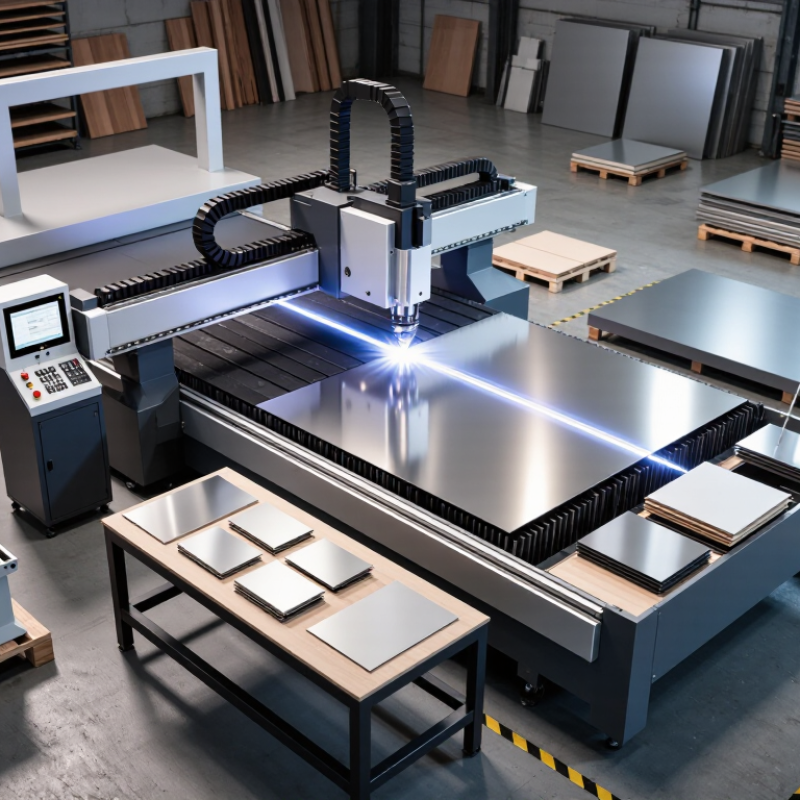
How to Choose the Best CNC Cutting Machine?
Understanding CNC Cutting Machine Types and Their Applications
CNC cutting machines differ mainly by cutting method, material range, and required accuracy. CNC routers suit wood, plastic, foam, and softer composite sheets. Their rotating bits can create grooves, pockets, lettering, and three-dimensional contours. Plasma cutters work well with conductive metals, especially steel and aluminum. They cut quickly, but their edges may need cleaning. Laser cutters deliver fine details on thin metal, acrylic, wood, and fabric. However, heat can discolor sensitive materials.
Waterjet machines cut stone, glass, metal, and layered materials with minimal heat distortion. They are useful when heat could weaken or warp the workpiece. A fiber-based metal cutter can handle sheet metal efficiently, while a CO2 system often serves nonmetal materials better. These categories overlap, so the material thickness matters as much as the machine type. A thick steel plate can expose the limits of an otherwise capable machine.
In practical machine evaluations, I check the smallest feature, edge quality, dust control, and maintenance access. A workshop cutting cabinet panels may value a vacuum table and automatic tool changing. A fabrication shop may prioritize piercing speed, fume extraction, and consistent kerf width. Ask for test cuts using your actual material. Sample charts are helpful, but they can hide difficult corners and uneven surfaces. I once underestimated setup time because the cutting speed looked impressive on paper. That mistake still deserves attention. Software compatibility, operator training, floor space, and safe ventilation also influence the final choice.
| CNC Cutting Machine Type | Primary Cutting Process | Typical Materials | Best Applications | Typical Thickness Range | Main Advantages | Key Limitations |
|---|---|---|---|---|---|---|
| CNC Laser Cutting Machine | Focused laser beam melts, burns, or vaporizes material along a programmed path. | Carbon steel, stainless steel, aluminum, brass, copper, and some plastics or wood with suitable equipment. | Precision sheet-metal parts, electrical enclosures, signage, appliances, and decorative components. | Approximately 0.5–25 mm, depending on material, laser power, and required edge quality. | High accuracy, narrow kerf, fast processing of thin sheet, and clean repeatable cuts. | Initial investment can be high; reflective metals and thick materials require appropriate power and process control. |
| CNC Plasma Cutting Machine | High-temperature ionized gas melts electrically conductive material and blows away the molten metal. | Mild steel, stainless steel, aluminum, copper, and other electrically conductive metals. | Structural steel, fabrication shops, brackets, frames, machinery parts, and medium-to-thick plate work. | Approximately 1–50 mm for common systems; heavy-duty systems may process thicker plate. | Fast cutting, comparatively low operating cost, and effective performance on medium and thick metal. | Edge quality is generally lower than laser cutting; it produces heat-affected zones, fumes, and consumable wear. |
| CNC Oxy-Fuel Cutting Machine | Fuel gas preheats the steel while a stream of oxygen oxidizes and removes the material. | Primarily carbon steel and low-alloy steel; not suitable for most stainless steel or aluminum cutting. | Large structural plates, shipbuilding, heavy fabrication, and basic profile cutting. | Approximately 6–300 mm or more, depending on torch design and machine configuration. | Cost-effective for thick carbon steel, simple equipment, and practical for large workpieces. | Slow on thin sheet, produces a wider heat-affected zone, and requires post-cut cleaning or finishing more often. |
| CNC Waterjet Cutting Machine | High-pressure water, often mixed with abrasive particles, erodes material without significant heat input. | Metals, stone, glass, ceramics, rubber, composites, plastics, and layered materials. | Heat-sensitive materials, thick plate, stone fabrication, aerospace components, and mixed-material projects. | Approximately 1–150 mm or more, depending on pump pressure, abrasive use, and material type. | No thermal distortion, broad material compatibility, and the ability to cut complex profiles. | Higher operating cost, slower cutting for some materials, water-treatment needs, and abrasive disposal. |
| CNC Router | A rotating cutting tool mechanically removes material along multiple programmed axes. | Wood, MDF, plywood, plastics, foam, acrylic, aluminum, and other relatively soft materials. | Cabinetry, furniture panels, signs, prototypes, patterns, molds, and sheet-based products. | Commonly 3–100 mm per pass or workpiece thickness, depending on spindle power and tooling. | Versatile 2D and 3D machining, efficient sheet processing, and a wide range of affordable tooling. | Tool wear and dust generation; less suitable for hard metals or very high-precision metal cutting. |
| CNC Milling Machine | Rotating multi-point tools remove material from a fixed or mechanically positioned workpiece. | Aluminum, steel, stainless steel, brass, titanium, engineering plastics, and composites. | Precision components, pockets, slots, holes, 3D surfaces, molds, dies, and machine parts. | Determined by machine travel, tool diameter, spindle power, and workholding rather than a single sheet thickness. | Excellent dimensional control, complex 3D machining, and strong compatibility with engineering materials. | Usually slower than dedicated profile cutters for large sheets; tooling, fixturing, and programming can be more complex. |
| CNC Knife Cutting Machine | A motorized blade, tangential knife, or oscillating knife cuts flexible or semi-rigid sheet materials. | Cardboard, corrugated board, foam, felt, textiles, leather, vinyl, rubber, and thin composite sheets. | Packaging prototypes, upholstery, apparel patterns, gaskets, insulation, and point-of-sale displays. | Typically up to 10–50 mm, depending on blade type, material density, and cutting method. | No heat damage, low material waste, quick setup, and clean cutting of soft sheet materials. | Not intended for thick metals or hard workpieces; blade selection and material hold-down affect cut quality. |
| CNC Wire EDM | A controlled electrical discharge removes conductive material using a continuously moving wire. | Hardened tool steel, carbide, titanium, nickel alloys, and other electrically conductive materials. | Precision dies, punches, intricate profiles, narrow slots, and hardened parts after heat treatment. | Often suitable for workpieces up to approximately 100–300 mm thick, depending on machine capacity. | Very high profile accuracy, fine details, and the ability to machine hardened materials without cutting force. | Only conductive materials can be processed; cutting is relatively slow and dielectric-fluid management is required. |
| CNC Ultrasonic Cutting Machine | A blade vibrating at ultrasonic frequency reduces cutting resistance and separates material with controlled pressure. | Honeycomb panels, composites, rubber, textiles, foams, plastics, and selected layered materials. | Composite trimming, interior components, medical textiles, packaging, and delicate layered materials. | Usually selected for thin to medium layered materials; practical limits depend strongly on material structure. | Reduced fraying, low cutting force, clean edges, and suitability for materials that are difficult to cut conventionally. | Specialized equipment and tooling; not a general-purpose solution for thick metal or heavy plate cutting. |