How to Choose the Right Single Acting Steering Cylinder for Your Needs?
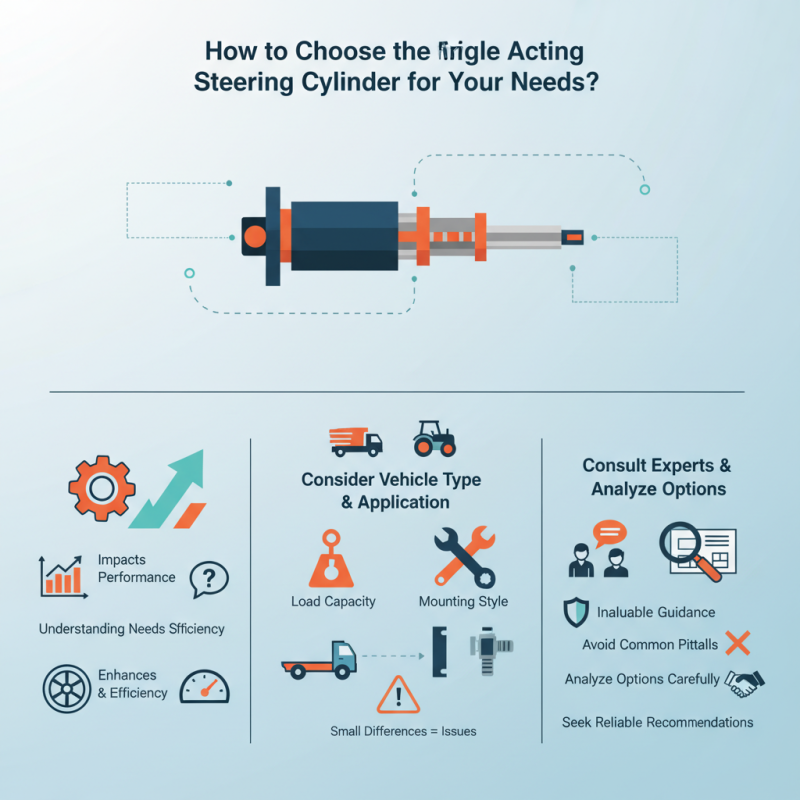
Choosing the right Single-Acting Steering Cylinder can significantly impact performance. Understanding your specific needs is crucial. A well-matched cylinder enhances steering response and overall efficiency.
When selecting a Single-Acting Steering Cylinder, consider vehicle type and application. Factors such as load capacity and mounting style play vital roles. Small differences can lead to performance issues down the line.
Moreover, consulting with experts in the field can provide invaluable guidance. They can help you avoid common pitfalls. Not every cylinder on the market will meet your needs. Take the time to analyze options carefully and seek reliable recommendations.
Understanding Single Acting Steering Cylinders: Key Features and Functions
Single acting steering cylinders are crucial components in various machinery. These cylinders utilize hydraulic pressure to facilitate steering, particularly in vehicles and industrial equipment. Their design allows them to exert force in one direction, making them efficient for specific applications. Typical features include a compact design, easy installation, and a robust construction that can withstand demanding environments. According to industry reports, the market for hydraulic steering systems is expected to grow by 5% annually, reflecting their importance in multiple sectors.
When selecting a single acting steering cylinder, consider the operating pressure and stroke length. Applications requiring precise control might need cylinders with lower tolerances. For heavy-duty use, look for models that can handle higher pressures. Always assess the material compatibility with the fluids involved to ensure longevity.
Tips: Always refer to manufacturers' specifications for performance ratings. Check for any feedback or reviews on the product. Investing in quality can reduce maintenance costs over time. It’s essential to reflect on your specific needs. Not every cylinder will perform well in all conditions. Analyze your priorities—such as cost versus durability—to make the right choice.
Identifying the Right Size and Capacity for Your Steering Cylinder Needs
Selecting the appropriate steering cylinder is crucial for efficient vehicle operation. Size and capacity are key factors. The right cylinder must match the size of the vehicle and the specific steering requirements. A cylinder that is too small may lead to underperformance. Conversely, oversizing can cause excessive weight and inefficiency.
According to industry reports, cylinders should provide enough force to handle the steering loads. For example, a standard steering cylinder for a medium-duty truck typically ranges from 2,000 to 4,000 pounds of force. A thorough assessment of vehicle specifications is essential. It is also vital to consider the hydraulic pressure system being used. If the system operates at high pressures, a cylinder designed for such conditions is necessary.
Users often overlook the importance of matching the stroke length with the steering mechanism's travel range. A mismatch could hinder steering responsiveness. Calculating these metrics can prevent issues down the line. However, operators should not base their decisions solely on capacity. Attention should also be paid to factors like design and operating environment, which can influence performance. Balancing these elements is a challenge that requires careful thought and planning.
Material Compatibility: Choosing Durable Materials for Harsh Environments
When selecting a single acting steering cylinder, material compatibility plays a crucial role, especially in harsh environments. The right materials ensure longevity and performance under extreme conditions. Consider factors like temperature, humidity, chemical exposure, and mechanical stress. Materials such as stainless steel, aluminum, and specific polymers often provide the needed durability.
Tip: Always assess whether the selected material can withstand the specific chemicals it might encounter. For instance, certain plastics can degrade when exposed to solvents. A mismatch can lead to failure, impacting functionality.
Additionally, don’t overlook surface treatments. Coatings can enhance resistance to corrosion and wear. They create a barrier against harsh elements. It’s essential to ensure these coatings are compatible with the base material and ground exposure conditions.
Tip: Consult material datasheets for detailed compatibility information. This can help prevent costly mistakes in selection. In the end, don’t hesitate to seek expert advice. Ensuring the right material choice can significantly reduce maintenance costs and improve equipment reliability.
Evaluating Performance Metrics: Pressure Ratings and Efficiency Standards
Choosing the right single acting steering cylinder requires careful evaluation of performance metrics. Pressure ratings significantly impact the cylinder's overall efficiency and application suitability. Industry reports indicate that cylinders with pressure ratings exceeding 2000 psi often perform better under heavy loads. However, higher pressure ratings can lead to increased wear over time, raising longevity concerns.
Efficiency standards are equally crucial. Cylinders designed for optimal efficiency can achieve hydraulic losses as low as 5%. This means they can convert more hydraulic energy into usable work. However, achieving this often requires a delicate balance. Over-optimizing can lead to compromises in other areas, such as response time or durability.
Tip: Always cross-reference efficiency ratings with real-world applications. Testing in varied conditions can reveal discrepancies not shown in standard metrics. Another approach is to consult with industry experts. Their experience can help uncover hidden pitfalls you might overlook in data sheets.
Cost Considerations: Budgeting for Quality and Performance in Cylinders
When considering a single acting steering cylinder, budgeting is crucial. Higher quality often comes at a higher price. Assessing your needs helps narrow down your options. For example, if you require a cylinder for a heavy-duty application, sacrificing quality for cost might lead to failures. Managing your budget effectively can help you avoid unexpected expenses later.
Tips for budgeting wisely: Identify core features necessary for your operations. Prioritize performance over extreme cost savings. Research different materials and designs to understand their longevity. Remember that investing in a quality cylinder can save money in maintenance and replacements.
Balancing cost and performance can be challenging. Some manufacturers offer lower prices, but this may come with a compromise in durability. It's important to check reviews and seek recommendations. Observing trends within the industry could help you make informed choices. Always evaluate the long-term benefits against immediate costs.