© 2025 Messer Cutting Systems, Inc.

Choosing a Triple Eccentric butterfly valve starts with the conditions it must handle, not its catalog description. Record the fluid, operating pressure, temperature range, required shutoff performance, and how often the valve will cycle. A valve controlling hot steam may need different materials and sealing details from one handling clean water. Small differences matter.
This design uses three offset geometry features to reduce disc and seat contact during much of the operating stroke. That can support tight shutoff and help limit wear, but performance depends on the actual design and service conditions. Do not assume every valve labeled Triple Eccentric behaves the same way. Check the datasheet, pressure-temperature limits, seat and disc materials, end connections, and applicable test documentation. Confirm that the actuator can provide the required torque, especially under the expected differential pressure.
Installation details deserve attention too. Measure the face-to-face dimension, check pipeline space, and confirm the preferred flow direction and mounting position with the manufacturer. Ask how the valve performs during real operating cycles, not only under a single factory test. That question can reveal useful gaps.
A sensible selection process compares the application requirements with documented valve capabilities and the supplier’s technical support. Price is only one factor; maintenance access, replacement parts, and service history also affect ownership costs. Some project data may be incomplete, and that is worth admitting early. Verify uncertain assumptions before ordering, because a confident guess is still a guess.
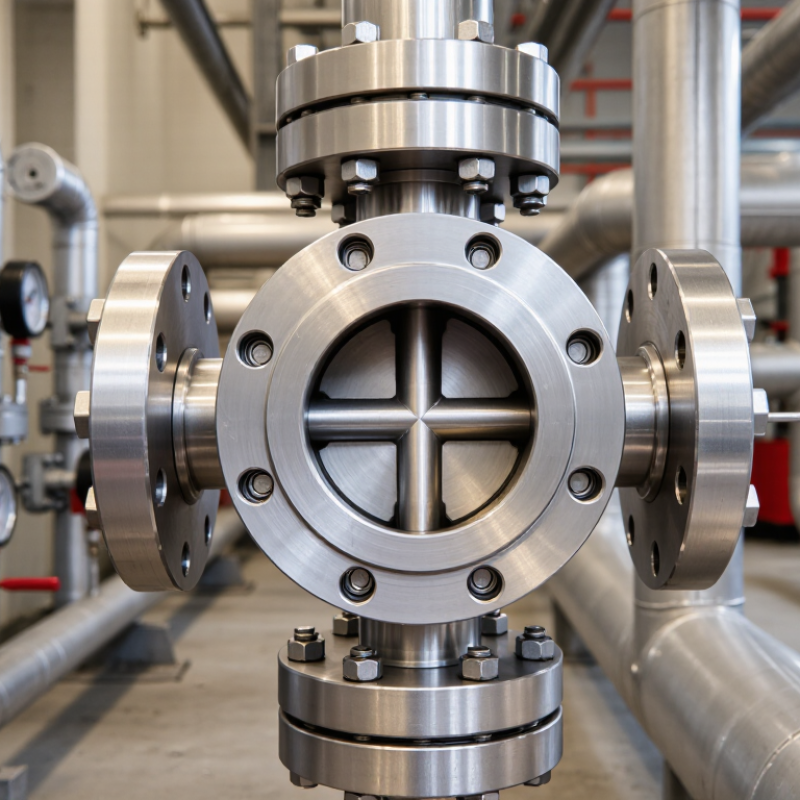
A triple eccentric butterfly valve should be selected for its actual duty, not nominal pipe size alone. Record fluid chemistry, suspended solids, pressure, temperature range, differential pressure, flow direction, cycling frequency, and required shutoff leakage. A steam line cycling from cold startup to hot operation stresses the body and seat differently from a clean-water line. Chlorides or abrasive scale change material choices. The 2016 NACE IMPACT study estimated corrosion costs at US$2.5 trillion worldwide, roughly 3.4% of global GDP, and identified potential savings of 15–35% through corrosion control. These figures are not valve-specific, but they make material compatibility worth careful review.
Check whether the valve is for isolation or throttling; do not assume one design suits both. For control, review the flow coefficient and usable opening range to avoid unstable operation near a nearly closed position. Size the actuator against the worst-case differential pressure, then verify torque needs across the full temperature range. Small details matter. Confirm pressure class, seat leakage requirements, and applicable editions of API 609 and ISO 5208. The uncomfortable part: process data are often incomplete. Ask for actual startup conditions and upset cases, not just normal operating values. A tidy datasheet can still miss them.
A triple-eccentric butterfly valve should match the service, not just the pipe size. Its offset disc lifts away from the seat during opening, reducing rubbing and helping metal seats handle demanding cycles. Check pressure, temperature, leakage class, and operating torque against the actual process conditions. Small details matter.
Material choice starts with the fluid. Carbon steel may suit many non-corrosive services, while stainless or duplex alloys can help resist specific corrosive environments. Confirm compatibility with the fluid, chloride level, and cleaning chemicals; “stainless” alone is not a guarantee. For low-temperature service, verify impact toughness and test requirements. GIIGNL’s 2024 Annual Report recorded 401.42 million tonnes of global LNG trade in 2023, illustrating the scale of cryogenic applications—but not every LNG line has identical conditions.
For seats and sealing surfaces, ask about hardfacing, coating, and allowable leakage under the required test standard. API 607 addresses fire testing for quarter-turn valves, while ISO 15848 covers fugitive-emission testing; neither replaces application-specific material review. The World Stainless Association reported 58.4 million tonnes of stainless-steel production in 2023. That signals broad availability, not automatic suitability. I would still check the supplier’s material certificates and test records. Selection can feel overly cautious, but a missed temperature limit is expensive.
| Selection Factor | Common Options | How to Select | Important Checks |
|---|---|---|---|
| Valve function | On/off isolation; throttling or control; emergency shutoff | Choose an isolation design for infrequent open/close duty. For control service, confirm the valve and actuator are suitable for the required flow range and operating conditions. | A butterfly valve’s flow characteristic and allowable throttling range depend on its design and application; do not assume every isolation valve is suitable for control duty. |
| Triple-offset geometry | Two shaft-to-disc geometric offsets plus an angled conical seat arrangement | Select a true triple-offset design when metal-seat shutoff, high-temperature service, or reduced seat rubbing during travel is required. | Confirm the manufacturer’s design drawings and stated leakage class. Triple-offset geometry alone does not define the achieved leakage rate. |
| Pressure and size | Nominal pipe size and applicable pressure class or rating | Match the valve rating to the system’s design pressure and temperature, including the relevant piping connection and end-connection requirements. | Allowable pressure changes with temperature and material. Verify the applicable pressure–temperature tables and the valve’s rated differential pressure. |
| Body material | Carbon steel, cast or forged stainless steel, duplex stainless steel, or other qualified alloys | Use carbon steel where the fluid and environment permit; consider stainless or higher-alloy materials when corrosion resistance is needed. | Check fluid chemistry, chlorides, external environment, corrosion allowance, temperature, and compatibility with connected piping. |
| Disc, shaft, and trim | Materials may include stainless steels, duplex grades, or corrosion-resistant alloys, selected for the service | Specify wetted parts based on corrosion, erosion, strength, and temperature requirements—not body material alone. | Confirm material grades, heat treatment where applicable, shaft strength, and galvanic compatibility among components. |
| Seat and sealing system | Metal-to-metal sealing; laminated metal-and-graphite seal rings; other service-specific metal seal arrangements | Choose the sealing construction according to leakage requirements, fluid compatibility, temperature, pressure, and cycling frequency. | Check the specified leakage test standard and class. Graphite-containing components require review for oxidizing, oxygen-rich, or otherwise restricted services. |
| Operating temperature | Ambient, elevated-temperature, or low-temperature service | Select body, seat, packing, gasket, and actuator components for the full minimum-to-maximum operating and design temperature range. | There is no single temperature limit for all triple-offset valves. Confirm limits for the exact materials, pressure rating, and construction. |
| Fluid and service conditions | Clean liquids or gases, steam, corrosive fluids, or fluids with suspended solids | Provide the fluid composition, concentration, contaminants, flow direction, pressure drop, and expected cycling conditions when requesting a selection. | Assess corrosion, erosion, deposition, cavitation risk, and whether the valve’s seat and flow path are appropriate for the media. |
| Flow direction and shutoff | Unidirectional or bidirectional shutoff, depending on valve design | If pressure can act from either side, specify bidirectional isolation and the required leakage performance in both directions. | Verify the permitted flow direction, pressure differential, and test basis in the valve documentation. |
| End connection and installation | Wafer, lug, or flanged ends, depending on the required design and piping arrangement | Match the end connection, face-to-face dimensions, flange drilling, and installation space to the piping system. | Check whether the selected configuration is suitable for end-of-line service and whether downstream piping support is required. |
| Actuation and torque | Lever, gearbox, pneumatic, electric, or hydraulic actuation | Select an actuator using the required operating time, control method, fail position, supply conditions, and valve torque throughout the operating cycle. | Include service factors and account for differential pressure, seat breakaway, temperature, and cycling. Do not size an actuator from nominal valve size alone. |
| Standards and inspection | Applicable valve design, pressure rating, dimensional, and pressure-testing standards | Specify the standards required by the project and jurisdiction; commonly referenced documents include API 609, ASME B16.34, and API 598 where applicable. | Confirm the exact edition, applicability, inspection scope, material certification, and acceptance criteria in the purchase specification. |
A triple eccentric butterfly valve should be selected against the actual pressure and temperature envelope, not just the normal operating point. Record startup surges, shutdown conditions, and the coldest ambient temperature. ASME B16.34 pressure–temperature ratings show why both material and temperature matter: allowable pressure changes as the valve heats up. Check the body, disc, shaft, and seat materials against the full range. Leave room for uncertainty; process data is not always complete.
Leakage needs its own specification. “Tight shutoff” is not a measurable acceptance criterion. State the required leakage class and test medium, then confirm the design can meet it at the relevant differential pressure. ISO 5208 defines valve leakage-rate classifications, while API 598 includes shell testing at 1.5 times the pressure rating and high-pressure closure testing at 1.1 times. These are test benchmarks, not proof of performance in every installation. Ask for test records matching the selected size and configuration. Check again. A metal seat may suit high temperatures and cycling, but the accepted leakage rate still matters. One detail is easy to miss: debris or uneven piping loads can compromise sealing, even when factory tests pass.
Actuator selection should begin with the valve’s torque requirements, not pipe size alone. Triple eccentric valves can require significant breakaway torque, particularly after long periods without operation. Request torque data across the full travel range and at the maximum differential pressure. Include a suitable safety margin, but avoid oversizing, which can put unnecessary stress on the stem and seating surfaces. Pneumatic actuators suit fast, frequent cycling when reliable instrument air is available. Electric actuators are useful where air is unavailable or controlled positioning is needed. Hydraulic drives can handle high-torque duties, though their power packs need space and maintenance. That detail matters. Specify the control signal, operating speed, duty cycle, and required response during power loss. I would not assume every large valve can use spring return.
Match the body connection to the pipeline flanges, pressure rating, and maintenance plan. Wafer bodies fit between flanges and need careful alignment during installation. Lug bodies use bolted connections; confirm their allowable pressure and whether they support the intended isolation arrangement. Flanged bodies offer a bolted interface and can simplify removal, but check face-to-face dimensions and flange drilling before ordering. Small mismatch, big trouble. Compare the valve drawing with the actual piping layout, including available actuator clearance. A connection that fits on paper may still leave too little room for a wrench or nearby equipment.
A triple eccentric butterfly valve should be checked against the exact service conditions, not selected by size alone. Confirm that its design and pressure-temperature rating meet the project specification; API 609 and ASME B16.34 are useful references. Then review the inspection and pressure-test requirements in API 598 or the specified equivalent. ISO 5208:2015 defines Rate A as no visually detectable leakage during a liquid test. That measurable acceptance criterion is more useful than a vague promise of “tight shutoff.” Small details matter.
Ask for documented shell and seat-test results, including test medium, pressure, duration, leakage class, and valve size. Match these records to the purchase specification and the applicable standard edition. For metal-seated valves, check the required leakage rate at the intended differential pressure; do not assume every project accepts the same limit. A test certificate alone cannot confirm correct installation. Verify flange alignment, disc clearance, actuator torque, and whether the pipe can be isolated safely for future testing. Those checks are easy to overlook.
Tips: Keep a maintenance record of cycle count, operating temperature, leakage observations, and actuator settings. Before ordering, confirm access to the seat area and replaceable parts. A perfect test result can still miss site-specific wear. Decide how often to inspect based on duty severity, then revise the interval when field data suggests it is too long or too short.
© 2025 Messer Cutting Systems, Inc.