China Top Face Mechanical Seal Manufacturers and Suppliers
China’s Face Mechanical Seal manufacturers serve demanding markets, from water pumps and mixers to chemical-process equipment. Yet a polished catalog cannot reveal how a seal behaves after months of heat, vibration, and abrasive particles. Buyers need evidence: material specifications, dimensional inspection records, pressure and speed limits, and clear application guidance.
Reliability engineer and author Heinz P. Bloch has written extensively about machinery reliability. An editorial paraphrase of the principle behind that work is: “A reliable machine depends on details that remain sound in service.” This is a paraphrase, not a verbatim quotation. For a Face Mechanical Seal, those details include flat, compatible seal faces, controlled spring loading, and elastomers suited to the actual fluid and temperature. Small differences matter. A harder face may resist wear, but it is not automatically the right choice for every duty.
This guide examines China-based manufacturers and suppliers through practical checks: product range, customization capability, quality controls, export experience, and technical support. Ask for drawings and test documentation, then compare them against your operating conditions. A supplier’s response to a difficult question can be as revealing as its brochure. No shortlist can replace a site-specific engineering review, and supplier claims still need verification. That part is easy to overlook. The goal here is not to declare one company best for every buyer, but to help readers identify credible options and ask sharper questions before sourcing.
What Face Mechanical Seals Are and How They Work
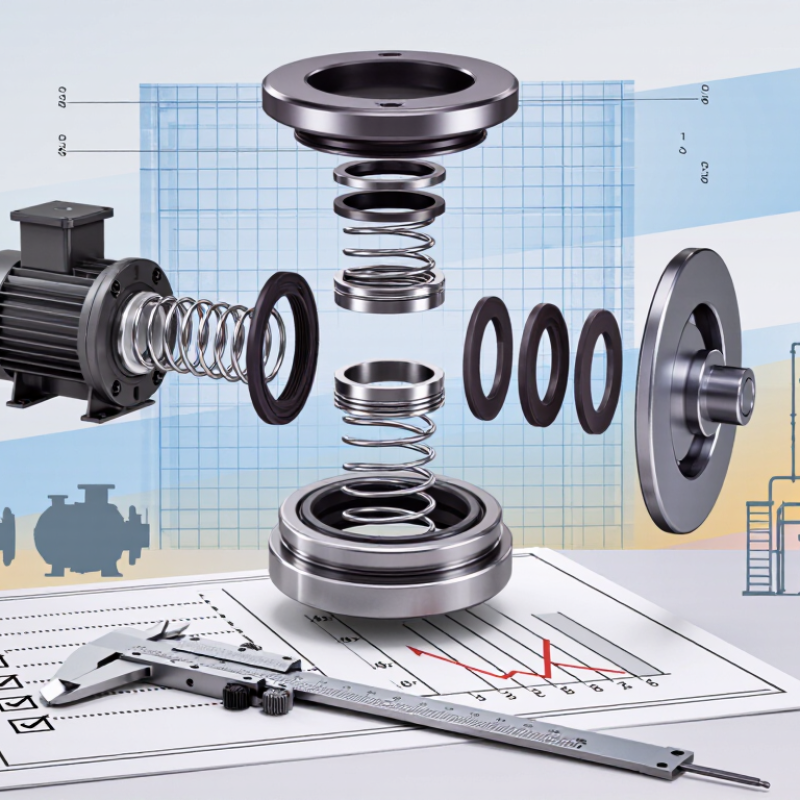
A face mechanical seal prevents fluid from escaping where a rotating shaft passes through a pump or mixer casing. It usually has two finely finished rings: one rotates with the shaft, while the other stays fixed in the housing. A spring and fluid pressure keep their faces in contact. The surfaces are exceptionally flat, but they are not meant to run completely dry.
During operation, a very thin fluid film forms between the faces. It reduces friction and carries away some heat, while the close clearance limits leakage. No visible drip is the goal. A small amount of vapor or leakage may still occur, depending on the fluid, pressure, speed, and seal design. When the shaft starts, stops, or vibrates, that film can change. The seal’s behavior is tied to the whole machine, not just its rings.
Material choice matters. Hard faces can resist abrasion, while other materials may suit cleaner fluids or different temperatures. The right combination depends on the actual service conditions. A clean diagram makes the process look effortless; real service is messier.
Misalignment, dry running, or poor installation can shorten seal life, even when the components seem sound. It is tempting to blame the seal alone, but that is not always fair. Check shaft movement, flushing, and operating records before drawing conclusions. Small details matter.
Common Seal Types, Components, and Materials
Face mechanical seals control leakage where a rotating shaft enters a pump or mixer. Common designs include single and double seals, plus balanced and unbalanced configurations. A single seal may suit clean, moderate-duty service. Double seals can provide an added barrier when fluid handling or operating conditions demand closer control. There is no universal best type. Pressure, speed, temperature, and fluid behavior all matter.
A typical assembly has a rotating face, a stationary face, springs or another loading mechanism, and secondary seals. The faces meet across a thin fluid film. Carbon is often paired with a harder counterface for general service, while silicon carbide and tungsten carbide can handle abrasive wear better. Ceramic may work in selected applications, but compatibility must be checked. Elastomers such as EPDM or FKM form secondary seals; the right choice depends on the process fluid and temperature. Fit matters. During supplier evaluation, ask for material specifications, operating limits, and installation guidance. A catalog match can still disappoint if shaft movement, dry running, or poor alignment is overlooked. These details deserve a second look.
China Top Face Mechanical Seal Manufacturers and Suppliers
Common Seal Types, Components, and Materials
Secondary-seal material selection depends on the fluid, pressure, and operating conditions. This chart compares representative upper continuous service temperatures: actual limits vary by material grade and application. PTFE is included as a common sealing material, though it is not an elastomer.
China’s Face Mechanical Seal Manufacturing and Supply Landscape
China’s face mechanical seal sector supplies components for pumps, mixers, and process equipment. Its manufacturing landscape includes precision machining, lapping, elastomer molding, and final assembly. Suppliers may customize seal dimensions, face materials, and secondary seals for different operating conditions. These details matter when fluids, pressure, temperature, and shaft movement vary. Capabilities differ. A polished sample alone cannot confirm consistent production quality.
Tips: Share drawings and real operating data, including fluid type, temperature, pressure, speed, and shaft size. Ask how suppliers check face flatness, surface finish, leakage, and batch consistency. Request material records and an inspection report for a sample. Keep tolerances clear.
Compare communication and lead-time reliability alongside price. Confirm whether the quoted schedule includes inspection and export packing. Some supplier profiles describe broad capabilities but provide little application-specific test evidence. Ask for relevant records rather than making assumptions. Installation conditions matter, too: misalignment or dry running can damage a well-made seal. Verification takes time, and buyers may still miss details.
How to Evaluate Chinese Manufacturers and Suppliers
China Top Face Mechanical Seal Manufacturers and Suppliers
When evaluating Chinese manufacturers and suppliers, look beyond polished product photos. Ask for drawings that show dimensions, tolerances, and installation requirements. Confirm whether the proposed seal suits your pressure, temperature, fluid, and shaft speed. Material choices matter: request details about seal faces, elastomers, and metal components. A standard model may look right but still fail in your equipment. Details matter.
Tips: Request a sample, inspection records, and a written quotation with clear specifications. Compare these documents across suppliers, not just unit prices. Ask how they handle dimensional changes or production defects. Evidence helps.
Reliable suppliers should explain their manufacturing and inspection steps in plain language. Ask how they check face flatness, surface finish, and assembly quality. If a supplier cannot answer directly, pause and ask for supporting records. A video call or factory visit can clarify equipment and workflow, but neither guarantees consistent batches. Check references where possible, and agree on packaging, lead time, and acceptance criteria before ordering. Some details may still be uncertain; document them rather than relying on a quick promise.
Applications, Quality Standards, and Purchasing Factors
Mechanical seals serve pumps handling clean water, abrasive slurry, hot condensate, and process chemicals. Each duty calls for suitable face materials, elastomers, and seal arrangements. The U.S. Department of Energy’s Improving Pumping System Performance sourcebook reports that pumping systems use nearly 20% of global electricity. That figure makes leakage and maintenance more than housekeeping issues. For Chinese suppliers, buyers should compare application experience, engineering support, and documented production controls—not just unit price.
API Standard 682 is a key reference for shaft sealing systems in petroleum, petrochemical, and natural gas services; ISO 21049 covers related requirements. These standards are useful benchmarks, but a certificate alone cannot confirm that a seal fits a specific pump. Check operating pressure, temperature, shaft speed, fluid compatibility, and flushing conditions. Request material certificates, dimensional inspection records, pressure-test results, and traceability for critical parts. A clear drawing review can prevent a costly mismatch. Still, paperwork may not reveal how a seal performs after months of vibration or solids exposure.
Tips: Send suppliers the pump model, fluid details, operating range, and failure history. Ask how they verify face flatness and test assembled seals. Compare lead time and spare-part availability alongside price. Small details matter. Do not assume the lowest quotation covers the same materials or test scope.