What is a Centrifugal Fan Blower and How Does it Work?
A Centrifugal Fan Blower is a vital component in various industrial applications. Its design allows it to move air efficiently, making it essential for ventilation and cooling systems. This type of blower works by using centrifugal force, which generates a significant amount of airflow. As air enters the fan, it is transformed into high-pressure air, suitable for a range of tasks.
Understanding how a Centrifugal Fan Blower operates is crucial for anyone involved in HVAC systems or industrial processes. The mechanics behind it involve an impeller that spins, drawing in air and expelling it at a higher velocity. This action creates a noticeable airflow, making it effective in various environments. Users must be aware of the potential for wear and tear over time. Maintaining optimal performance often requires regular checks and potential adjustments to ensure efficiency.
Selecting the right Centrifugal Fan Blower demands expertise. Different applications require unique specifications. Oversizing or undersizing a blower can lead to inefficiencies. Proper sizing and application knowledge can save costs long-term. Understanding these aspects helps users avoid common pitfalls in implementation and maintenance.
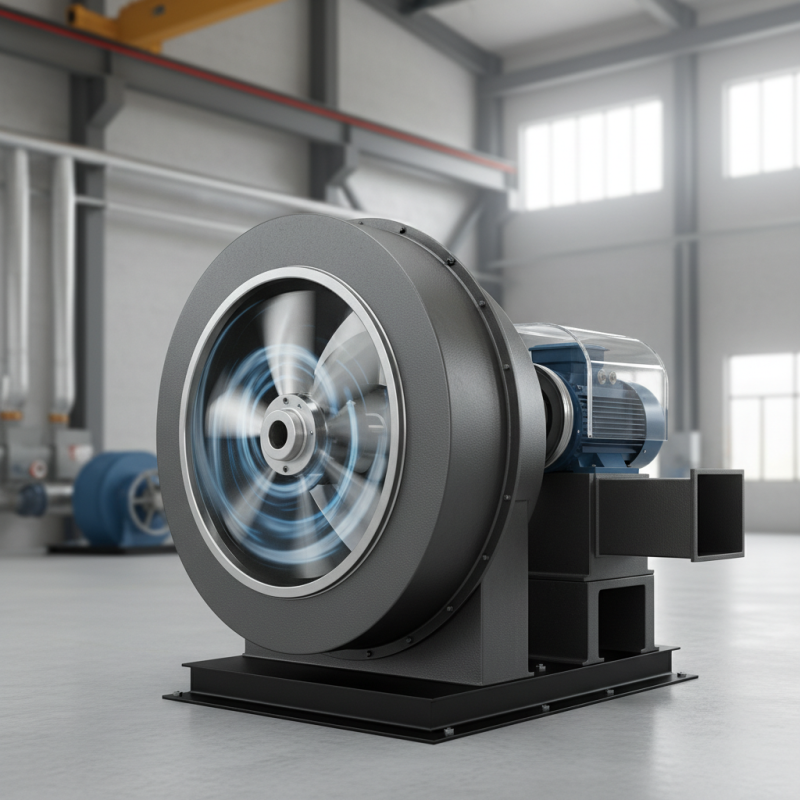
Definition of a Centrifugal Fan Blower and Its Key Features
Centrifugal fan blowers are essential tools in various industries. They efficiently move air or gases using centrifugal force. A centrifugal fan consists of a rotating impeller that draws air in and expels it at high speed. This design allows for improved airflow while maintaining lower noise levels.
Key features of these blowers include high efficiency and durability. They operate at different speeds to accommodate various applications. The casing design can also enhance performance by reducing turbulence. It's important to consider the fan's static pressure capabilities, as this affects its efficiency in specific setups.
Tips: Always evaluate the size and power requirements for your installation. Proper maintenance can significantly extend the fan's lifespan. Don't overlook the importance of selecting the right materials for specific environments. Sometimes, the perfect fan might not be the most expensive.
Principles of Operation: How a Centrifugal Fan Blower Works
Centrifugal fan blowers are essential in various applications, such as ventilation and cooling. They work on a simple yet effective principle. When the impeller spins, air is drawn into the center. This motion creates a flow that pushes the air outward. The design allows the fan to increase the pressure of the air as it moves through the unit. This process transforms low-pressure air into high-pressure airflow.
The blower uses centrifugal force, generated by the impeller's rotation, to boost air pressure. As the impeller accelerates, the kinetic energy increases. This energy is then converted into pressure energy, pushing air into ducts or out into larger spaces. The efficiency of a centrifugal fan largely depends on its design and the speed of the impeller.
However, creating the perfect fan is challenging. Designers must consider factors like air resistance and noise levels. Optimizing these elements can lead to better performance. Engineers must often revisit designs to enhance efficiency and reduce energy consumption. Striking a balance between power and efficiency often proves difficult, revealing the intricate nature of centrifugal blowers.
Common Applications of Centrifugal Fan Blowers in Various Industries
Centrifugal fan blowers play a vital role in several industries. They help maintain airflow and control air pressure in spaces such as foundries, chemical plants, and HVAC systems. These blowers are efficient, often reaching pressure increases of 50% or more compared to other fans. This capability makes them ideal for transporting air and dust across long distances.
In the manufacturing sector, a variety of processes rely heavily on centrifugal fan blowers. For example, the plastics industry uses them to cool down parts during production. Reports indicate that the global market for industrial blowers, including centrifugal models, is expected to grow significantly. However, with advancements, some companies still face challenges in optimizing blower efficiency, often due to lack of regular maintenance.
Centrifugal fan blowers also have applications in the renewable energy sector. Wind turbines use them for cooling and ventilation. Yet, this is an area where many organizations struggle with energy losses. Research shows that up to 40% of energy can be wasted due to improper blower sizing and system design. It highlights the importance of optimizing these systems for better performance and energy savings.
Components of a Centrifugal Fan Blower and Their Functions
The centrifugal fan blower is an essential tool in many ventilation systems. Its design includes several key components that work together to move air efficiently. The main part is the impeller, a rotating disc with blades. As it spins, it accelerates the air outwards, generating a flow. This design is crucial because it ensures a continuous stream of air, making it effective for cooling and drying applications.
In addition to the impeller, the housing is another vital component. It encases the impeller and directs airflow. The blower housing shapes the air stream, minimizing turbulence. The inlet helps in drawing air into the system smoothly. Each of these parts contributes to the blower's overall efficiency. However, improper installation or maintenance can lead to inefficiencies. Regular checks are necessary to ensure optimal functionality.
Another crucial aspect is the motor. It powers the impeller, providing the energy needed for rotation. Selecting the right motor is essential. An underpowered motor can lead to inadequate airflow. On the other hand, an oversized motor can cause excess energy consumption. Balancing these components is sometimes challenging, but it drastically affects performance. Understanding these elements is foundational for anyone working with centrifugal fan blowers.
What is a Centrifugal Fan Blower and How Does it Work? - Components of a Centrifugal Fan Blower and Their Functions
| Component | Function |
| Impeller | The rotating part that accelerates air outwards, creating airflow. |
| Housing | The structure that encloses the impeller and directs airflow. |
| Motor | Provides the necessary mechanical energy to rotate the impeller. |
| Inlet | The entry point for air, designed for optimal airflow into the impeller. |
| Discharge Outlet | The exit point for air, where the airflow is expelled from the blower. |
| Bearings | Support the shaft and allow smooth rotation of the impeller. |
| Vibration Dampeners | Reduce noise and vibration generated during operation. |
Maintenance Tips for Ensuring Optimal Performance of Centrifugal Fans
Centrifugal fan blowers play a crucial role in various industrial applications. Their performance heavily relies on proper maintenance. Regular inspections can reveal issues that might affect airflow efficiency. A study from the American Society of Mechanical Engineers indicates that improper maintenance can reduce fan efficiency by up to 30%.
Monitoring bearing conditions is vital. Worn bearings can lead to vibration, affecting fan stability. Industries should track vibration levels regularly. Keeping fan blades clean is another essential task. Dust accumulation can hinder airflow. Cleaning can improve performance and extend the fan's lifespan.
Lubrication is critical as well. It helps reduce friction and wear on moving parts. According to research from the International Journal of Engineering Trends and Technology, inadequate lubrication is a leading cause of breakdowns. Implementing a scheduled maintenance routine can prevent significant problems. Some organizations still overlook these necessary practices, causing avoidable downtimes. Regular training for maintenance staff can enhance their ability to identify early signs of failure.