© 2025 Messer Cutting Systems, Inc.

Buying a Case Maker for international production is not just a price comparison. It is a decision about fit, consistency, and support after installation. A machine that handles one carton style well may struggle with another. Ask suppliers to demonstrate your actual case dimensions, board grades, and expected production speed. Watch the machine cycle. Listen for uneven movement. Inspect finished cases for square corners, secure folds, and clean edges.
Packaging specialist Maya Chen offers a practical buying principle: “A machine is only a good fit when its finished cases meet your real production needs.” Use that test throughout the evaluation. Confirm which case styles the equipment supports, how quickly operators can change formats, and what routine maintenance requires. Request sample runs and written specifications. Check spare-part availability, training, warranty terms, and remote or local service options. Small details matter. A delayed sensor or unfamiliar control panel can interrupt a shift. Compare total ownership costs, not just the quoted purchase price. Include installation, tooling, energy use, and planned maintenance. If a supplier cannot explain performance limits clearly, pause and ask for evidence. That is worth doing.
The sections ahead present seven practical tips for global buyers: defining requirements, checking machine compatibility, testing output, reviewing build quality, assessing automation, verifying service support, and comparing lifecycle costs. No checklist replaces a factory visit or a well-planned acceptance test. Still, asking precise questions makes supplier discussions more useful. Keep records of test conditions and agreed specifications. Then compare offers on the same basis. A polished brochure is helpful. Verified production results are better.
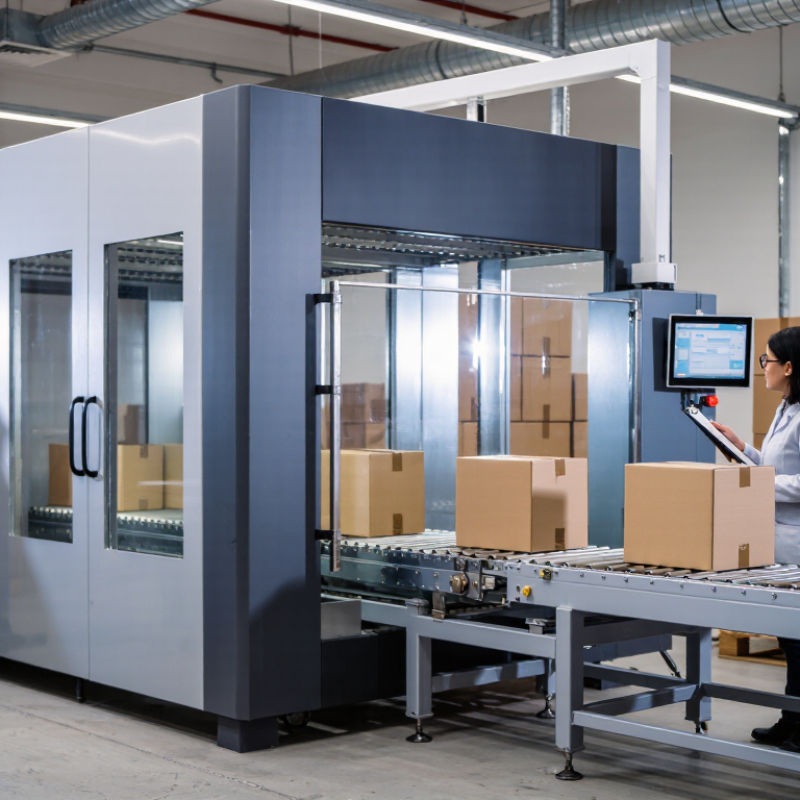
A case maker turns flat corrugated board into shipping cases through feeding, scoring, slotting, folding, and sometimes gluing. The finished case must protect its contents and fit the way goods are stacked, handled, and shipped. Machine types vary: some handle basic box styles, while others support more complex designs. A buyer should understand which operations are included, rather than assuming every case maker performs them all. Small differences matter. A crease in the wrong place can weaken a box or make it awkward to assemble.
Tips: Ask what board grades and case dimensions the machine can process. Request sample cases made from your intended material, then check folds, seams, and dimensions. Confirm setup time and changeover steps; frequent product changes can affect daily output.
A case maker is part of a packaging system, not a stand-alone productivity figure. Its speed matters only when feeding, stacking, and downstream packing can keep pace. Ask for documented operating ranges and clarify how output was measured. A short sample run is useful, but it may not reveal every production issue. Even careful planning can miss something; operators may spot handling problems that specifications do not show.
Defining production needs starts with the boxes your customers actually order, not the machine’s headline speed. FEFCO’s 2022 European industry statistics report about 51 billion square metres of corrugated board production. That scale shows why small efficiency gains matter, but regional output is not a factory forecast. Map your own weekly volume, peak season, shifts, and expected growth before requesting quotations.
Write down the minimum and maximum case length, width, and height, plus board grades and flute profiles. Include the case styles you run most often, such as regular slotted cases, and note how frequently operators change sizes. Ask suppliers to state output in saleable cases per hour for your board and dimensions. A speed figure without those conditions can mislead. Check changeover time, dimensional tolerances, scrap rates, floor space, and available power. A sample run using your actual board is more useful than a polished demonstration. It may still miss a difficult order, so record what needs testing.
Tips: Measure real demand. Bring three representative job specifications to supplier discussions: a common run, a peak-volume run, and a difficult short run. Confirm every assumption in writing.
A case maker should match the box style, board thickness, and daily order mix—not just the fastest advertised cycle. Semi-automatic machines suit varied, shorter runs, though they need more operator handling. Fully automatic models can reduce repetitive work on stable, high-volume jobs. A modular line may offer a practical middle ground. Check what “capacity” means: rated pieces per hour may exclude feeding, changeovers, rejects, and pauses. Ask suppliers to run your actual materials and record saleable output. Small details matter: corner wrapping, glue control, positioning accuracy, and changeover time can affect finished quality.
Market growth provides context, not a buying specification. Smithers’ report, The Future of Global Packaging to 2028, forecasts the global packaging market will exceed $1.2 trillion by 2028. That outlook suggests continued demand, but it does not prove that every converter needs a high-speed line. Compare the maker’s working range with your real order history, including the smallest and largest cases. Measure floor space, power needs, staffing, and service access before comparing prices. A compact machine may fit the workshop but restrict future throughput. And a fast machine may sit idle. Request a written acceptance test, including setup time, dimensional tolerances, and output using your own board and wrapping paper. The rated number alone is easy to trust—and easy to misread.
A polished sample can hide uneven production. Ask the case maker how it controls dimensions, stitching, closures, and surface finish across large orders. Request samples from a normal production run, not only a hand-finished display piece. Compare them with your specification under consistent lighting. Small color shifts can become obvious when cartons arrive.
Check the supplier’s quality records and request current test reports for the materials and markets involved. Confirm that report details match the exact product, not a similar model. Ask how materials are traced by lot and how defects are recorded. Paperwork matters. Requirements vary by destination, so verify applicable rules with qualified local advisers rather than relying on a supplier’s broad assurance.
After-sales support deserves the same scrutiny as price. Agree in writing on response times, evidence needed for a claim, replacement procedures, and responsibility for shipping costs. Ask for an example of a corrective-action report, with sensitive customer details removed. A useful report identifies the cause and the change made. In practice, some issues are hard to assign neatly to one party; document decisions anyway. A short video call with the production or quality lead can reveal how clearly the supplier explains a problem.
| # | Buying Tip | What to Evaluate | Evidence to Request | Global Buyer Check | After-Sales Questions |
|---|---|---|---|---|---|
| 01 | Match the machine to your product and process | Confirm the case format, materials, dimensions, production rate, changeover needs, and how the machine will fit into the existing line. | Request a written specification, sample-machine trial using your materials, and a clear list of included and optional equipment. | Check that the proposed configuration suits your local power supply, available floor space, production workflow, and intended use. | Ask which setup and process adjustments are included during commissioning and what support is available for later product changes. |
| 02 | Verify supplier capability and manufacturing quality | Assess relevant project experience, production and inspection processes, component sourcing, and the supplier’s ability to meet the agreed specification. | Request a factory audit or live production review, inspection records, a project reference you can verify, and documented quality procedures. | Confirm the contracting entity, manufacturing location, export experience, and who is responsible for installation and technical support. | Identify the service team and escalation contact, rather than relying solely on the sales contact. |
| 03 | Check performance claims under realistic conditions | Distinguish rated speed from sustained output. Review acceptable material tolerances, changeover time, reject handling, and operator requirements. | Ask for a factory acceptance test (FAT) using agreed materials and acceptance criteria, with results recorded in a signed report. | Agree on the test method, measurement units, product samples, and remedies if the equipment does not meet the contract criteria. | Clarify whether remote troubleshooting or an on-site visit is available if actual production results differ from the test. |
| 04 | Review safety and regulatory documentation | Check machine guarding, emergency stops, electrical design, operating instructions, and any conformity requirements that apply in the destination market. | Request the risk assessment, technical documentation, declarations or certificates applicable to the machine, and manuals in the required language. | Confirm requirements with the relevant local authority or a qualified compliance professional. Rules vary by market, machine type, and intended use. | Ask how safety notices, software updates, or replacement parts affecting safe operation will be communicated. |
| 05 | Calculate total landed and operating cost | Consider machine price alongside packaging, freight, insurance, duties, installation, training, utilities, maintenance, and consumables. | Request an itemized quotation, shipping terms, packing details, estimated spare-parts costs, and a list of exclusions. | Check import classification, taxes, customs documentation, and delivery responsibilities with a customs broker or local adviser. | Compare preventive-maintenance costs and the availability and lead time of commonly replaced parts. |
| 06 | Agree on installation, training, and acceptance | Define site preparation, utilities, foundation or floor requirements, installation scope, operator training, and handover responsibilities. | Include an installation plan, training agenda, commissioning checklist, acceptance test procedure, and documentation list in the purchase contract. | Confirm travel, visa, language, local contractor, and site-access arrangements before shipment. | Specify how training records, operating procedures, and troubleshooting materials will be supplied and updated. |
| 07 | Put warranty and service commitments in writing | Review warranty duration and start date, coverage, exclusions, response arrangements, remote-support hours, and repair responsibilities. | Request written warranty terms, service contact details, recommended spare-parts lists, and repair or replacement procedures. | Confirm time-zone coverage, communication channels, language support, and any local service partner arrangements. | Ask how service requests are logged, how urgent cases are escalated, and whether spare parts can be shipped to your market. |
When comparing case makers, treat the machine price as one part of the investment. Request an itemized quotation covering packing, freight, insurance, commissioning, and operator training. Small details matter. A low freight estimate may exclude port handling or delivery from the port to your facility. Confirm the agreed delivery terms, shipment dimensions, and who arranges unloading before approving the order.
Build a landed-cost estimate that includes duties, taxes, inland transport, and possible storage charges. These amounts vary by destination and shipment route, so verify them with your customs broker and freight provider. Ask how long the machine may remain in transit and whether transit damage is covered. A realistic buffer helps, though it will not prevent every delay. It is easy to underestimate the cost of a missed production window.
Installation can require more preparation than expected. Check floor capacity, doorway width, working clearance, electrical supply, and compressed-air requirements against the machine’s specifications. Have qualified site staff confirm utilities before delivery. Ask whether installation includes leveling, test runs, and adjustments using your actual case materials. Clarify which tools, technicians, and spare parts must be available. A rushed setup can create avoidable downtime, and a checklist may still miss something. Review it with both the supplier’s technician and your maintenance team.
Illustrative landed-and-installed budget for a hypothetical US$100,000 purchase. Percentages are planning assumptions, not industry averages or a supplier quote.
Compare the full cost—not only the machine price. Request itemized shipping, insurance, duties and taxes, site-preparation, installation, commissioning, training, and spare-parts estimates. Confirm delivery access, utilities, floor requirements, and who is responsible for installation before ordering.
© 2025 Messer Cutting Systems, Inc.