© 2025 Messer Cutting Systems, Inc.

A production line rarely stops because of one dramatic failure. More often, a worn hinge, loose module, or slow belt change interrupts a shift. That is why choosing a Modular Conveyor Belt supplier in China requires more than comparing unit prices. Buyers need evidence of consistent molding, dependable lead times, and support for installation and replacement parts.
Automation is expanding the setting in which these decisions matter. The International Federation of Robotics reported 4,281,585 industrial robots operating in factories worldwide in 2023, a 10% increase from the previous year. This figure does not measure conveyor demand directly, but it shows the scale of automated production environments where reliable material handling is essential. Market research from firms such as Fortune Business Insights also tracks continued development in the broader conveyor belt sector; forecasts, however, vary by scope and methodology. Treat them as context, not guarantees.
So, who are the best modular conveyor belt suppliers in China? A useful answer compares verifiable capabilities: material options, pitch and width tolerances, food-contact documentation where relevant, load and temperature limits, sample testing, and after-sales response. Ask for drawings, test records, and references from comparable applications. A polished catalog is not proof. Nor is the lowest quote. Some supplier claims can be hard to verify, and even a careful shortlist may miss a practical weakness. That uncertainty deserves attention before production begins.
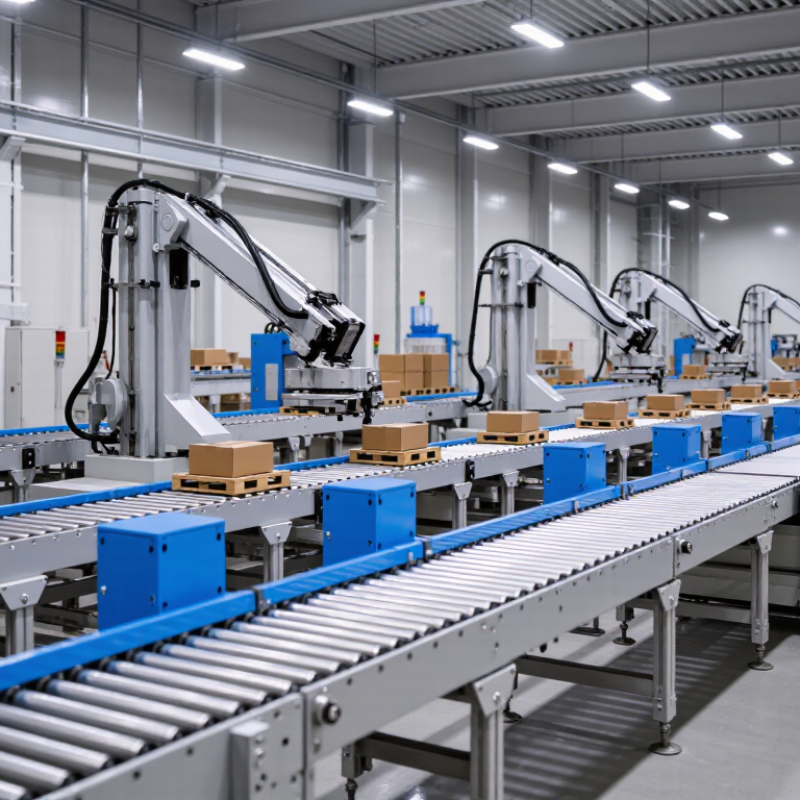
Modular conveyor belts are made from interlocking plastic segments joined by hinge rods, creating a flexible, repairable conveying surface. Unlike a continuous belt, damaged modules can often be replaced individually. The belt runs on sprockets, which help maintain positive drive through curves and transfers. Open-grid designs allow water and debris to drain; solid-top versions support small items. They are commonly used in food processing, packaging, bottling, and some assembly lines. A belt is not a cure-all.
The choice depends on product size, load, temperature, cleaning routine, and transfer geometry. A small biscuit can tip at a poorly designed transfer; a wet washdown area may need open drainage and compatible materials. MarketsandMarkets’ 2023 Conveyor System Market report estimated the broader conveyor system market at USD 10.6 billion, projecting USD 14.1 billion by 2028. This is not a modular-belt-only figure, but it signals investment in conveying equipment across industries. In practice, smooth operation also depends on sprocket alignment, belt tension, and cleaning access. These details are easy to underestimate, and modular belts still need regular inspection for wear and trapped residue.
Who Are the Best Modular Conveyor Belt Suppliers in China?
How to Evaluate Modular Conveyor Belt Suppliers in China
A reliable supplier should understand your actual production conditions, not just quote a belt width. Share the product dimensions, line speed, load, washdown routine, and operating temperature. Then ask how these details affect material selection, belt pitch, sprocket design, and support structure. Small mismatches can cause tracking problems or premature wear. Ask for drawings and confirm that the proposed belt fits your existing conveyor.
Look for practical evidence. Request material data, dimensional tolerances, inspection records, and examples of comparable applications. If possible, review a sample and check its surface, hinge rods, and connection between modules. Ask how the supplier handles wear complaints and identifies replacement parts. Clear answers matter. Vague promises do not. A capable technical team should explain trade-offs, including when a standard design may not suit your line. Check lead times for both new belts and spare modules, and confirm how changes are documented. One thing is easy to overlook: a polished quotation does not prove consistent production quality. A factory visit or third-party inspection can help, though neither guarantees every batch will be perfect. Keep some healthy skepticism.
| Evaluation Dimension | What to Assess | Evidence to Request | Suggested Weight |
|---|---|---|---|
| Product range and application fit | Availability of suitable belt pitches, widths, open-area patterns, sprockets, and accessories for the intended conveyor and product. | Product drawings, dimensional data sheets, application references, and a sample for fit checks. | 15% |
| Material suitability | Whether the proposed polymer or other belt material suits operating temperature, moisture, cleaning chemicals, abrasion, and product-contact requirements. | Material grade, operating-temperature limits, chemical-resistance information, and relevant food-contact documentation where required. | 15% |
| Load and operating conditions | Declared allowable working tension, support requirements, speed limits, and suitability for straight-running or side-flexing operation, as applicable. | Technical specifications and written confirmation that the proposed belt matches the application conditions. | 15% |
| Quality control and traceability | Documented inspection procedures, production consistency, lot identification, and handling of nonconforming products. | Quality-management documents, inspection records, sample reports, and a description of batch traceability. | 15% |
| Dimensions and interchangeability | Consistency of module dimensions, hinge and rod fit, sprocket engagement, and compatibility with the existing conveyor design. | Dimensioned drawings, tolerance information, and a physical sample or trial assembly. | 10% |
| Customization and engineering support | Ability to review conveyor layouts, recommend belt configurations, and provide drawings or practical installation guidance. | A technical response to the buyer’s operating data, layout review, and examples of available documentation. | 10% |
| Delivery and export readiness | Quoted lead time, packaging suitable for transport, export-document capability, and clarity on shipping terms. | Written lead-time estimate, packaging details, a quotation with stated Incoterms, and a list of provided export documents. | 10% |
| After-sales service and warranty | Clarity of warranty coverage, spare-part availability, response process, and support for troubleshooting or replacement claims. | Written warranty terms, service contact process, and recommended spare-parts information. | 10% |
| Total suggested evaluation weight | 100% | ||
Use the weights as a buyer-defined comparison framework, not as a ranking of suppliers. Confirm application-specific requirements and supporting documents directly with each supplier before placing an order.
Chinese modular conveyor belt suppliers generally fall into three groups. Integrated manufacturers produce belt modules, sprockets, shafts, and conveyor frames in one facility. This can simplify fit checks. Their capabilities may include injection molding, machining, assembly, and load testing. Ask how they verify hinge-pin retention and belt tracking; these details matter when a line runs wet or carries uneven loads.
Component-focused suppliers concentrate on molded modules or drive parts, while engineering-led firms design complete conveying systems around a plant’s layout. They may offer CAD drawings, speed calculations, and trials using sample products. A third group handles sourcing and export coordination, sometimes combining parts from several factories. This can widen product choices, but traceability may be less clear. Check whether drawings, material data, and inspection records come from the actual production site.
Capabilities vary widely. A supplier with many catalog sizes may still lack experience with tight transfer gaps or abrasive loads. Request a short test run with your product, then inspect belt movement, noise, and wear after operation. Ask about resin grades, molding tolerances, spare-part availability, and production lead times. A small oversight can become expensive. I would not treat a polished brochure as proof of manufacturing depth; factory evidence and measured samples are more useful.
Material choice is one practical way to compare supplier capabilities. These approximate operating ranges vary by grade, belt design, load, and environment; confirm the exact limits with the supplier for the intended application.
When comparing modular conveyor belt suppliers in China, ask for evidence, not polished claims. The global conveyor systems market was valued at about USD 9.4 billion in 2024, with MarketsandMarkets forecasting growth to USD 12.9 billion by 2029. That expansion makes supplier selection more consequential, but market growth does not guarantee consistent belt quality.
Request material specifications, load ratings, belt pitch, and documented test results. Then check whether these match your product, washdown routine, and operating temperature. Ask for sample sections and inspect hinge movement, edge finish, and sprocket engagement. Small defects matter. A belt that tracks poorly can interrupt a line. Compare quotations on the same basis: belt length, accessories, spare links, packaging, and delivery terms. Low upfront pricing may exclude useful support.
Service deserves a practical test. Ask how quickly the supplier can identify a replacement module and whether technical staff can help with installation. MHI’s 2024 Annual Industry Report found that 55% of surveyed companies planned to increase investment in supply-chain technology, reflecting growing attention to automation. Still, automation projects depend on ordinary details, such as clear drawings and dependable spare-part supply. I would also ask for references from comparable applications; supplier claims alone are not enough. Some comparisons remain imperfect, especially when factories use different duty cycles. That uncertainty should be recorded, not ignored.
Choosing a modular conveyor belt supplier in China starts with your product, not the quotation. A food plant moving wet, chilled items needs different belt materials, drainage, and cleaning access than a dry packaging line. Ask for belt pitch, allowable load, operating temperature, and chemical-resistance data. Request drawings and a sample section. Small details matter: a transfer gap can catch soft products, while an unsuitable sprocket can cause uneven tracking.
The market is growing, but that does not make every supplier suitable. MarketsandMarkets estimated the global conveyor-system market at US$10.6 billion in 2023, forecasting US$13.7 billion by 2028. Treat this as context, not proof of a supplier’s capability. Check production tolerances, material certificates, spare-part lead times, and whether the supplier can test your actual product. Ask for references from comparable applications and a clear service plan for your destination market. Very practical. Also verify packaging, communication across time zones, and who handles installation support. I would not judge quality from a polished catalogue alone; a short pilot run may reveal issues that paperwork misses. Some buyers skip this step. That can be costly.
© 2025 Messer Cutting Systems, Inc.