© 2025 Messer Cutting Systems, Inc.

Choosing the best Electronic Voltage Stabilizer in China depends on the power conditions at your site, not just a brand name. A unit that suits a small office may struggle with a workshop motor or several air conditioners starting together. Begin with the equipment’s nameplate, total running load, and starting current. Then compare these figures with the stabilizer’s rated capacity and stated input-voltage range. A wider range may help where supply voltage fluctuates, but it does not guarantee better performance in every installation.
Check the details that affect daily use. Look for overload and over-temperature protection, clear status indicators, suitable output accuracy, and service support in your area. For example, a display showing low input voltage can help explain why a compressor keeps stopping. Yet a stabilizer cannot repair faulty wiring, provide backup power during an outage, or solve every power-quality problem. Small distinction. Installation matters, too; have a qualified electrician assess the circuit and grounding before choosing a model.
This guide compares common stabilizer types and practical selection criteria for homes, businesses, and industrial loads in China. It also explains which specifications deserve close attention and which claims need context. Product data sheets are useful, but they may not reflect performance under your actual load. There is no universal winner. The right choice balances capacity, voltage range, protection, cost, and dependable local support.
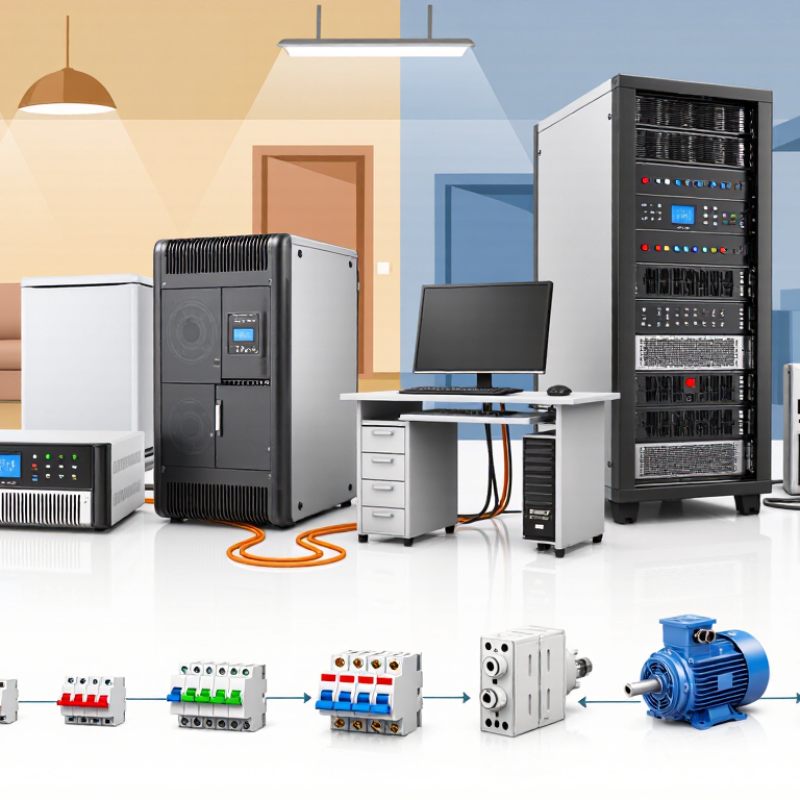
An electronic voltage stabilizer monitors incoming voltage and adjusts it when supply rises or falls outside a set range. A sensing circuit detects the change; electronic switches then select transformer taps or regulate power through another circuit design. The exact method varies by model. Its purpose is to keep the output closer to the required level, not to create electricity or guarantee protection from every fault.
The 2024 Uptime Institute Annual Outage Analysis found that 54% of surveyed organizations said their most recent significant outage cost more than $100,000. This survey concerns data-center outages, not stabilizer performance, but it shows why power reliability deserves attention. The label can mislead. Before choosing a unit, check its input range, output accuracy, response time, rated capacity, and ability to handle motor-starting surges. A stabilizer cannot correct every problem. It generally does not fix frequency changes, severe waveform distortion, or a complete power failure; a refrigerator’s compressor may still draw a sharp starting current. Real site measurements matter more than a broad product claim.
An electronic voltage stabilizer regulates voltage through a feedback loop. It measures the incoming supply, compares it with a target, and adjusts a transformer or power-electronic circuit. Relay models switch transformer taps; servo models move a contact across a winding; static designs use semiconductor switches. The correction appears at the output, helping protect connected equipment from sustained overvoltage or undervoltage. The device does not create unlimited power.
Response time matters. IEEE Std 1159-2019 defines a voltage sag as an RMS reduction to 0.1–0.9 per unit, lasting from half a cycle to one minute. A stabilizer may correct slower variations, but brief sags can pass through before its control system reacts. Check its stated response time and rated capacity against the actual load. A motor starting in a workshop, for example, can draw a sharp surge and pull the voltage down. Real installations are messier. Wiring, load changes, and poor sizing all affect performance; a stabilizer cannot fix every power-quality problem.
In China, voltage stabilizers commonly use relay, servo-motor, or static electronic control. Relay models switch transformer taps through relays. They suit modest loads, but switching can create brief voltage steps. Servo units move a carbon brush across a variable transformer. Their correction is smoother, though the motor and brush need maintenance. Static stabilizers use power electronics, respond quickly, and have no moving brush. They often cost more.
Selection should start with the supply and load, not the product label. China’s GB/T 12325-2022 standard allows 220-volt single-phase supply to vary by +7% and −10%—roughly 198 to 235 volts. That range matters. A refrigerator compressor or workshop motor can draw a strong starting current, so the stabilizer needs suitable capacity and overload tolerance. A unit rated only for steady running may trip at startup.
For frequent fluctuations, static control can be useful; for simpler household loads, a relay unit may be adequate. Servo control can suit equipment needing steadier output, provided maintenance is acceptable. None is a cure-all. Stabilizers cannot fix poor wiring or an undersized circuit, and I would check measured voltage across different times of day before choosing.
When comparing electronic voltage stabilizers in China, start with actual supply conditions, not the largest advertised capacity. Record the lowest and highest input voltage during a normal workday; a narrow input range may leave equipment exposed during evening dips. Check the rated output voltage and regulation accuracy. Confirm that accuracy at both partial and full load. For sensitive controls, small deviations can matter.
Choose capacity in kVA, allowing for motor-starting current and equipment that runs simultaneously. A pump may briefly draw several times its normal current. Confirm single-phase or three-phase compatibility, frequency, response time, and suitability for connected electronics. Check for overload, over-temperature, short-circuit, and voltage protection. Also consider cooling, noise, ambient temperature, and service access. Datasheets can omit practical limits. Ask about test conditions and verify safety certifications against project requirements. Even careful sizing can miss a fluctuating load.
Tips: Photograph equipment nameplates and measure voltage at the installation point before ordering. Measure first. Leave sensible capacity headroom, but avoid paying for unused capacity. If readings vary sharply, have an electrician inspect the wiring and load balance; a stabilizer cannot correct every upstream fault.
| Specification | What to Check | Typical Reference | Why It Matters | Practical Selection Guidance |
|---|---|---|---|---|
| Nominal supply voltage and phase | Rated input and output voltage; single-phase or three-phase configuration | Common nominal supplies in China are 220 V single-phase and 380 V three-phase at 50 Hz. | The stabilizer must match the electrical system and the connected equipment. | Confirm the site supply and equipment nameplate. For three-phase loads, check whether the load requires a three-phase unit and how phase imbalance is handled. |
| Input-voltage range | Minimum and maximum input voltage at which the unit can regulate its rated output | Ranges such as 140–260 V or 160–250 V are found on some single-phase models; available ranges vary by model and capacity. | A wider range can help where supply voltage regularly fluctuates, but the rated output capacity may be reduced at low input voltage. | Measure or log the lowest and highest site voltage before choosing. Check the manufacturer’s capacity-versus-input-voltage curve, not just the headline range. |
| Rated capacity | Continuous capacity in kVA or kW, plus any derating conditions | Capacity should be selected from the connected load’s actual operating demand; kW and kVA are not interchangeable unless power factor is considered. | An undersized unit may overheat, trip, or fail to start a load. A unit selected only by the sum of appliance wattages may not account for power factor or starting current. | Calculate the simultaneous load, account for power factor, and leave a suitable margin. For motors and compressors, check starting current and the stabilizer’s overload capability. |
| Output-voltage accuracy | Regulation accuracy under specified input, load, and temperature conditions | Published accuracy varies by design and model; values around ±2% to ±5% are specified by some products. | Sensitive equipment may require tighter voltage control than general lighting or heating loads. | Compare accuracy specifications under the same test conditions. Verify that the required accuracy is maintained across the expected input range and load level. |
| Stabilizer technology and response | Regulation method, correction speed, and performance during abrupt voltage changes | Relay-switched, servo-controlled, and static electronic designs have different switching behavior, correction characteristics, and maintenance needs. | Technology affects response, output stability, noise, wear components, and suitability for the application. | Choose by load sensitivity and operating environment. Ask for documented response and regulation data; avoid comparing response figures that use different test methods. |
| Protection functions | Overload, overvoltage, undervoltage, short-circuit, overheating, and bypass protection | Protection features differ among models and may have adjustable thresholds or time delays. | Protection can disconnect the load when the supply or stabilizer operates outside safe limits; it does not replace proper circuit protection. | Check trip thresholds, reset behavior, alarms, and whether a bypass mode is available. Coordinate the unit with correctly rated upstream breakers and downstream protection. |
| Efficiency and heat dissipation | Efficiency at representative loads, ventilation requirements, and permissible ambient temperature | Efficiency is model- and load-dependent; losses are converted to heat inside the unit. | Heat affects energy use, component life, and reliable operation, especially in continuously loaded installations. | Review efficiency data at the expected operating load. Provide the specified ventilation clearances and avoid dusty, damp, or excessively hot locations unless the enclosure is rated for them. |
| Installation and operating environment | Indoor or outdoor rating, enclosure protection, wiring, grounding, and service access | Enclosure ratings and installation requirements are product-specific; outdoor suitability should not be assumed. | Correct installation reduces electrical hazards and helps prevent moisture, dust, and heat from damaging the unit. | Follow the unit’s installation manual and applicable local electrical requirements. Confirm cable and terminal ratings, grounding, phase arrangement, and access for inspection. |
| Standards, testing, and documentation | Applicable conformity documents, test reports, technical datasheet, and warranty terms | Requirements depend on product type, intended use, and the relevant regulations or procurement specification. | Clear documentation helps verify ratings and supports safe installation, maintenance, and procurement decisions. | Request the exact model’s datasheet and test documentation. Verify that stated ratings apply to the intended configuration and are not based solely on marketing descriptions. |
Comparing voltage stabilizers in China starts with the supply conditions, not the product label. China’s national standard GB/T 12325-2008 sets voltage deviation limits of +7% to −10% for 220 V single-phase supply and ±7% for 380 V three-phase supply. Use these figures as a reference, then measure voltage at the actual installation point. A workshop at the end of a long feeder may face different dips from an apartment with steady mains. Measure during peak operating hours, too.
Match capacity to the load. Motors, pumps, and compressors draw high starting current, while office electronics usually have steadier demand. Check rated kVA, input-voltage range, regulation accuracy, response time, efficiency, and heat dissipation. For example, a stabilizer installed beside a dusty machine needs suitable enclosure protection and clear ventilation. Check the load’s starting current, not just its running wattage. Small details matter. For sensitive equipment, confirm waveform quality and grounding requirements; a stabilizer does not replace a UPS during outages. Compare test reports against the stated operating conditions, and ask how performance changes near the input-voltage limits. I would not choose by accuracy alone. That is an easy mistake, and real site measurements can still surprise you.
Compare stabilizers for different applications by checking whether they can handle each load’s starting current, alongside their input-voltage range, output accuracy, and protection features.
Typical motor starting current can be several times the running current; resistive heaters generally have little starting surge. These are approximate general ranges, not product specifications. Actual values vary by equipment and starting method. Check the equipment nameplate and choose a stabilizer rated for the load and its startup demand; motor loads may also require additional capacity when input voltage is low.
© 2025 Messer Cutting Systems, Inc.