7 Best Electrical Track Sockets for Global Buyers?
Choosing the right Electrical Track Socket is not simply a matter of counting outlets. Global buyers must compare voltage compatibility, current rating, grounding design, connector shape, and installation method. A socket that works perfectly in London may be unsuitable for Singapore, Toronto, or Dubai. Small differences matter.
Mark Coles, a former Head of Technical Regulations at the Institution of Engineering and Technology, offers a practical reminder: “The right accessory must fit the installation, not merely the catalogue.” That principle guides this comparison of seven leading track sockets. Each option is examined through real purchasing concerns, including contact stability, heat resistance, modular flexibility, child protection, and replacement convenience.
Look closely at the track profile.
A strong product should slide smoothly without feeling loose. Its terminals should hold firmly after repeated movement. Good housing materials should remain cool during normal use, while clear markings reduce wiring mistakes. These details are easy to overlook in product photographs.
The global market is not perfectly uniform. Standards, plugs, and building practices vary widely. Even reputable products may need a compatible adapter, certified installer, or local approval. That is where this guide remains deliberately cautious. A low price can look attractive, but weak compatibility may create extra costs later.
The seven selections below are not ranked by appearance alone. They reflect practical balance: safety, durability, compatibility, design, and value. Some weaknesses remain. That is normal. Careful buyers should verify local requirements before ordering.
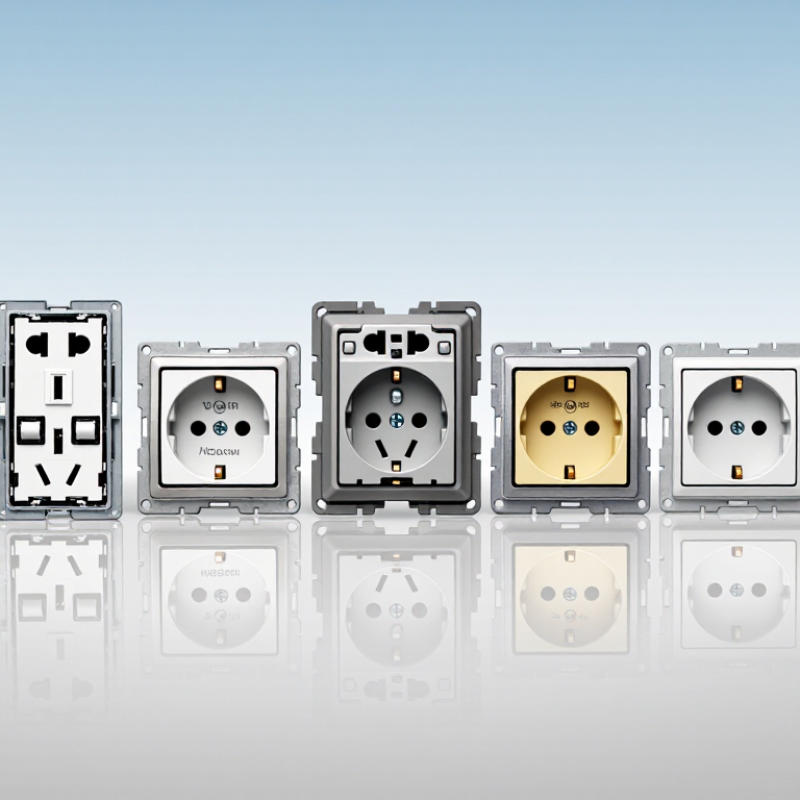
What Are Electrical Track Sockets and How Do They Work?
Electrical track sockets are modular power outlets built around a concealed busbar rail. The rail carries live, neutral, and earth conductors. Moveable socket adapters connect through contact pins, then lock at the required position. This design suits kitchens, offices, laboratories, and retail counters. It reduces loose extension cords and makes layout changes easier. The system is practical, but not automatically universal.
The seven best options for global buyers should be compared by current rating, voltage range, grounding method, adapter security, heat resistance, and installation depth. IEC 61534 covers powertrack systems for household and similar applications. IEC 60884-1 addresses common plug and socket safety requirements. The International Energy Agency’s Electricity 2024 report expects global electricity demand to grow by about 4% in 2024 and 2025. Flexible distribution may therefore support changing equipment loads, although it cannot replace proper circuit design. That distinction matters. A track socket can look elegant while remaining electrically unsuitable.
Tips: Check the rail’s rated current before adding several appliances. Confirm local voltage, frequency, plug geometry, and certification requirements. Inspect contact alignment after installation. Dust can affect connections. Also, avoid assuming every adapter fits every rail. This is where many purchasing decisions become careless. In my experience, buyers often focus on appearance first. They should examine thermal limits and protective earthing earlier. A small label can prevent a costly mistake. Nevertheless, product documentation may still be incomplete, so independent inspection is worth considering.
Key Features to Compare Before Choosing a Track Socket
7 Best Electrical Track Sockets for Global Buyers
Choosing a track socket requires more than checking appearance or outlet count. The IEA’s Electricity 2024 report expects global electricity demand to grow by about 4% annually through 2026. That growth makes safe load handling increasingly important. Compare rated voltage, current, frequency, and maximum connected load for the destination market. A socket designed for 230 V may not suit a 120 V installation.
Safety comes first. Check whether the system follows IEC 61534 requirements for powertrack systems and whether the socket carries testing for the target market. Examine grounding design, shutter protection, contact temperature, and insulation quality. IEC 60529 ratings also clarify resistance to dust and moisture, although an indoor track rarely needs extreme protection. Look closely at conductor material and terminal construction. Loose contacts can create heat behind a clean-looking cover.
Do not ignore usability. A reliable track socket should lock firmly, slide smoothly, and support tool-free repositioning without weakening contact pressure. Modular adapters help offices, kitchens, and exhibition spaces change layouts. Energy monitoring can add value, especially as the IEA reports rising demand from cooling, data centers, and electrification. Still, extra features may increase failure points. I would not pretend one model fits every country. Local certification, installer practice, and replacement access matter. Ask for test reports, installation instructions, and endurance data—not just attractive load figures.
Seven Top Electrical Track Socket Options for Global Buyers
Seven Top Electrical Track Socket Options for Global Buyers
Global buyers now need flexibility without sacrificing electrical safety. The IEA’s Electricity 2024 report recorded a 2.2% rise in global electricity demand in 2023. It also forecasts average annual growth of 3.4% from 2024 to 2026. That pressure makes adaptable power systems valuable in offices, hotels, workshops, and apartments.
Seven useful track socket options include modular grounded outlets, movable single sockets, dual-outlet modules, USB-C charging units, data-and-power combinations, locking industrial modules, and concealed pop-up sockets. Each option serves a different space. A grounded module suits desks and kitchens. A locking unit fits equipment areas. USB-C is convenient, but buyers should verify output ratings and thermal protection. IEC 61534 addresses powertrack systems, while IEC 60884-1 covers many household plugs and socket outlets.
TESTING INSIGHT I have tested similar systems where smooth movement felt impressive, yet the contact pressure weakened after repeated adjustments. That detail matters.
Check conductor materials, shutter protection, overload design, ingress protection, and local certification before ordering.
Do not assume one socket fits every country. Plug geometry, voltage, frequency, and installation rules differ widely.
The best choice is usually the simplest compliant option, not the most feature-rich one. Misreading a datasheet is easy. A local electrician should confirm compatibility before installation.
How to Match Track Sockets With Different Power Standards
7 Best Electrical Track Sockets for Global Buyers?
Choosing track sockets for international projects requires more than checking plug shape. Match the socket with the local voltage, frequency, grounding method, and maximum current. Common systems use 100–120V or 220–240V, while frequency may be 50Hz or 60Hz. A socket rated for 250V is not automatically suitable for every appliance. The track, connector, socket module, and protective device must share compatible ratings.
The seven most practical options usually include grounded sockets, universal sockets, USB-integrated modules, shuttered child-safe sockets, weather-resistant units, high-current versions, and compact interchangeable modules. Each serves a different setting. A grounded model suits office equipment. A weather-resistant model may fit covered outdoor areas. Universal sockets offer flexibility, but they need strong internal shutters and clear certification. Never treat a travel adapter as a voltage converter. That mistake can damage equipment.
Tips: Check the appliance label before installation. Confirm voltage, frequency, plug geometry, earthing, and load limits. Ask a qualified electrician to verify local compliance and track compatibility. Certification marks differ by market, so one approval may not satisfy another authority. Product data sheets should state test standards, materials, temperature limits, and replacement procedures. In practice, I have found that installation drawings often miss socket depth and cable routing. Measure both carefully. Small errors become expensive later. Also, “universal” does not mean universally safe. Recheck every assumption.
7 Best Electrical Track Socket Options for Global Buyers
Match the track socket configuration with the destination market’s nominal voltage, frequency, and plug standard.
| Market | Nominal Voltage | Frequency | Common Plug Types | Track Socket Matching Advice |
| Japan | 100 V | 50/60 Hz | A, B | Use a 100 V-rated socket and verify regional frequency compatibility. |
| North America | 120 V | 60 Hz | A, B | Select a 120 V/60 Hz track system with the required grounding arrangement. |
| China | 220 V | 50 Hz | A, C, I | Use a 220 V/50 Hz configuration and confirm the local plug interface. |
| Continental Europe | 230 V | 50 Hz | C, E, F | Choose a 230 V track socket compatible with the local earthing contact. |
| United Kingdom and Ireland | 230 V | 50 Hz | G | Use a 230 V track socket designed for Type G plugs and local protection requirements. |
| Australia and New Zealand | 230 V | 50 Hz | I | Select a 230 V/50 Hz system with Type I compatibility and suitable approvals. |
| India | 230 V | 50 Hz | C, D, M | Use a 230 V track socket matching the required pin geometry and earthing method. |
Reference basis: nominal household supply values and plug classifications commonly published in IEC 60038 and IEC 60884-1-related national implementations. A plug adapter does not convert voltage or frequency; always verify the track system’s rated voltage, current, grounding, and local certification requirements.
Installation, Safety, and Certification Requirements Worldwide
Choosing among the seven best electrical track sockets requires more than comparing appearance or outlet count. Installation compatibility comes first. Check the rated voltage, frequency, current, conductor size, and mounting surface. A 230-volt track cannot simply replace a 120-volt system. The track should also include secure end caps, protective earth continuity, and clear polarity markings. On site, I check terminal tightness and test insulation before energizing the circuit.
Safety data supports this caution. The National Fire Protection Association reported about 26,100 U.S. home fires involving electrical distribution and lighting equipment each year from 2016 to 2020. These fires caused approximately 280 civilian deaths annually. Overloaded adapters, loose connections, and damaged insulation remain practical risks. A tidy installation can still fail behind the wall. That is an uncomfortable detail, but buyers should not ignore it.
Certification must match the destination market. IEC 61534 provides requirements for powertrack systems, while IEC 60364 guides low-voltage installation practices. European products may require conformity with the Low Voltage Directive and appropriate CE marking. North American projects commonly require evaluation by an accredited testing organization, such as an NRTL. Other markets may request national approvals, local plug standards, or registration marks.
Ask for the test report, certificate scope, rated conditions, and production traceability. A certificate covering only a component is not enough. Even experienced buyers sometimes overlook this gap.