Which Type of Drying Oven Is Best in 2026?
Choosing the best Drying Oven in 2026 is not a matter of buying the hottest or largest unit. It means matching heat, airflow, and control to the material being dried. A tray of ceramic parts, a sealed pharmaceutical batch, and a moisture-sensitive electronic component each respond differently. The wrong setup can leave damp centers, brittle edges, or uneven color. Small details matter.
The International Energy Agency’s Energy Efficiency 2023 report identifies industry as a major share of global energy use. That wider context makes oven efficiency worth examining, though it does not tell buyers which specific oven to choose. Drying researcher Arun S. Mujumdar, editor of Handbook of Industrial Drying, has emphasized a related principle: drying performance depends on the material and operating conditions. This is a paraphrase of his published work, not a verbatim quotation. Take that seriously.
This guide compares convection, vacuum, infrared, and other common oven types by temperature range, load size, drying time, and process sensitivity. It also considers practical questions: Does the sample tolerate direct airflow? Must moisture be removed at low temperatures? Will batches vary in shape or thickness? Manufacturer specifications help, but they are not independent performance tests. A careful buyer should verify uniformity and repeatability under real operating conditions. No oven wins every job. The right choice is the one that meets the product’s requirements without adding needless heat, time, or complexity.
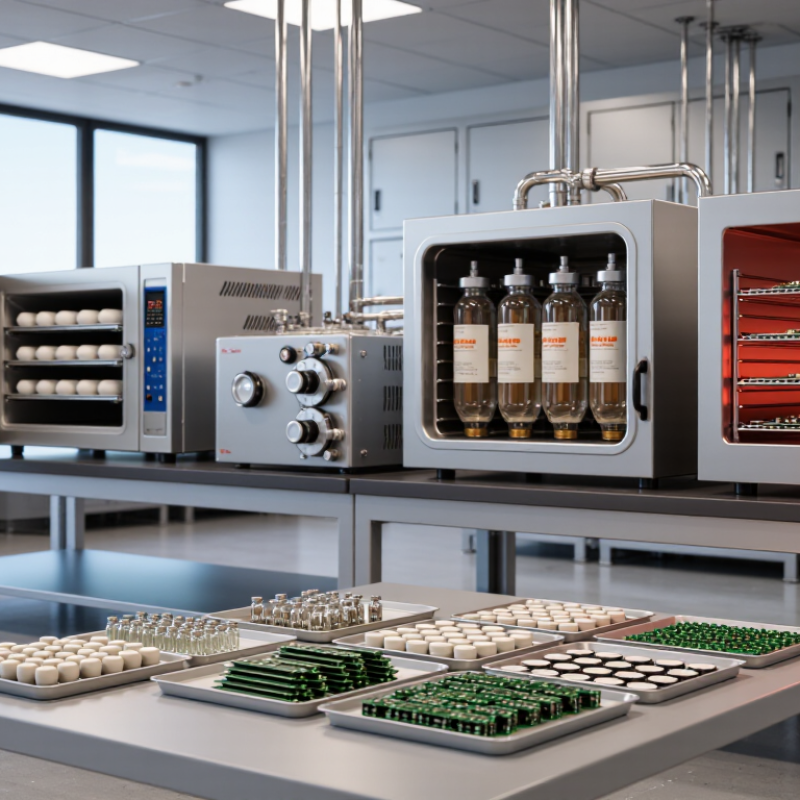
What a Drying Oven Does and How It Removes Moisture
A drying oven removes moisture by warming a material and allowing water vapor to leave its surface. Its job is not simply to make a chamber hot. Controlled temperature, air movement, and ventilation help moisture escape at a predictable rate. Heat moves into the sample, while airflow carries away humid air. Some ovens rely mainly on natural circulation; others use fans to distribute heat more evenly. That sounds simple. It isn’t always.
Moisture inside a thick or tightly packed load must travel toward the surface before it can evaporate. If the temperature is too high, the outside may dry quickly while the center stays damp. If airflow is poor, humid air can linger around trays. A well-chosen oven matches the material, load size, and required drying conditions.
In 2026, digital controls and logged readings can help operators repeat a process, but they do not guarantee uniform results. Placement and loading still matter. A small test run is useful, especially when the material changes. I’d check the sample’s mass over time rather than trusting the display alone; it’s a little less convenient, but often more revealing.
Tips: Spread material in a shallow, even layer, leave space between trays, and avoid blocking vents. Record temperature, drying time, and sample mass. If one corner dries slower, inspect airflow and tray placement before raising the set temperature.
The Main Types of Drying Ovens Available in 2026
Natural-convection ovens move warm air without a fan. They suit gentle drying when samples are light or easily disturbed, though temperature recovery can be slow after the door opens. That matters.
Forced-air ovens use a fan to circulate heat. They often dry batches more evenly, especially when trays hold similar loads and leave room for airflow. But airflow can shift fine powders or dry the surface of a sample before its center. It is a trade-off that is easy to underestimate.
Vacuum ovens lower air pressure, helping moisture evaporate at lower temperatures. They are useful for heat-sensitive materials, but require suitable vacuum equipment and careful loading.
Infrared ovens transfer heat directly to exposed surfaces, which can make them quick for thin layers; thicker or uneven pieces may dry inconsistently. Not always.
The best type depends on the material, batch size, target moisture level, and acceptable temperature. Check temperature uniformity and recovery with a representative load, not an empty chamber. A small test batch can reveal problems that a specification sheet will not.
How Drying Oven Types Differ in Heat, Airflow, and Control
The best drying oven depends on what must stay uniform: temperature, airflow, or product moisture. Gravity-convection ovens move warm air naturally and suit light, loosely loaded samples. But dense trays can leave cool pockets. Forced-air models use fans to move heat across shelves, often improving recovery after the door opens. Not always better. Fast airflow may disturb powders or lightweight parts.
Vacuum ovens lower pressure, helping moisture evaporate at lower temperatures; they fit heat-sensitive materials, though loading and sealing affect results. Infrared systems heat exposed surfaces quickly, but shaded areas may dry unevenly. The U.S. Department of Energy’s process-heating sourcebook estimates that process heating uses about 36% of energy in U.S. manufacturing. That figure makes insulation, door openings, and control strategy practical selection factors—not minor details.
Compare temperature uniformity under a representative load, not just the empty chamber’s display. Check sensor placement, recovery time, and airflow at the shelf level. ASTM E145 provides a recognized framework for gravity-convection and forced-ventilation oven specifications. A tidy specification sheet can still mislead: a tightly packed tray may behave differently from the test load. The right oven is the one that repeatedly dries the actual product without overheating its edges.
Which Type of Drying Oven Is Best in 2026?
Compare typical heat-transfer responsiveness, airflow, and temperature-control precision across common drying oven types.
Scores show typical relative characteristics on a qualitative 1–5 scale, not standardized test results. The best choice depends on the material, required throughput, and process conditions.
Key Factors for Matching an Oven to Your Materials and Process
The best drying oven depends on what must leave the material, how quickly it must leave, and what heat the material can tolerate. A thin coating may dry evenly with gentle, well-distributed airflow. Dense parts or deep trays can hold moisture inside, even when their surfaces look dry. Small details matter.
Start with the material’s temperature limit and the process endpoint. Does the product need to reach a target moisture level, or simply feel dry? Heat-sensitive components may need lower temperatures and longer cycles. Solvents or strong odors may require suitable exhaust provisions. Check the material supplier’s guidance, and confirm the oven’s operating range against the actual process.
Airflow and loading patterns are easy to underestimate. A shelf packed with trays can block circulation; a test with one empty shelf proves little. Record temperatures at several points in a representative load, then compare results across repeated cycles. If one corner stays damp, adjust spacing or loading before raising the setpoint. That may take longer than expected.
For repeatable production, consider programmable controls, alarms, and data logging. These features help reveal drift, but they do not replace process checks. A batch oven offers flexibility for varied loads, while a continuous system may suit steady throughput. Neither is automatically better. I would test with real materials and normal load sizes before settling on a specification; bench trials sometimes miss awkward production-day conditions.
Drying Oven Applications Across Laboratory and Industrial Settings
Which Type of Drying Oven Is Best in 2026?
Drying Oven Applications Across Laboratory and Industrial Settings
Drying ovens serve very different jobs, from removing moisture in a laboratory sample to curing components on a production line. In labs, forced-air ovens help dry glassware and stable materials, while vacuum ovens suit heat-sensitive samples that may degrade at higher temperatures. The right choice depends on the material, load size, and required temperature uniformity. Small details matter: a crowded shelf can slow drying and create uneven results.
Industrial ovens face a different challenge: repeatable output across larger loads. Tray, conveyor, and batch ovens can support drying, preheating, or curing, but throughput alone is a poor measure of performance. The International Energy Agency’s Energy Efficiency 2023 report estimates that industry accounted for about 37% of global energy use in 2022. That makes insulation, airflow, operating schedules, and heat recovery worth checking alongside capacity. Measure energy use under real loading conditions, not just an empty chamber.
There is no perfect setting. A temperature that works for a thin ceramic part may damage a thicker assembly. Map chamber temperatures with sensors, then test representative loads before setting routine cycles. Record drying time, product moisture, and energy use. It takes effort. Still, assumptions can be costly. Even careful tests may miss variation between batches, so review the process when materials or loading patterns change.