What is an Alloy Powder Grader and How Does it Work?
In the realm of metal processing, an "Alloy Powder Grader" plays a vital role. This equipment is essential for the precise classification of metal powders, which are critical in various manufacturing processes. Dr. Emily Chen, a leading expert in powder metallurgy, once stated, "The accuracy of an Alloy Powder Grader can make or break the quality of the final product." Her insight highlights the importance of this technology.
An Alloy Powder Grader works by employing specific algorithms and sensors to sort particles based on size and density. These measurements ensure that the powders meet strict quality standards. However, the technology is not without its challenges. Variations in powder properties can lead to inconsistencies in grading results. This can affect the end product's performance.
Thus, understanding the complexities of an Alloy Powder Grader is essential for manufacturers. Ongoing research and innovation are needed to overcome the current limitations. As the industry evolves, greater precision and efficiency will be required. This highlights the need for a deeper exploration into the mechanisms of alloy grading and its impact on production quality.
What is an Alloy Powder Grader?
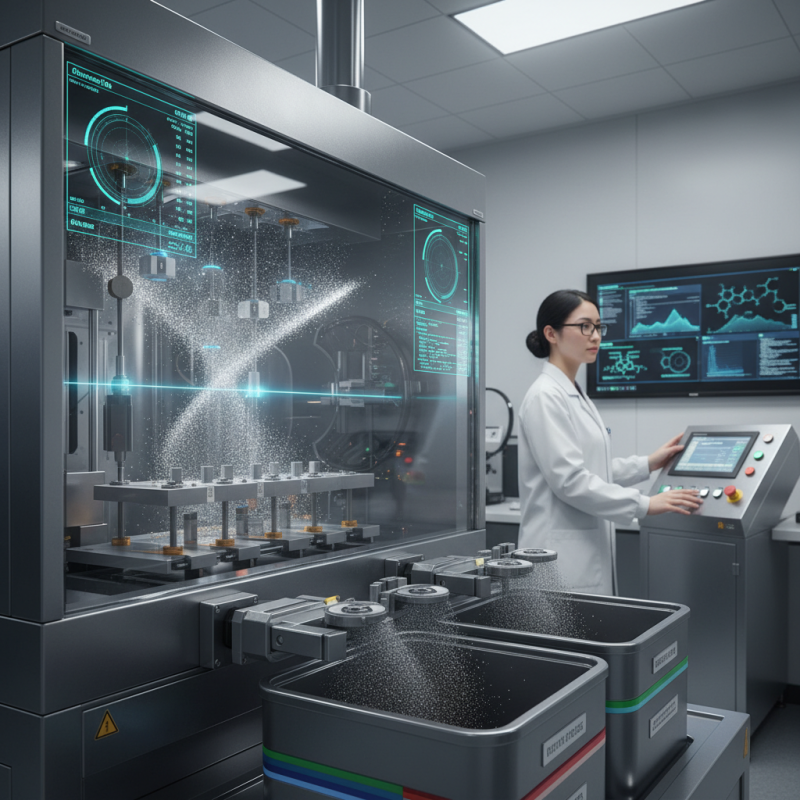
An alloy powder grader is a specialized device used to classify and measure the particle size of alloy powders. These powders are essential in various industries, such as aerospace and automotive, where precise material properties are crucial. The grading process ensures that the particles are uniform in size, which affects how they interact during manufacturing processes, like sintering and 3D printing.
These graders typically utilize advanced technologies, such as laser diffraction or sieving methods. The equipment can differentiate between various sizes, helping manufacturers choose the right powder for their applications. However, the process is not always perfect. Sometimes, the grading may miss finer particles or inaccurately group irregular shapes. This can lead to challenges in achieving the desired final product quality.
Moreover, the calibration of alloy powder graders can be a complex task. Variability in the powders themselves may affect readings. Operators must be diligent in verifying the accuracy of their equipment. Despite the advancements in technology, human oversight is sometimes necessary to ensure the highest standards. In conclusion, while alloy powder graders play a vital role, there remains a need for improvement and consistent evaluation.
The Importance of Alloy Powder Grading in Manufacturing
Alloy powder grading is crucial in manufacturing. It ensures that the size and distribution of particles meet specific standards. According to a recent industry report, particle size influences the mechanical properties of alloys. Smaller particles can enhance strength and durability, while larger ones may improve ductility.
In aerospace and automotive industries, precise grading is vital. For example, a study revealed that 70% of manufacturers observed improved performance when using accurately graded powders. Additionally, improper grading can lead to defects, wasting materials and increasing production costs. A 2019 analysis estimated that manufacturing defects cost companies billions annually.
The grading process itself involves various methods. Sieving, laser diffraction, and dynamic image analysis are common techniques. Each method has its pros and cons, and no single solution fits all needs. Ongoing research continues to refine these processes. Organizations must embrace adaptability to stay competitive. Keeping standards high is not just an option but a necessity.
Alloy Powder Grading in Manufacturing
The chart below illustrates the importance of various alloy powder grades used in manufacturing processes, showing the percentage usage of different alloys in the industry.
How Alloy Powder Graders Function: Key Mechanisms
Alloy powder graders are specialized devices used to sort and classify metal powders. They perform critical functions in various industries, such as aerospace and automotive. The efficiency of these graders significantly impacts the quality of the final product.
The key mechanisms of alloy powder graders include sieving, airflow, and vibration. Sieving separates powders based on particle size. Controlled airflow helps to adjust the density of the powder mixture. This is crucial for achieving a uniform distribution of particles. Vibration further aids in moving the powders through the grading system.
However, not all systems yield perfect results. Variations in particle shapes and sizes can lead to inconsistencies. Sometimes, powders clump together. This can obstruct the grading process. Operators must regularly monitor and adjust settings to minimize these issues. Continuous improvement in these mechanisms is essential for enhanced performance.
Applications of Alloy Powder Graders in Industry
Alloy powder graders play a crucial role in various industries. These devices ensure that metal powders meet specific particle size requirements. Precise control of particle size is essential for consistent quality in manufacturing processes. In industries like aerospace and automotive, even slight variations in powder size can significantly affect the final product.
Applications of alloy powder graders are vast. In additive manufacturing, these devices help produce high-quality components. The grading process enhances the flow characteristics of powders, improving layer deposition. Other applications are found in the production of electronic components, where powder consistency is vital. However, the grading process can sometimes overlook certain inconsistencies, which could lead to problems down the line.
In the metal forming industry, alloy powder graders are essential for quality control. Their role in ensuring powder uniformity cannot be overstated. Yet, achieving perfect grading remains a challenge. Factors such as humidity and temperature can impact the grading process. Companies must continually fine-tune their techniques for better outcomes.
Future Trends in Alloy Powder Grading Technology
The future of alloy powder grading technology is driven by advancements in automation and artificial intelligence. Industry analysts predict that the global alloy powder market will exceed $2 billion by 2025. Companies are increasingly adopting automated grading systems that improve accuracy and speed. These systems analyze particle size and distribution, which are crucial for quality control.
Moving forward, sustainable practices will play a key role. The emphasis on eco-friendly production processes is growing. Alloy powders produced with minimal waste will capture market interest. This focus aligns with the overall trend toward sustainability in manufacturing.
Tip: Regular calibration of grading equipment ensures consistent results. Also, consider integrating data analytics to predict and improve grading outcomes.
Recycling of alloy powders could become a game-changer. Studies indicate that nearly 20% of alloy powders are currently recycled, but this figure is expected to rise. Enhanced recycling methods could help meet the increasing demand while reducing environmental impact. There’s still a long way to go in achieving these goals. Companies must invest in research and development to refine these processes.
What is an Alloy Powder Grader and How Does it Work? - Future Trends in Alloy Powder Grading Technology
| Parameter | Description | Impact on Quality | Future Trends |
| Particle Size Distribution | The range of sizes of particles in the alloy powder. | Affects the flowability and sintering behavior. | Advanced laser diffraction techniques. |
| Shape Analysis | Evaluation of the geometric shape of particles. | Influences packing density and mechanical properties. | Utilization of digital imaging for shape characterization. |
| Chemical Composition | The elemental makeup of the alloy powder. | Determines the material's properties and performance. | Automated spectroscopy for rapid analysis. |
| Density Measurement | The mass per unit volume of the powder. | Higher density can lead to improved mechanical strength. | Integration of x-ray imaging for accurate assessments. |
| Moisture Content | The amount of water present in the alloy powder. | Excess moisture can lead to clumping and reduced flowability. | Real-time moisture detection technologies. |