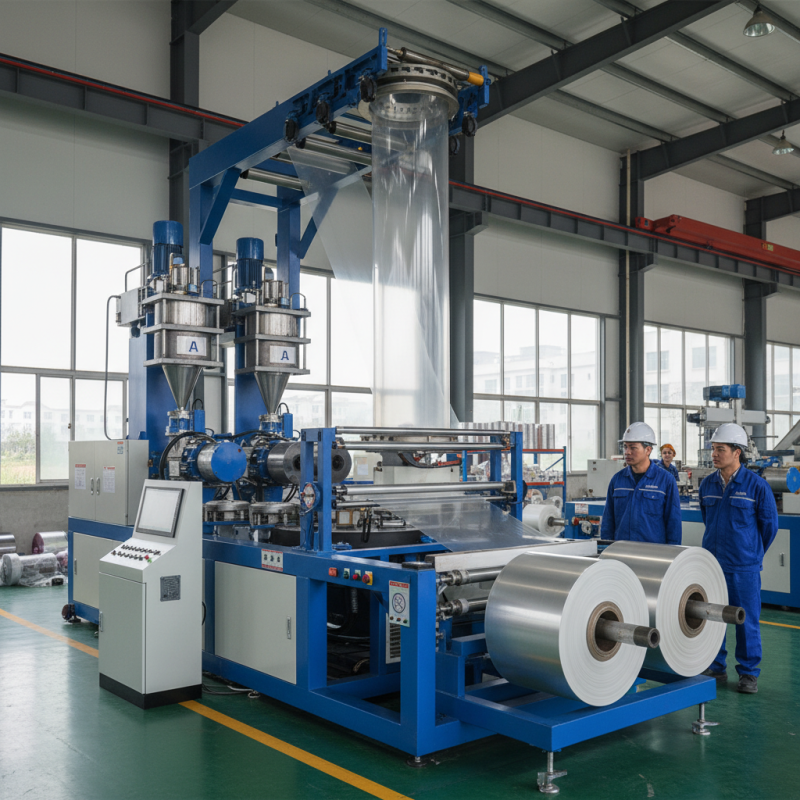
Best Aba Blown Film Machine Features and Benefits Explained?
The aba blown film machine is a vital piece of equipment in the plastic manufacturing industry. Its design focuses on producing high-quality film with enhanced properties. Understanding its features and benefits can help manufacturers make informed decisions.
Many businesses find the aba blown film machine to be efficient yet complex. The process involves multiple stages, which can be overwhelming. However, this machine offers versatility in film thickness and material types. It allows for customization, catering to specific production needs.
Despite its advantages, users often face challenges. Operating the aba blown film machine requires skilled personnel. Mistakes in operation can lead to production issues. Overall, while the machine provides exceptional benefits, it's essential to approach its use with careful consideration.
Features of ABA Blown Film Machines: An In-Depth Analysis
ABA blown film machines are essential in producing high-quality plastic films. These machines utilize a three-layer structure, which enhances the mechanical properties of the films. A notable advantage is their improved barrier resistance. According to industry statistics, films produced with ABA technology show a 30% increase in resistance to gases compared to traditional single-layer films.
The versatility of ABA systems is also significant. They can produce films suitable for various applications, from packaging to agricultural uses. Reports indicate that the global market for blown film machines is growing at a CAGR of 5.2%. This trend reflects the increasing demand for materials that provide better durability and environmental resistance.
However, not all machines perform equally. Some machines may struggle with consistency in film thickness or clarity. This inconsistency can lead to material waste and production inefficiencies. Manufacturers must regularly assess and refine their processes to keep up with industry standards. The investment in advanced features often pays off, but there’s a learning curve. Continuous improvement is key in maximizing the benefits of using ABA blown film machines.
Key Benefits of Using ABA Blown Film Technology in Packaging
ABA blown film technology offers significant advantages in the packaging industry. This method produces films with a unique three-layer structure. The outer layers are typically made from high-density polyethylene (HDPE), while the inner layer is low-density polyethylene (LDPE). This combination enhances durability and flexibility. Such films provide excellent barrier properties against moisture and contaminants. They are suitable for a variety of packaging needs.
One key benefit is their ability to reduce material costs. When using ABA technology, less polymer is necessary compared to traditional films. This efficiency translates into savings for manufacturers. Another plus is the ease of recycling. Many ABA films can be repurposed, promoting sustainability. Yet, achieving the perfect blend of materials requires attention. An incorrect ratio can lead to weaker films. Manufacturers must constantly evaluate and adjust their formulations for optimal performance.
Despite these benefits, some challenges exist in processing. The production speed can sometimes be slower compared to mono-layer films. This can be a drawback in fast-paced industries. Operators need to be vigilant about temperature controls. Inconsistent settings can affect the film quality. Reflecting on these issues is crucial for continuous improvement.
Comparative Performance Metrics: ABA Blown Film vs. Other Technologies
When considering ABA blown film technology, its comparative metrics against other methods are crucial. ABA films exhibit enhanced strength due to their layered structure. This unique feature allows for varied applications across different industries, catering to diverse needs. However, these benefits come at a cost. While producing thinner films is possible, challenges in maintaining uniformity might arise.
In contrast, traditional blown film techniques often sacrifice performance for simplicity. They can produce thicker films, but often lack the flexibility of ABA technology. Additionally, the energy consumption of ABA machines may seem high, leading to questions about sustainability. Companies must weigh these factors carefully. Efficiency gains could offset energy concerns in the long run. Yet, the balance between operating costs and environmental impact remains a complex discussion.
Moreover, the mechanical properties of ABA films provide benefits such as barrier performance and durability. Nonetheless, these films may require more frequent maintenance compared to other methods. This aspect of reliability calls for ongoing assessment to ensure optimal performance. Making informed decisions is essential as the industry evolves and embraces new technologies.
Industry Applications of ABA Blown Film Machines: Data and Trends
ABA blown film machines are widely used in packaging, agriculture, and consumer products. According to recent industry data, the global market for blown film technology is expected to grow at a rate of 4.5% annually from 2023 to 2030. This growth is driven by the rising demand for sustainable packaging solutions. The versatility of ABA blown film makes it ideal for producing bags, wraps, and protective films.
In agricultural applications, ABA film is essential for mulch and greenhouse covers. Data shows that around 60% of the agricultural films used globally are produced using blown film technologies. These films help extend the growing season and improve crop yields. However, challenges arise with film durability and waste management.
Moreover, in the consumer goods sector, there's a trend towards lighter and thinner films. A study indicated that over 75% of manufacturers seek to reduce the weight of their packaging films without compromising performance. This push for innovation often leads to trade-offs in film strength and impact resistance. Continuous improvement in ABA film technology is necessary to address these complexities and meet market demands.
Cost Efficiency and Production Output of ABA Blown Film Machines
ABA blown film machines are known for their cost efficiency. These machines utilize a three-layer structure, which optimizes material usage. This design minimizes waste and reduces production costs significantly. Manufacturers can produce a variety of films with different properties, enhancing versatility in product offerings.
When examining production output, ABA machines demonstrate impressive capabilities. They can achieve higher speeds than conventional models. However, operational challenges can arise. For instance, maintaining consistent quality at high speeds may require fine-tuning. Equipment downtime might occur unexpectedly, leading to output delays.
Investing in ABA technology does pose risks. The initial investment can be substantial, which needs careful consideration. Long-term savings on material costs can compensate for this upfront expense, but it's essential to evaluate ongoing maintenance costs. Each production facility may face unique challenges that can affect overall efficiency and output.