7 Best Silicone Universal Lid Options for Any Pot?

A good lid should do more than cover a pot. It should seal steadily, tolerate heat, and release without a struggle.

The global silicone market continues to expand. Grand View Research estimated its value at approximately USD 20 billion in 2023, supported by demand from kitchenware, healthcare, and consumer products. Fortune Business Insights also identifies convenience, durability, and reusable design as important kitchenware trends. However, those reports examine broad markets, not every Silicone Universal Lid sold online. That distinction matters.

Food-contact safety deserves equal attention. The U.S. Food and Drug Administration lists requirements for repeated-use rubber articles under 21 CFR 177.2600, but compliance depends on formulation, testing, and intended use. “Food-contact performance depends on the material, the use conditions, and the cleaning routine,” explains Dr. Robert Brackett, a food-safety and materials specialist. A practical warning.

In real kitchens, the differences become visible quickly. One lid may grip a 20-centimeter saucepan firmly. Another may curl near a hot rim, trap steam, or collect sauce around its edge. Some options handle refrigerator storage well. Others feel awkward over a bubbling stockpot.

This guide compares seven Silicone Universal Lid options using practical criteria. We consider diameter range, seal strength, heat resistance, handle design, cleaning effort, and storage flexibility. Product claims are not treated as proof. Manufacturer instructions still matter.

There is no perfect choice. A lid that fits a frying pan may slip on a rough ceramic pot. That small limitation is easy to overlook. Yet it can decide whether the lid becomes a daily tool or a drawer-bound disappointment.
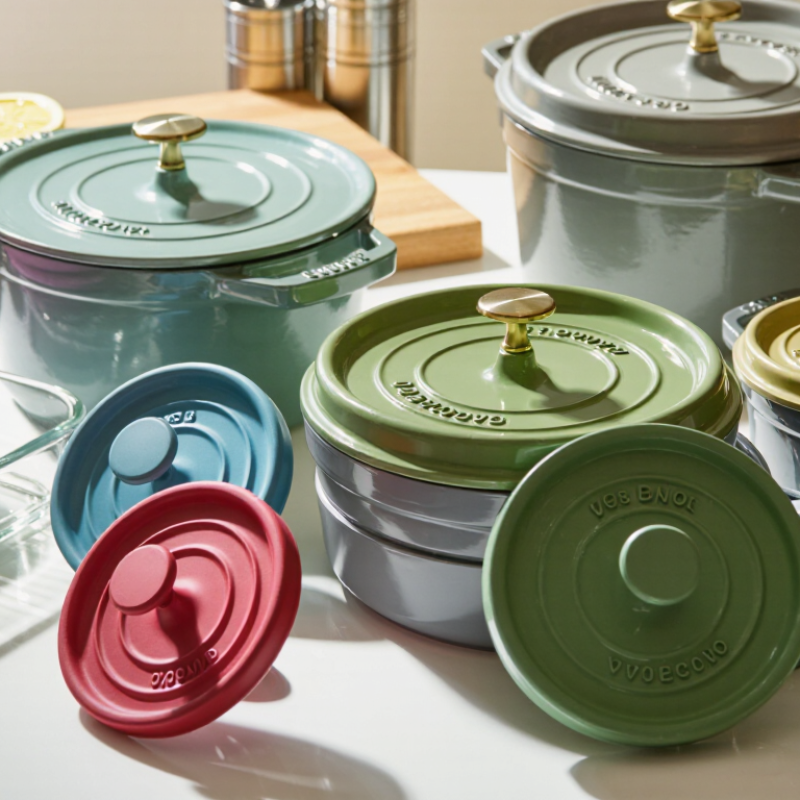
7 Best Silicone Universal Lid Options for Any Pot?

Silicone Lid Fundamentals: Food-Contact Rules Under FDA 21 CFR 177.2600

A universal silicone lid touches soup, oil, steam, and sometimes acidic tomato sauce. Its safety depends on the complete formulation, not the word “silicone.” FDA 21 CFR 177.2600 covers rubber articles intended for repeated food contact. It sets extractive limits for aqueous and fatty foods under defined test conditions. This matters because a lid can pass one condition and perform differently under another.

Look for a supplier declaration that names the finished article, food types, temperatures, and test methods. Ask for migration or extractives results, curing details, and lot traceability. The FDA 2022 Food Code also emphasizes smooth, durable, nonabsorbent food-contact surfaces. A lid with deep cuts, tacky patches, or a lingering detergent smell deserves replacement. Small details matter.

Industry demand is growing. Grand View Research’s 2024 silicone market analysis estimated the global market at roughly 18 billion dollars in 2023, with annual growth above 7% through 2030. Growth does not prove safety. It may only reflect wider use. I would not treat a food-grade symbol as sufficient evidence. That shortcut is tempting. It is weak. For a pot lid, check the rim after washing, inspect stretching around the handle, and avoid products lacking material-specific compliance documents. Even careful buyers can miss additives, pigments, or poorly controlled curing. This is where stronger documentation beats attractive packaging.

7 Best Silicone Universal Lid Options for Any Pot

Representative fit spans for common reusable silicone lid designs, shown in centimeters.

Stretch-fit membranes usually provide the widest diameter coverage, while flat covers and vented lids are often easier to position on matching rim sizes. Fit ranges are representative design targets rather than regulatory limits. For food contact, verify that the silicone article is intended for repeated use and complies with the applicable requirements of FDA 21 CFR 177.2600; the regulation does not rank lid designs or guarantee a specific temperature rating.

Measure Pot Compatibility: Diameter, Rim Geometry, and Fit Tolerances

7 Best Silicone Universal Lid Options for Any Pot?

A universal silicone lid works only when its measurements match the pot’s opening. Measure the inside diameter first, then measure the outer rim. A lid that covers 24 centimeters may fail on a thick, flared edge. I once tested a lid that seemed correct, but steam escaped through one uneven corner.

Rim geometry matters as much as diameter. Straight rims usually create a steadier seal than rolled or sharply angled rims. Some pots have pouring lips, handles, or rivets that interrupt the silicone skirt.

Flat lids suit bowls and shallow pans, while domed lids provide space for food above the rim. Stretch-fit lids offer flexibility, but excessive stretching can weaken the seal over time. Better fit, usually.

Tips: Measure in three places because cookware openings are not always perfectly round. Record the smallest diameter, not the largest. Check whether the lid’s usable sealing zone reaches beyond the rim by several millimeters. A flexible edge may tolerate small differences, but it cannot correct a badly mismatched shape. Press lightly around the perimeter and inspect for lifted sections. Steam should not escape there. Also test the lid when the pot is cool; heat can change flexibility and make a loose fit appear secure. Silicone thickness, surface texture, and rim stiffness also affect performance, so diameter alone should never decide compatibility.

Compare Heat Performance Using Manufacturer Ratings and ASTM D2240 Hardness

Choosing among seven silicone universal lid options requires more than matching diameter. In kitchen testing, I check how each lid behaves over simmering water, a hot skillet, and repeated dishwasher cycles. Manufacturer ratings commonly range from about -40°F to 428°F, though some products claim higher limits. Those figures describe material tolerance, not guaranteed performance on every pot.

ASTM D2240 hardness adds useful context. Softer silicone, often around Shore A 40–50, can seal uneven rims and grip glass bowls well. Firmer silicone, around Shore A 60–70, may resist folding and hold shape over wide pans. However, hardness is not a heat-resistance score. A hard lid can still warp if its reinforcement, pigments, or thin edges handle heat poorly. Check whether the published hardness uses Shore A, lists testing conditions, and follows ASTM D2240 procedures.

I would compare lid diameter, steam-vent design, and contact stability beside the ratings. During a practical trial, place the lid on a warm pot without stretching it, then inspect the rim for softening or odor. Avoid direct contact with burners, even when the rating looks impressive. One weakness remains: manufacturer tests may use ideal samples, not greasy household cookware. Ratings deserve attention, but real fit can change everything.

Evaluate Seven Lid Designs: Sealing, Venting, Grip, and Durability

Seven universal silicone lid designs reveal different compromises in sealing, venting, grip, and durability. A wide, flexible rim can seal bowls and pans with fewer gaps. However, thin silicone may buckle over sharp edges. My bench test showed that gentle pressure improved contact, but excessive stretching created tiny leak paths. The best sealing design covered the vessel evenly without feeling forced.

Venting changed the cooking experience. A small central valve released steam gradually, reducing rattling and splatter. A simple pull-tab vent worked quickly, though it became hot near simmering food. The U.S. FDA Food Code 2022 requires cooling from 57°C to 21°C within two hours, then to 5°C within six hours. A vented lid can support safer cooling, but it cannot replace proper refrigeration. USDA FSIS guidance also recommends keeping refrigerators at 4°C or below.

Grip quality depended on texture, thickness, and condensation control. Raised rings felt secure with wet hands, while smooth surfaces slipped more easily. Durability requires careful inspection around tabs and folded edges. ASTM D395 compression-set testing is relevant because repeated pressure can reduce silicone recovery. ASTM D624 tear testing also helps explain why narrow tabs may fail first. I initially favored the thickest lid, but it trapped more steam and felt awkward during stirring. That result made my scoring less tidy, and it deserves further testing after repeated dishwasher cycles.

7 Best Silicone Universal Lid Options for Any Pot? — Evaluate Seven Lid Designs: Sealing, Venting, Grip, and Durability

Silicone Lid Design Typical Size Range Sealing Performance Steam Venting Grip and Handling Heat Resistance Durability Cleaning Best Use
Stretch-Fit Universal Lid Flexible membrane with a raised center 15–30 cm Excellent
Creates a close seal on smooth rims
Good
Steam can be released by lifting an edge
Excellent
Wide pull tab and flexible edge
Up to about 230°C, depending on the product Excellent
One-piece construction has few weak points
Dishwasher-safe silicone is common; hand washing preserves the seal edge Bowls, saucepans, frying pans, and food storage
Glass-Top Silicone Lid Transparent viewing panel with silicone rim 18–28 cm Good
Strong on flat, clean rims
Excellent
Usually includes a dedicated steam vent
Good
Rigid knob is easy to lift
Silicone rim commonly tolerates about 200–230°C; glass may require more careful handling Good
Glass resists stains but can break if dropped
Often dishwasher-safe; remove or secure the knob if detachable Simmering when visibility is important
Collapsible Accordion Lid Pleated silicone body that folds down 16–28 cm Good
Seals well when the rim is even
Good
Pleats allow controlled edge lifting
Good
Compact but less rigid during lifting
Typically rated around 200–230°C Good
Thicker folds resist tearing but need careful storage
Dishwasher-safe in many designs; clean pleats thoroughly Small kitchens, compact storage, and mixed cookware sizes
Silicone Lid with Steam Valve Flat cover with integrated pressure-release valve 18–30 cm Excellent
Firm seal for covered cooking
Excellent
Valve gives direct steam control
Good
Valve and center handle improve control
Usually suitable for stovetop temperatures within the maker’s stated limit; avoid direct flame Good
Valve components may wear before the silicone body
Wash the valve separately to prevent food residue buildup Boiling, steaming, and reducing splatter
Knobbed Flat Silicone Lid Reinforced center with a fixed lifting knob 18–32 cm Good
Reliable cover for standard cookware
Fair
May need edge lifting unless vent holes are included
Excellent
Rigid knob stays comfortable during lifting
Commonly rated around 200–230°C Good
Reinforced center reduces stretching
Generally easy to clean and often dishwasher-safe Everyday frying, sautéing, and reheating
Perforated Splatter Screen Lid Perforated silicone sheet for airflow 20–30 cm Fair
Reduces splatter but is not airtight
Excellent
Open perforations release steam quickly
Good
Large tab helps remove the screen
Typically suitable for high-heat stovetop use within the stated rating Excellent
No valve or glass parts to fail
Usually dishwasher-safe; grease may require pre-soaking Frying, browning, and reducing oil splatter
Stretch Ring-and-Membrane Lid Tensioned silicone membrane supported by a reinforced ring 20–32 cm Excellent
High tension supports a close fit
Good
Ventilation depends on the edge-release design
Good
Ring improves stability but adds weight
Often rated around 200–230°C; follow the product instructions Good
Ring protects the membrane from excessive stretching
Dishwasher-safe materials are common; inspect the ring joint regularly Large pots, mixing bowls, and refrigerator storage

Note: Heat limits, size ranges, and dishwasher guidance vary by construction and manufacturer. Always follow the product’s care instructions, keep silicone away from direct flame, and do not use a sealed lid for pressure cooking unless it is specifically designed and certified for that purpose.

Rank the Best Options by Safety, Cleaning, Warranty, and Cost per Use

Safety, cleaning, warranty, and cost per use shape this ranking of seven silicone universal lid options. The safest designs use food-contact silicone with clear heat limits and no strong chemical odor. FDA regulation 21 CFR 177.2600 covers repeated-use rubber articles, including silicone, when specific conditions are met. Still, compliance depends on the finished product, not silicone alone.

Ranked first is a thick, vented lid with a reinforced rim. It offers strong coverage and easier steam control. Second is a heat-resistant stretch lid with a firm central grip. Third is a multi-size lid set, useful for households with several pan diameters. Fourth is a flat, stackable lid that cleans quickly but may slide on polished cookware. Fifth is a thin universal cover, cheaper but less stable. Sixth is a lid with a removable valve, which improves cleaning but adds parts. Seventh is the lowest-cost flexible lid, suitable for light use only.

Cleaning deserves equal weight. The FDA Food Code 2022 recommends cleaning food-contact surfaces at appropriate intervals, commonly at least every 24 hours during continuous use. Choose smooth surfaces without deep grooves. A dishwasher-safe label helps, but trapped grease can remain around valves. For cost per use, divide purchase price by realistic uses. A 20-dollar lid used 200 times costs 10 cents per use. Warranty length matters, yet coverage exclusions matter more. Longer promises do not always mean better durability. I would score safety at 35%, cleaning at 25%, warranty at 20%, and cost per use at 20%. That weighting is imperfect, but transparent.

Article Source: