2026 Top Towable Boom Lift Features and Benefits Explained?
In the rapidly evolving access equipment industry, Towable Boom Lifts stand out for their versatility and efficiency. According to a recent market report, the global boom lift market is expected to grow significantly, reaching USD 16 billion by 2026. This growth highlights the increasing demand for aerial work platforms in construction and maintenance sectors.
Towable Boom Lifts offer unique benefits. They are lightweight and easy to transport. These lifts can access difficult job sites, saving both time and labor costs. Their ability to function on various terrains makes them ideal for outdoor jobs. However, some users find it challenging to navigate their setup and operation. This aspect can lead to project delays if proper training is lacking.
When analyzing the features of Towable Boom Lifts, safety remains a priority. Equipped with advanced safety systems, they minimize risks for workers at heights. Nevertheless, reliability and maintenance are concerns that operators must address. Understanding these lifts' advantages and drawbacks is crucial for optimal usage in 2026 and beyond.
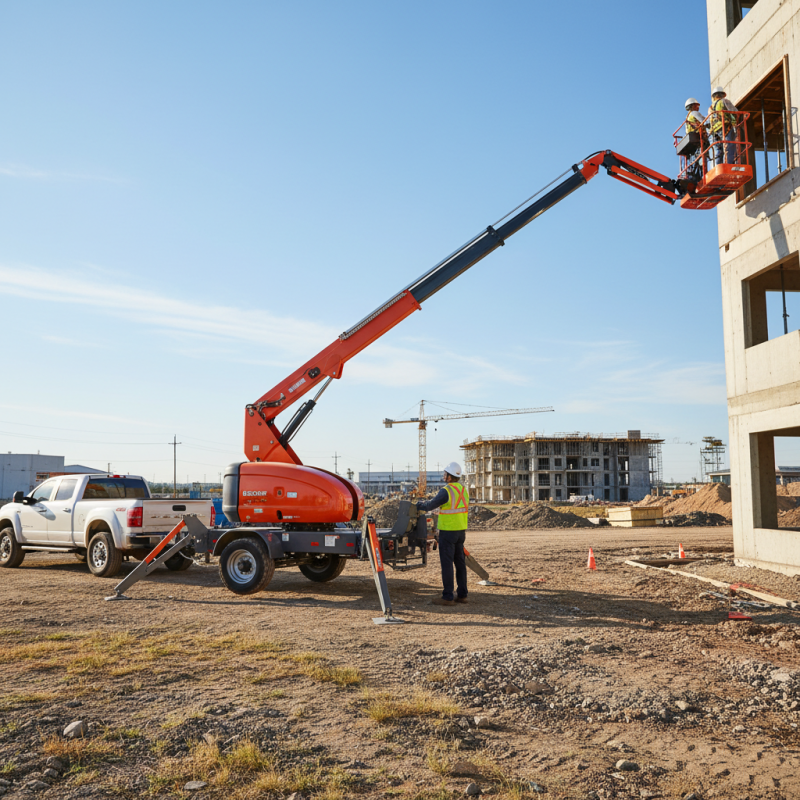
Key Features of 2026 Top Towable Boom Lifts
Towable boom lifts are essential for various industries, including construction and maintenance. In 2026, the top models will showcase remarkable features designed to enhance efficiency and safety. One significant feature is the extended reach. Many lifts can reach heights over 50 feet. This allows operators to access difficult areas without the need for scaffolding.
Another vital aspect is the ease of transport. Today’s models often weigh less than 5,000 pounds, making them adaptable for numerous vehicles. The compact size means they can maneuver into tight spaces easily. According to industry reports, portability can save operators up to 20% on transport costs. However, the reliance on lighter materials can raise concerns about durability under heavy use.
One should consider the power sources as well. Electric options are becoming popular due to their reduced noise levels and emissions. Yet, they may not provide the same lifting capacity as their hydraulic counterparts, which can lead to limitations in certain environments. As boom lift technology advances, balancing power and portability remains a challenge for manufacturers. The incorporation of advanced safety features, like automatic leveling systems, addresses some risks but may introduce complexity that requires extensive training for users.
2026 Top Towable Boom Lift Features and Benefits Explained
| Feature | Description | Benefits |
| Compact Design | Easy to transport and maneuver in tight spaces. | Increased accessibility in urban environments. |
| Extended Reach | Higher platform heights and extended outreach capabilities. | Ability to reach difficult areas for maintenance and construction. |
| Easy Setup | Quick deployment with minimal assembly required. | Reduced downtime and faster work initiation. |
| Safety Features | Equipped with safety harness points and emergency descent systems. | Enhanced worker safety and compliance with regulations. |
| Flexible Power Options | Can operate on petrol, diesel, or electric power. | Versatility for different job site requirements. |
| Rotating Platform | Allows for 360-degree operation from the platform. | Increased efficiency for tasks requiring multiple angles. |
Benefits of Using Towable Boom Lifts in Various Industries
Towable boom lifts are transforming many industries by enhancing productivity and safety. These lifts are highly versatile, making them ideal for construction, maintenance, and film production. For instance, a towable boom can easily navigate tight spaces, allowing workers to reach high places with minimal setup time. This efficiency is crucial when deadlines are tight or when working in urban environments.
One notable benefit is the ease of transportation. Workers can tow these lifts with standard vehicles, which reduces logistics concerns. However, transporting equipment comes with its own challenges. Ensuring secure loading is essential to avoid accidents during transit. Additionally, operators must be well-trained. Familiarity with the controls is vital for safety and efficiency. In industries where time is money, any delay caused by mishaps can be costly.
The adaptability of towable boom lifts allows them to cater to various applications. From tree trimming to building maintenance, these lifts excel in diverse environments. Yet, operators need to be aware of the ground conditions where they work. Uneven terrain can pose risks, and caution is necessary. As useful as they are, like any tool, towable boom lifts require careful handling and ongoing training for best results.
Benefits of Using Towable Boom Lifts in Various Industries
Safety Features and Compliance Standards for Towable Boom Lifts
Towable boom lifts are essential for many construction and maintenance tasks. Their safety features play a crucial role in protecting operators and bystanders. These lifts must comply with strict industry standards to ensure safe operation. Key safety features include emergency stop buttons, load limiters, and outriggers to stabilize the lift. Regular inspections are vital to confirm these systems are functioning correctly.
Tips: Always check for visible wear and tear. Examine cables and controls before use. Keeping a daily inspection log helps track lift conditions over time.
Compliance standards for towable boom lifts encompass design, manufacturing, and operation. Lifts should adhere to safety regulations set by recognized organizations. Proper training for operators is non-negotiable. They must understand the limitations of the equipment and local regulations. This adherence minimizes accidents and enhances workplace safety.
Tips: Invest time in operator training. Frequent refreshers can prevent accidents. Remember, understanding equipment limits is key to safe operation.
Cost-Effectiveness and Maintenance of Towable Boom Lifts
Towable boom lifts have gained popularity due to their cost-effectiveness. A recent industry report highlighted that these lifts can save businesses up to 30% in operational costs compared to traditional lifts. Their ability to be easily transported makes them ideal for various job sites. This mobility reduces downtime, as workers can complete tasks quickly and efficiently.
Maintenance is another important factor. Regular inspections can prevent costly repairs. According to industry standards, a well-maintained boom lift can extend its lifespan by up to 50%. Neglecting basic maintenance, however, can lead to unexpected failures, which can increase costs significantly. The dilemma lies in balancing immediate savings with long-term reliability.
User feedback often reveals mixed experiences. Some operators prefer traditional lifts for their stability. Others appreciate the convenience of towable models. This shows that while towable boom lifts offer clear benefits, they may not meet every need effectively. Each project demands careful consideration of the lift's capabilities and the associated costs.
Technological Advancements in 2026 Towable Boom Lift Models
In 2026, towable boom lifts are seeing significant advancements in technology. Lightweight materials are now commonplace, improving portability. Some models weigh up to 30% less than those from previous years. This change enhances ease of transport and increases user accessibility. According to industry reports, over 72% of operators prefer lifts that can be towed by standard vehicles.
Another noteworthy advancement is enhanced safety features. Many new models come with advanced stabilization systems that automatically adjust to uneven terrain. This technology reduces the risk of tipping. An estimated 40% of accidents can be traced back to stability issues. New sensors and alarms further monitor the lift's position, providing real-time feedback to the operator.
Moreover, energy efficiency has become a key focus. Many 2026 models include hybrid engines that decrease fuel consumption by up to 25%. Despite these improvements, some users still struggle with understanding the advanced mechanisms. Training remains a crucial aspect of user experience, assuring safety and efficiency. The industry must continue to innovate while addressing these important user challenges.