2026 Top ATS Switch Types Which Is Best for Buyers?
Choosing among the 2026 top ATS switch types is not just a matter of comparing prices. A transfer switch must match the load, power source, operating environment, and required transfer speed. Uptime Institute’s 2024 Annual Outage Analysis found that 54% of surveyed organizations reported their most recent significant outage cost more than $100,000; 16% reported costs above $1 million. Those figures concern outages broadly, not ATS failures specifically. Still, they show why backup-power decisions deserve careful review.
The options differ in practical ways. Open-transition switches briefly interrupt power; closed-transition models can reduce that interruption when utility conditions allow. Manual switches may suit smaller, supervised installations, while automatic models respond to a loss of normal power without waiting for an operator. IEC 60947-6-1 provides an international standard for transfer switching equipment, but compliance alone does not establish the best fit for a particular site. Check ratings, maintenance access, source compatibility, and the manufacturer’s published specifications.
Andy Lawrence, Uptime Institute’s Executive Director of Research, has emphasized through his work that resilience depends on the wider system, not one component. A useful paraphrase for buyers: an ATS is only one link in a backup-power plan. That distinction matters. A beautifully rated Switch Ats can still disappoint if its generator, protection settings, or maintenance plan are poorly matched. This guide compares leading ATS types by application, trade-offs, and buyer priorities. The “best” choice may be less obvious than the product label suggests.
ATS Fundamentals: How Automatic Transfer Switches Move Loads Between Sources
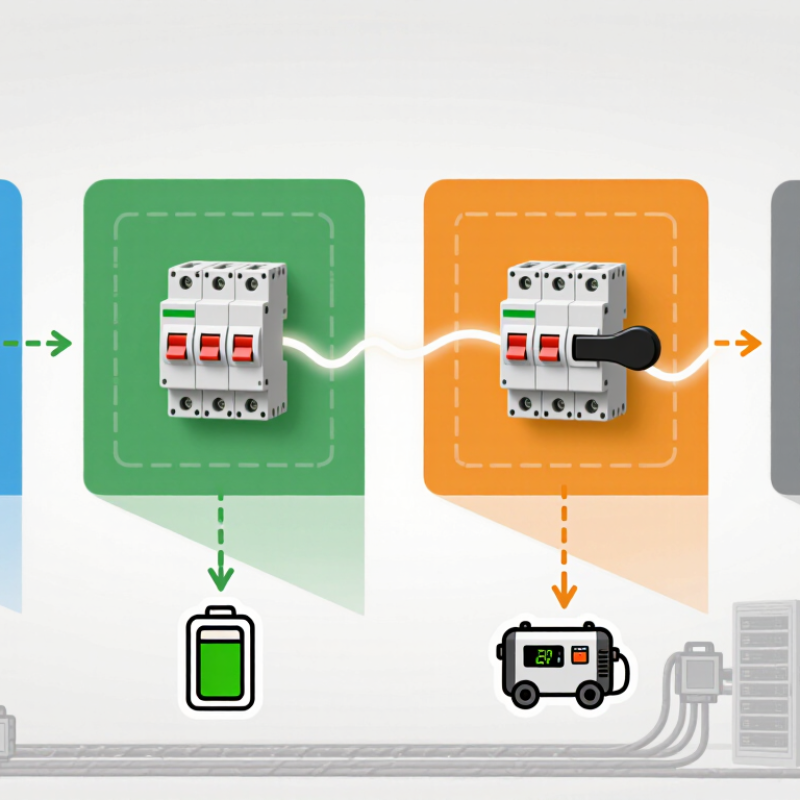
An automatic transfer switch (ATS) monitors the normal power source and moves a connected load to an alternate source when supply falls outside set limits. That source may be a generator or a second utility feed. The ATS does not create power; it coordinates the transfer. Its controller detects a fault, signals a generator when needed, and transfers the load once the alternate source is ready.
With open transition, the switch disconnects one source before connecting the other. This break-before-make action avoids briefly paralleling sources, but causes a short interruption. Closed-transition equipment overlaps sources briefly, where system design and operating requirements permit. Timing matters. Generator start delays, retransfer settings, and cooldown periods shape what users actually experience—not just the switch’s headline rating.
Uptime Institute’s 2024 Annual Outage Analysis identifies power problems as the leading cause of serious outages, accounting for 54% of reported cases. That figure makes transfer behavior worth examining, though an ATS cannot prevent every outage. Buyers should check voltage, phase, current rating, fault withstand capability, and compatibility with the load. Motors may need delayed transfer to reduce stress from residual voltage. A clean single-line diagram helps, but real installations can be messier than diagrams suggest. Commissioning should test source failure, generator start, transfer, retransfer, and alarm behavior under realistic conditions.
The Main ATS Types in 2026: Open, Delayed, Closed, and Static Transition
An automatic transfer switch (ATS) moves a load between normal and backup power, but the transition method affects what equipment experiences. Open transition is break-before-make: the first source disconnects before the second connects. A brief outage follows. For lights, that may be barely noticeable; for a controller, pump, or server, even a short gap can trigger a reset. Measure the load’s real tolerance, not just its nameplate rating.
Delayed transition also breaks before making, but adds a pause between sources. That interval can let residual motor voltage decay or give a load time to settle. Closed transition briefly overlaps the sources, reducing interruption, but requires proper synchronization and system-specific engineering. It is not automatically the better choice. Static transition uses power electronics to switch very quickly, which can suit sensitive loads, though source quality and protection coordination still matter. Fast is not magic.
Compare transfer time, load behavior, fault conditions, and maintenance access with a qualified electrical professional. Test the complete system under realistic conditions, including generator startup and return to normal power. One detail is easy to miss: a switch can meet its timing specification while the connected equipment still trips. The right ATS type depends on the whole installation, not one impressive number.
Industry Benchmark: NFPA 110 Type 10 Requires Power Within 10 Seconds
For buyers, the key question is not simply which ATS appears fastest. NFPA 110 defines Type 10 performance as supplying power to emergency loads within 10 seconds after normal power fails. This is a system-level requirement, not a guarantee that the switch alone transfers power within that time.
Ten seconds matters.
The requirement affects generator starting, sensing, transfer logic, and load sequencing. A generator may start promptly, yet voltage checks can use up valuable seconds. Open-transition switches briefly interrupt the load; closed-transition switches can reduce interruption but need compatible controls and utility coordination. Neither is automatically best. Ask for witnessed timing tests under load, including alarms and retransfer—not just a catalog specification.
The U.S. Energy Information Administration’s Electric Power Annual 2022 reported average customer interruption duration of 5.6 hours, including major events. Excluding major events, the figure was 2.4 hours. These national utility averages do not predict a specific facility’s outage risk. Request generator-start records and evidence that the complete emergency system meets Type 10 with the intended load. Site conditions and maintenance can still expose gaps.
A paper-compliant design may not be a perfect fit.
Compare ATS Performance: Transfer Time, Current Rating, Poles, and Bypass
An automatic transfer switch should be compared by its mechanism and the demands of the load. Contactor-based units are common for routine building loads, while molded-case designs can suit installations needing circuit-breaker protection. Static switches can transfer rapidly for sensitive electronic equipment, but their performance and overload limits depend on the specific design. Check documented transfer time under the conditions your system will actually face. A fast figure alone can mislead.
Current rating must cover the expected load, including practical operating margins and starting demands. A 400-amp rating does not automatically mean a switch can handle every brief surge. Review its withstand and closing ratings, too. Pole count matters: three-pole and four-pole arrangements treat the neutral differently, so match the switch to the electrical system and grounding plan. Ask a qualified designer to verify this detail. It is easy to overlook.
For facilities that cannot tolerate an outage during service, bypass-isolation may allow maintenance while the load remains supplied. It adds equipment, space, and operating steps. Worth it? Compare the maintenance plan against the cost and complexity. Record transfer time, current ratings, pole configuration, and bypass requirements side by side, then check each against site conditions—not just a product table.
Choose the Best ATS: Match Switching Type to Load and Application
2026 Top ATS Switch Types: Which Is Best for Buyers?
Choose the Best ATS: Match Switching Type to Load and Application
Choosing an automatic transfer switch starts with the load, not the catalog. Open-transition switches briefly disconnect one source before connecting another. They suit many lighting and general building loads, where a short interruption is acceptable. Keep sensitive controls in mind: even a brief break can reset equipment.
Delayed transition adds a pause before reconnection. That gap can help motors and transformers shed residual voltage before receiving power from a new source. Closed transition briefly connects both sources, allowing a near-seamless transfer when they are synchronized and the installation supports paralleling. The trade-off is greater system complexity. The awkward part: a transfer that looks seamless on paper may still unsettle a motor.
Uptime Institute’s 2024 Annual Outage Analysis reported that 54% of respondents’ most recent significant outages cost more than $100,000. That finding concerns data centers, but it highlights why buyers should assess interruption costs alongside switch price.
Check load type, transfer time, available fault current, and maintenance needs. For critical facilities, bypass-isolation designs can allow switch servicing without interrupting the load. Confirm ratings and coordination with a qualified electrical engineer. Small details matter. A pump, server rack, and hospital lighting circuit do not necessarily need the same transfer behavior.